
News
Stay up to date on the latest crypto trends with our expert, in-depth coverage.

1Bitget UEX Daily|Micron Earnings Significantly Beat Expectations Boosting AI Sentiment; Oil Prices Fall as Supply Concerns Ease; Trump Delays Housing Bill Signing2Micron Technology (MU) FY2026 Q3 Earnings: Revenue Surges 346% YoY, Gross Margin Hits Record 84.9%, Q4 Guidance Crushes Estimates3The "Storage Supercycle" in Kioxia's Financial Report: Apple Orders Surge, Raw Material Inventory Soars, and the Entire Industry Chain Is Rushing to Position Ahead

Kazakhstan’s stock exchange launches Solana ETF for regulated SOL exposure in Central Asia
Cryptobriefing·2026/06/25 21:27
DeFi TVL Drops 39% In 2026 As Leverage And Yields Cool
Newsbtc·2026/06/25 21:12
TheGardenDAO launches to raise millions for 2026 NBA Finals memorabilia
Cryptobriefing·2026/06/25 21:09
ONDO Finance’s SPCXon surpasses $10M in tokenized market cap
Cryptobriefing·2026/06/25 21:09
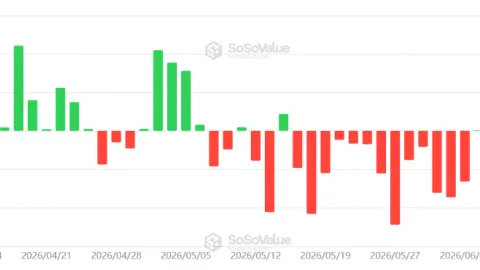
Bitcoin bounces off new 2026 price lows: Will US stock weakness push BTC lower?
Cointelegraph·2026/06/25 21:06
Fake JPYSC tokens appear after SBI Holdings’ new launch! What do investors need to watch out for?
Cointurk·2026/06/25 21:06

Crypto Traders Push Altcoin Market Below $900B Twice in 24 Hours as Panic Deepens
CryptoNewsNet·2026/06/25 21:04

Two Cardano Zones on the Radar Amid Struggles to Find Price Floor
CryptoNewsNet·2026/06/25 21:04
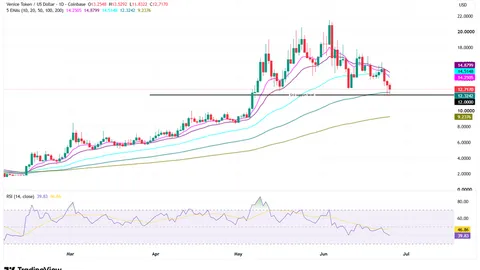
Venice Token (VVV) price outlook: $12 in focus as bearish momentum intensifies
CryptoNewsNet·2026/06/25 21:04
Flash
21:32
On Thursday, June 25th, the US stock market’s storage chips and hardware supply chain index rose by 11.85% to 271.70 points, opening with a gap and continuing to fluctuate at a high level, approaching the historical closing high of 274.95 points set on June 22nd.Component stock SanDisk closed up 21.97%, Micron Technology rose 15.74%—marking the best single-day performance since May 26. Applied Materials rose 13.42%, Teradyne rose 10.48%, Lam Research rose 7.21%. Western Digital and Seagate Technology both gained at least 3.23%. Rambus fell 0.67%.
21:29
Closing Report of US Magnificent 7 Stocks|On Thursday (June 25), the Magnificent 7 Index fell by 2.79% to 198.56 points, with US tech stocks showing a significant drop at the start of trading and an overall long-tail L-shaped trend.The constituent stock Apple closed down 6.1%, marking its largest single-day decline since April 2025. The "mega" market cap tech stock index fell 1.36% to 414.51 points, opening slightly higher before turning downward early in the session, and overall presented an L-shaped trajectory with a long tail.
21:19
Synaptics Incorporated shares surged 12.6% in after-hours trading, closing at $141 per share.Previously, ON Semiconductor announced that it had reached an agreement to acquire Synaptics in an all-cash transaction valued at approximately $7 billion. This deal is expected to significantly enhance ON Semiconductor's portfolio of analog and sensing solutions in the automotive and industrial semiconductor markets. Market analysts believe the acquisition premium is notable, reflecting Synaptics' core technology and market positioning value in the human-machine interface solutions field. Upon completion of the transaction, Synaptics will become a wholly owned subsidiary of ON Semiconductor.
Trending news
MoreClosing Report of US Magnificent 7 Stocks|On Thursday (June 25), the Magnificent 7 Index fell by 2.79% to 198.56 points, with US tech stocks showing a significant drop at the start of trading and an overall long-tail L-shaped trend.
Kazakhstan’s stock exchange launches Solana ETF for regulated SOL exposure in Central Asia
News