
News
Stay up to date on the latest crypto trends with our expert, in-depth coverage.


Bank of Japan set to keep rates steady as Iran war clouds outlook
ForexFactory·2026/04/27 22:00
Aave Dragged Into New Avi Eisenberg Controversy
BeInCrypto·2026/04/27 22:00

Subway Partners With Ripple To Modernize Treasury System
CryptoNewsNet·2026/04/27 21:54

MemeCore Price Crashes 10% After Hitting ATH 3 Days Ago
CryptoNewsNet·2026/04/27 21:54

Jupiter (JUP) price gains amid 109% volume spike
CryptoNewsNet·2026/04/27 21:54
Tron (TRX) price nears $0.328 as market cap hits $30.8B
Cointurk·2026/04/27 21:51

Why Does Ripple Keep Unlocking And Selling Millions Of XRP Every Month?
Newsbtc·2026/04/27 21:45
XRP hits $13 billion in CME futures volume for Q1
Cointurk·2026/04/27 21:30
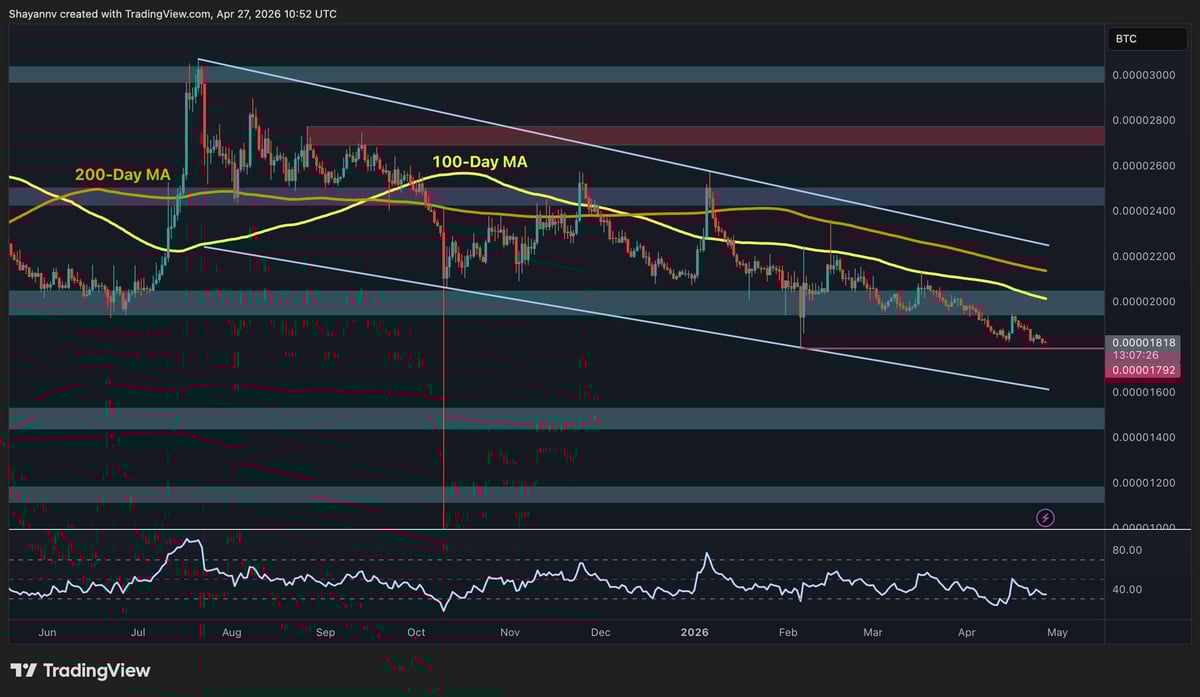
Ripple Price Analysis: XRP Finally Shows Bullish Momentum Signs After Weeks of Consolidation
CryptoNewsNet·2026/04/27 21:18
Solana Draws $31.8M Inflows as Analysts Eye Triangle Breakout and $500 Long-Term Target
CryptoNewsNet·2026/04/27 21:18
Flash
01:36
SCAM market capitalization now reported at 13.03 million USD, with a 24.37% increase in the past hourForesight News report: According to GMGN market data, the market capitalization of SCAM is currently 13.03 million US dollars, with a 24.37% increase over the past hour.Foresight News narrative note: Musk has repeatedly called OpenAI CEO Sam Altman "Scam Altman" publicly on X, accusing him of turning OpenAI from a non-profit charitable project into a for-profit company, concealing conflicts of interest, and lying while testifying before Congress.
01:28
Japan's Finance Minister stated that authorities are prepared to take necessary actions against forex market volatility at any time, a move seen as a warning to speculators just hours before the Bank of Japan announces its policy decision."I have repeatedly mentioned that we will take decisive action when necessary," Finance Minister Shunichi Katayama said on Tuesday. When asked whether the government would remain vigilant during Japan's upcoming Golden Week holiday, she added: "We are prepared to respond around the clock." The Bank of Japan is expected to announce its latest interest rate decision in a few hours, with markets widely anticipating no change; the voting result will be a focus, as the market is assessing the possibility of a rate hike in June. Statements made by Governor Kazuo Ueda at the post-decision press conference will also be closely watched. According to overnight swap market pricing, the probability of a rate hike on Tuesday is less than 3%, while the chance of a June hike has risen to 65%. The US dollar/Japanese yen USD/JPY is currently trading around 159.5, near the level at which authorities intervened in the FX market in 2024.
01:19
BTC faces critical battle at $77,000! Institutions and whales are frantically buying, will the Iranian oil "traffic jam" ignite a major market shift?1. Market Direction: BTC hits high levels then pulls back, but institutions are “buying when others sell”. The market is fierce: Yesterday, Bitcoin briefly touched the $79,000+ ceiling, then quickly dropped into the $77,000 range, currently priced at $77,308. Logic behind buying at lower levels: It’s like a flash discount—when prices fall, big players rush in. Institutional net demand growth has reached its highest level since the end of 2025, with buyers fiercely resisting the selling wave. Even Colombia’s largest pension fund is eager to join the action, indicating major players are using market swings to shake off short-term followers, demonstrating strong long-term confidence. 2. Macro Analysis: Iran’s oil inventories in crisis, geopolitical tensions become a “powder keg”. The energy death spiral: Under U.S. sanctions, Iran’s oil exports hit a wall, causing severe inventory backlog—even forcing officials to store oil in containers and abandoned tanks. Overflow effect: Extreme supply chain disruptions are essentially depleting safe-haven sentiment. Each geopolitical tremor sends crypto market volatility soaring. For traders, it’s not just about numbers anymore—it’s about watching for macro risks that could explode at any moment. 3. Track Treasure Hunt: PRL surges against the trend, funds turning to “hard assets”. Safe haven effect: While the main market stagnates, PRL soars 45.04% against the trend. Backed by a certain exchange and the AI narrative, it has become a magnet for risk-averse capital. Momentum spotlight: BLY (+26.08%) and LUNC (+21.45%) also stand out in unsettled times, showing that plenty of aggressive capital is still hunting for opportunity. Main player signals: CHZ trading volume exploded by 8 times in an instant. Volume leads price—this is a clear signal of large-scale accumulation by major players. 4. Trading Mindset: How to protect yourself during high volatility? 2% death red line: Forget belief, focus on risk management. Loss per trade must never exceed 2% of total capital. Practical strategy: Set your stop-loss first, then calculate how many tokens to buy—not just spending your remaining balance in one go. Key defense zones: Watch closely the “order wall” of $86.8 million in ETH and the $77,000 threshold in BTC. These are the last lines of defense—if they fail, it’s time to retreat. Cash is king: Keep at least 50% of your capital ready. Until the main market recovers $79,069 (average institutional entry price), observe more and act less, only participate in short-term trades on abnormal movers. Risk warning: Geopolitical situation is unpredictable, institutions buying in doesn’t mean they won’t shake out weak hands. Always use stop-loss orders; don’t be the one left holding the bag.