
Trump's Pressure for Lower Rates Puts Fed's Autonomy to the Test
- The Fed plans a 25-basis-point rate cut to 3.75–4.00%, addressing persistent inflation and labor market strains amid delayed economic data from the government shutdown. - Analysts highlight shifting Fed priorities toward weakening employment trends, while Trump pressures for faster cuts to offset tariffs and vetted five potential Powell successors. - Major banks like Goldman Sachs and JPMorgan face mixed outlooks, with rising M&A fees contrasting concerns over sustaining growth amid geopolitical and tari
The Federal Reserve is expected to lower interest rates by 25 basis points on Wednesday, adjusting the benchmark rate to a range of 3.75–4.00%. This move comes as inflation continues to exceed the Fed’s 2% goal and the labor market remains under pressure, according to a
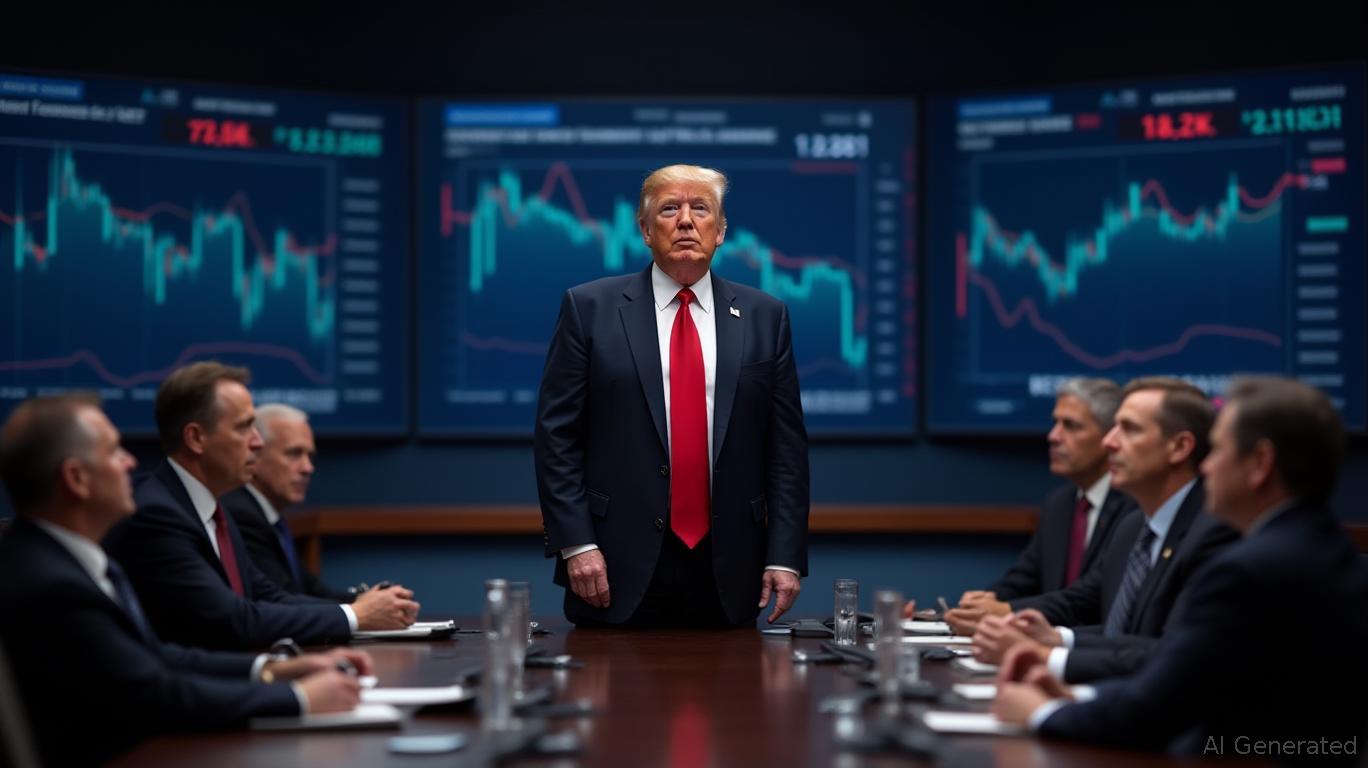
For leading financial institutions such as
Political factors are also at play. Former President Donald Trump has openly criticized Fed Chair Jerome Powell, urging quicker rate reductions to counteract the impact of tariffs, and has started
The economic outlook remains uncertain. Although core CPI for September eased to 3%, inflation is still high, and
Market participants are paying close attention to the Fed’s upcoming
Disclaimer: The content of this article solely reflects the author's opinion and does not represent the platform in any capacity. This article is not intended to serve as a reference for making investment decisions.
You may also like
The Growing Influence of Artificial Intelligence on Universities and Preparing Tomorrow’s Workforce
- AI integration in higher education drives academic program expansion, with 2.5% undergraduate and 3% graduate enrollment growth in 2024. - Universities invest $33.9B in generative AI to modernize curricula and partner with industries , addressing 58% workforce readiness gaps. - AI-driven tools boost student retention (52% adoption) and project 1.5% U.S. GDP growth by 2035 through automation in key sectors. - Challenges persist: 71% academic integrity concerns and 52% training gaps highlight risks in AI a

The CFTC-Sanctioned Transformation in Clean Energy Trading
- CFTC's 2025 withdrawal of carbon credit derivatives guidance creates regulatory uncertainty but sparks innovation in blockchain/AI solutions. - OBBBA's 2026 construction deadline accelerates solar/wind project cancellations while preserving tax credit transferability mechanisms. - Battery storage, geothermal, and hydrogen emerge as resilient sectors amid market shifts, supported by IRA tax credits and OZ modernization. - Investors prioritizing domestic supply chains and third-party certified projects gai
Aligning university programs with new technology sectors to pinpoint areas with strong investment potential
- Higher education is redefining curricula to align with AI, quantum computing, green energy, and biotech sectors, addressing urgent talent gaps. - Green energy apprenticeships (e.g., ACE Network) and biotech-AI hybrid training programs are scaling rapidly to meet workforce demands. - Quantum computing initiatives like Connecticut's $1B QuantumCT plan highlight trillion-dollar investment potential in talent development and infrastructure. - AI ethics integration and edtech platforms for real-time labor mar

Tight Range Emerges: PEPE Trades at $0.054368 With 4.1% Weekly Decline and Key Levels in Focus

Trending news
MoreCrypto prices
More





