
U.S. CPI Tops Expectations, Putting PPI in Focus: How Can Traders Approach Gold, Forex, and Stock Indices?
U.S. inflation pressures are once again in the financial market spotlight. According to the information provided, the Consumer Price Index (CPI) rose 0.4% month over month in October, exceeding the market forecast of 0.3%. Core CPI, which excludes food and energy, increased 0.3%, also above the expected 0.2%.
Hotter-than-expected inflation could prompt markets to reassess the Federal Reserve’s interest rate path, influencing the U.S. dollar, Treasury yields, gold, and U.S. equities. For CFD traders, the next key event to watch is the upcoming release of the U.S. Producer Price Index (PPI).
Whether PPI reinforces signs of persistent inflation—and how far the figures deviate from market expectations—will be key considerations when assessing short-term CFD price action.
Why Does Above-Forecast CPI Matter for CFD Markets?
CPI measures changes in consumer prices. When the data exceeds expectations, markets typically reprice the monetary policy outlook, potentially scaling back expectations for rate cuts or increasing the likelihood of interest rates staying elevated. However, a single upside CPI surprise does not necessarily mean the Fed will raise rates. Employment, economic growth, and other inflation indicators also need to be considered.
The main transmission channels for CFD markets include:
-
Forex CFDs: Higher U.S. interest rate expectations could support the dollar, affecting currency pairs such as EUR/USD, GBP/USD, and USD/JPY.
-
Gold CFDs: A stronger dollar and rising real yields typically increase the opportunity cost of holding gold, although safe-haven demand may offset some of that pressure.
-
Stock index CFDs: Higher interest rates can weigh on valuations, making technology-heavy indices particularly important to watch.
-
Crude oil CFDs: Both the dollar and demand expectations influence oil prices, but supply policies, inventories, and geopolitical developments are equally important.
CFD traders should therefore look beyond the headline inflation figures and assess whether interest rate expectations actually shift after the release.
PPI Preview: What Matters Beyond the Headline Figure?
According to the schedule cited in the original material, the U.S. October PPI report is scheduled for release on November 13 at 9:30 p.m. Taiwan time (UTC+8). The actual release time should be confirmed against the Bureau of Labor Statistics (BLS) announcement.
PPI measures changes in the prices of goods and services at the producer level, helping markets assess business cost pressures. However, whether those costs are passed on to consumers depends on demand, companies’ pricing power, and profit margins. PPI and CPI should not be viewed as having a one-to-one relationship.
CFD traders can focus on four key areas:
1. The gap between actual and expected figures
Markets react to the degree of surprise. Even if PPI continues to rise sharply, a below-forecast reading could trigger a price reaction that differs from what the headline alone might suggest.
2. Core PPI and services prices
Price changes excluding food and energy can help reveal whether inflation pressures are broad-based and persistent.
3. Revisions to previous data
A moderate current-month reading does not necessarily mean the broader trend is cooling. A substantial upward revision to earlier figures could still lead to a hawkish market interpretation.
4. The combined response of the dollar and Treasury yields
If the dollar and yields move in the same direction after the release, it can provide a clearer indication of how markets are interpreting the interest rate outlook.
Three PPI Scenarios: How Might CFD Markets React?
The following is general scenario analysis, not a definitive price forecast. Actual market moves will depend on prior pricing, positioning, and other news.
| PPI outcome |
Potential market interpretation |
What CFD traders should watch |
| Above expectations |
Inflation appears more persistent, strengthening expectations that rates will remain elevated |
The dollar may strengthen, while gold and stock indices could face pressure. Watch for confirmed breaks below support |
| Broadly in line with expectations |
Limited new information for the policy outlook, shifting attention to details and revisions |
Range-bound trading or false breakouts may occur. Avoid chasing only the initial price move |
| Below expectations |
Easing cost pressures may reduce concerns about restrictive monetary policy |
The dollar may weaken, while gold and stock indices could find support. Reactions may diverge if the data also raises growth concerns |
Gold CFDs: Watch the Dollar, Real Yields, and Key Price Levels
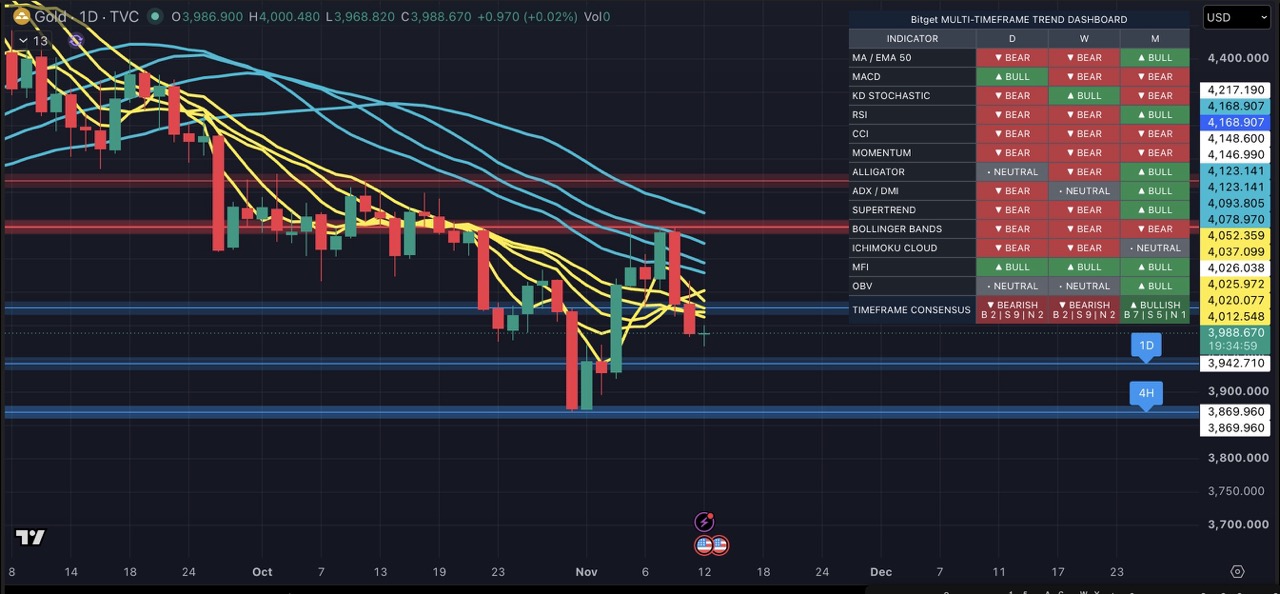
If PPI runs hot and both the dollar and real yields rise, gold could face short-term pressure. If the data cools, gold may benefit from lower interest rate expectations.
Before trading, consider marking the previous session’s high and low, along with recent consolidation ranges. After the release, assess whether prices can hold beyond breakout levels rather than treating a brief move through support or resistance as confirmation of a trend.
Forex CFDs: Assess Dollar Direction, Then Compare Currency Pair Strength
Dollar-related currency pairs offer a direct way to observe the impact of PPI, but they may not react uniformly. For example, USD/JPY is also influenced by Bank of Japan policy and safe-haven flows, while EUR/USD requires consideration of the European interest rate outlook.
CFD traders should avoid building multiple positions that appear different but effectively represent the same directional bet on the dollar, creating excessive risk concentration.
Stock Index CFDs: Consider Growth Expectations Alongside Rate Sensitivity
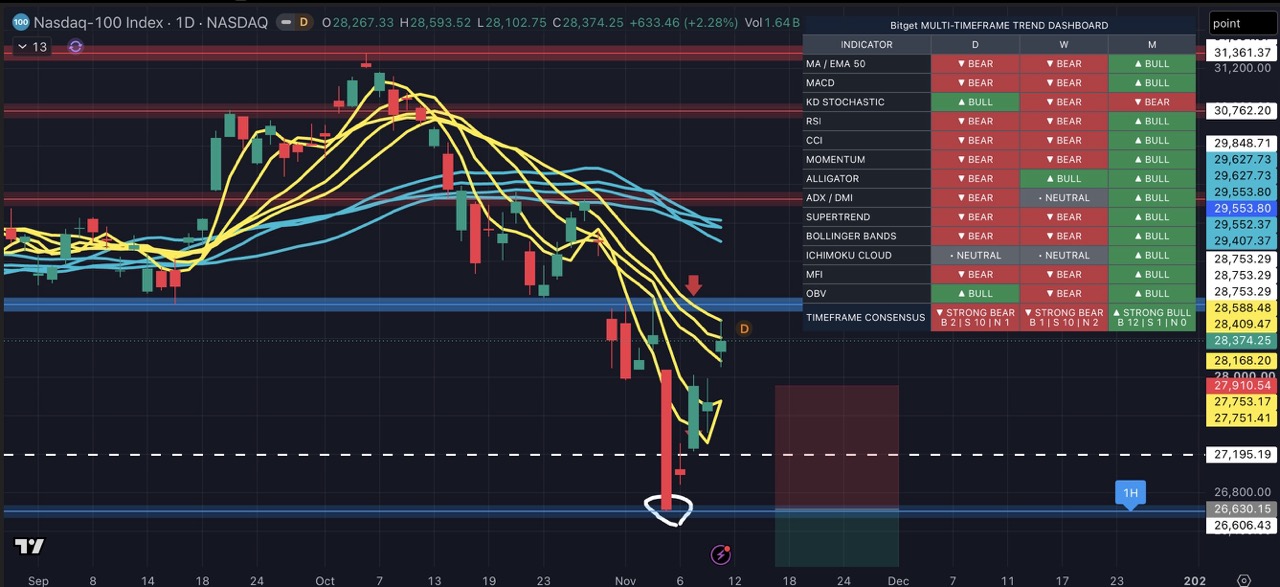
An above-forecast PPI reading could weigh on equity valuations through higher yields, while a below-forecast reading may provide support. However, stock indices may not rise if weaker data is interpreted as a sign of deteriorating demand.
When monitoring CFDs linked to indices such as the Nasdaq-100 and SP 500, consider Treasury yields and premarket price action to assess whether markets are primarily responding to changes in inflation or risks to growth.
As Data Releases Amplify Volatility, Risk Management Comes First in CFD Trading
CFDs offer the flexibility to trade both rising and falling markets, but leverage also magnifies losses. Around major economic releases, wider spreads, slippage, and rapid reversals can cause actual execution outcomes to differ from the original plan.
Before trading, consider the following preparations:
-
Confirm the release time and market consensus rather than relying on outdated information.
-
Size positions according to the loss you can tolerate, not simply the amount of leverage available.
-
Define exit conditions in advance and understand that standard stop-loss orders do not guarantee execution at the specified price.
-
Review margin requirements and holding costs, leaving sufficient room for unexpected volatility.
-
There is no need to chase the first move. Waiting for spreads and price action to stabilize before reassessing is also an option.
Follow PPI-Driven Market Moves and Explore CFD Trading on Bitget
The PPI release could trigger repricing across gold, forex, and stock indices. For CFD traders, the priority is not to predict a single number correctly, but to develop scenarios, confirm the market’s response, and maintain strict risk controls.
Want to participate in global market moves? Visit Bitget to explore the CFD products and trading conditions available in your region. Once you have confirmed your eligibility and understood the leverage and fees involved, start trading CFDs according to your own trading plan.
All trading education provided by Bitget is for educational purposes only and should not be considered financial advice. The strategies and examples shared are for reference only and may not reflect actual market conditions. CFD trading involves significant risk, including the potential loss of capital. Past performance does not guarantee future results. Please conduct thorough research and ensure that you understand the risks involved. Bitget is not responsible for any trading decisions made by users.


- Why Does Above-Forecast CPI Matter for CFD Markets?
- PPI Preview: What Matters Beyond the Headline Figure?
- Three PPI Scenarios: How Might CFD Markets React?
- As Data Releases Amplify Volatility, Risk Management Comes First in CFD Trading
- Follow PPI-Driven Market Moves and Explore CFD Trading on Bitget