
A Rare U.S. Stock Market Signal Emerges: Heavy Selling in Mega-Cap Tech Is Rewriting the Market Narrative
When the S&P 500 falls sharply by around 1.2% in a single session, the immediate assumption is usually that the market is broadly selling off. This time, however, the market displayed an unusually sharp divergence: advancing stocks outnumbered declining stocks by 173 issues.
In other words, although the index closed lower, most S&P 500 constituents actually ended the day in positive territory.
Using the criteria of an S&P 500 decline of more than 1% while advancers outnumber decliners by more than 150 stocks, this was only the second occurrence since 1999. Such a rare market structure deserves close attention from traders following U.S. equities, stock indices, and CFDs.
The key question, however, is this: Does this signal an imminent rebound, or is it merely a temporary divergence before a larger wave of volatility?
A Falling Index Does Not Mean Every Stock Is Falling
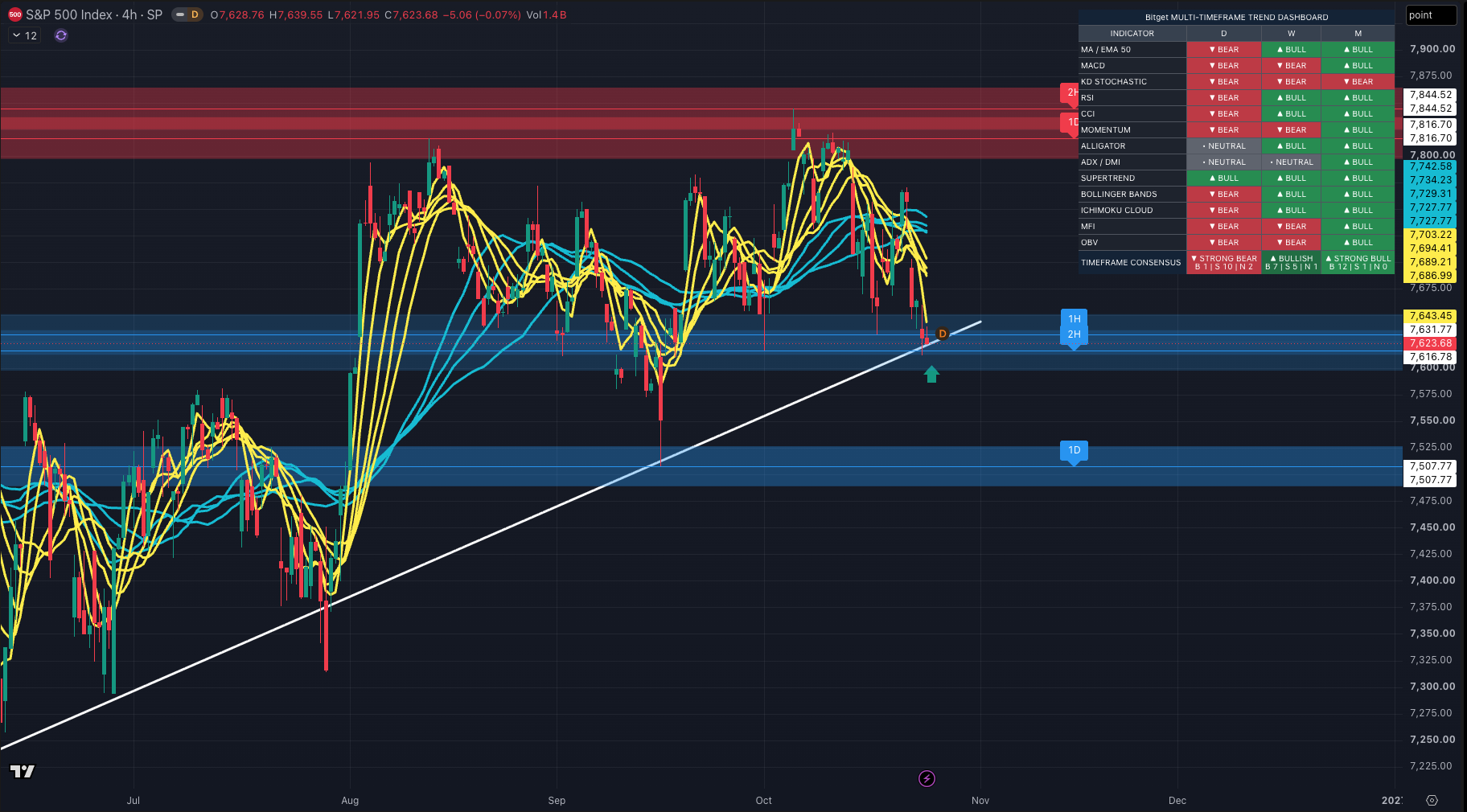
The core reason for this divergence lies in the S&P 500’s market-cap-weighted structure.
The larger a company’s market capitalization, the greater its impact on the index. As a result, when mega-cap technology stocks come under meaningful selling pressure, they can drag the overall index lower even if most stocks in the market are rising.
The latest decline was driven primarily by selling in large-cap technology names. At the same time, capital did not exit the equity market entirely. Instead, it rotated into areas such as:
-
Business services stocks
-
Regional banks
-
Transportation stocks
-
Other industry groups with lower index weightings
This helps explain why investors saw the headline of a falling index while market breadth indicators remained relatively constructive.
For traders, this offers an important reminder: watching index direction alone may not be enough to identify where capital is truly flowing.
AI Themes Face Pressure as Growth Trades Are Repriced
For some time, AI-related themes, mega-cap technology stocks, upward earnings revisions, and price momentum have been major drivers of U.S. equity gains. Recently, however, these previously dominant trades have come under pressure.
Investors are moving away from growth stocks, companies with continued earnings-estimate upgrades, and high-momentum names. AI-related trades have been particularly affected, while stocks linked to AI development constraints and data-center power demand have also faced selling pressure.
This does not necessarily mean that the long-term AI trend has ended. However, markets are clearly reassessing several key questions:
1. Can AI capital expenditure generate sufficient profits?
2. Have high valuations in major technology companies already priced in too much optimism?
3. Could investment in power, chips, and data centers create supply or cost bottlenecks for AI infrastructure?
4. When risk appetite weakens, are highly valued growth stocks more likely to face position reductions?
As markets shift from “chasing growth” to “examining valuations and execution,” volatility in mega-cap technology names is likely to have a more direct impact on major indices such as the S&P 500 and Nasdaq.
Not One Bearish Catalyst, but Multiple Risks Converging
The latest selling pressure does not appear to have been triggered by a single negative event. Instead, it looks more like the result of several market risks converging at the same time.
Key sources of pressure include:
-
Concerns over Meta’s AI strategy
-
Rising French government bond yields
-
Higher oil prices
-
Valuation and position-adjustment pressure in large technology stocks
-
A relatively muted market response following earnings releases
This type of environment tends to increase market volatility and makes investors question whether positive news has already been priced in.
This is particularly relevant during earnings season. Markets do not simply assess whether companies beat expectations; they also focus on whether management can provide guidance strong enough to support future growth. When investor expectations are elevated, even solid earnings results may not be enough to drive share prices higher.
Historical Precedent: A Next-Day Rebound Does Not Mean Selling Is Over
According to historical data, the last similar occurrence took place on January 27, 2025.
At that time, the S&P 500 rebounded by approximately 0.9% the following day. However, three of the next five trading sessions still ended lower. The lesson is important: improving market breadth may signal sector rotation, but it does not necessarily mean that overall market risk has fully disappeared.
When most stocks rise while the index falls, the market may be sending two contrasting signals:
-
On one hand, capital is not leaving equities altogether; it is rotating among sectors.
-
On the other hand, selling pressure in heavyweight stocks may persist and keep broader market volatility elevated.
For that reason, interpreting this pattern directly as a “buy-the-dip” signal may be overly optimistic.
Citi’s View: Raising Exposure Still Carries Elevated Risk
Although Citi continues to favor large-cap and growth companies with strong balance sheets, strategist Stuart Kaiser remains cautious.
He believes the market is facing visible pressure from position adjustments. In addition, recent earnings-season reactions suggest that companies must clear a higher-than-expected bar to restore investor confidence.
For traders, this means the focus should not be solely on how far the market has fallen. It is also important to monitor the following signals:
-
Whether mega-cap technology stocks can stabilize and regain market leadership
-
Whether S&P 500 market breadth can continue to improve
-
Whether the Nasdaq and S&P 500 show further technical breakdowns
-
Whether yields, oil prices, and the U.S. dollar continue to pressure risk assets
-
Whether earnings results and corporate guidance can once again support market valuations
In a high-volatility environment, markets can rebound sharply—but they can also retest lows after a rebound. Rather than rushing to predict a single direction, traders may be better served by maintaining a clear trading plan, disciplined stop-loss rules, and robust risk management.
Conclusion: Understanding the Tug-of-War Between Mega-Caps and Market Breadth
This rare signal—where the S&P 500 declines while most of its constituents rise—does not simply reflect a battle between bulls and bears. It points to an ongoing redistribution of capital within the market.
Selling in mega-cap technology stocks can be sufficient to pull a market-cap-weighted index lower. At the same time, strength in lower-weighted groups such as financials, transportation, and business services suggests that risk appetite has not disappeared entirely. This kind of divergence often makes trading more challenging and highlights the need for index traders to monitor macroeconomic data, sector rotation, and the performance of heavyweight stocks.
Looking to capture U.S. stock index volatility and potential opportunities in both rising and falling markets? Explore stock index CFDs on Bitget CFD, follow key markets such as the S&P 500 and Nasdaq, and position your trades flexibly according to your own strategy.
All trading education provided by Bitget is for educational purposes only and should not be considered financial advice. The strategies and examples shared are for reference only and may not reflect actual market conditions. CFD trading involves significant risk, including the potential loss of capital. Past performance does not guarantee future results. Please conduct thorough research and ensure that you understand the risks involved. Bitget is not responsible for any trading decisions made by users.


- A Falling Index Does Not Mean Every Stock Is Falling
- AI Themes Face Pressure as Growth Trades Are Repriced
- Not One Bearish Catalyst, but Multiple Risks Converging
- Historical Precedent: A Next-Day Rebound Does Not Mean Selling Is Over
- Citi’s View: Raising Exposure Still Carries Elevated Risk
- Conclusion: Understanding the Tug-of-War Between Mega-Caps and Market Breadth