

Hawkish FOMC Minutes: A 50-Basis-Point December Hike Remains Conditional as Markets Watch Dollar Rate Differentials, Gold’s Real-Yield Exposure, and Tech Valuations
I. Weekly Market Overview
This week’s source material shifts the focus from employment and inflation data to the Federal Reserve’s policy response. According to the supplied report, although the FOMC left interest rates unchanged in October, “almost all” participants believed that further rate increases over the coming months could remain appropriate if inflation and the labor market evolved in line with the baseline outlook.
Two participants suggested that, if subsequent inflation data proved unfavorable, the next meeting might warrant consideration of a rate increase larger than 25 basis points. This makes more aggressive tightening a risk worth monitoring. However, it does not establish a 50-basis-point December hike as the base case, nor does it mean the FOMC has reached a decision.
For CFD markets, support for the dollar depends on the U.S. interest-rate path relative to other economies. Gold requires attention to both real yields and safe-haven demand, while U.S. equities face a combined test of valuations, financing costs, and returns on AI investment.
The key trading question is not simply whether the language is hawkish, but how much additional tightening it implies relative to what markets have already priced in.
II. Key Market Themes
1. A Pause Is Not a Pivot, but Policy Direction Is Not the Next Meeting’s Decision
| Item |
Details in the Source Material |
Key Interpretation |
| October meeting decision |
The target rate range was held at 3.75%–4.00% at the October 27–28 meeting |
A pause may mean waiting for more information, not necessarily the end of tightening |
| Differing positions |
Lisa Cook and Beth Hammack favored a 25-basis-point hike |
Individual positions do not represent committee consensus |
| Future policy direction |
“Almost all” participants believed further hikes could remain appropriate if the baseline outlook materialized |
This is a conditional policy assessment |
| A larger rate increase |
Two participants suggested that unfavorable inflation developments might require a hike exceeding 25 basis points |
This cannot be read as majority support for a 50-basis-point December hike |
The minutes reflect discussions at the time of the meeting, not necessarily officials’ latest assessments when the minutes are released. Data published afterward may also alter the policy path.
In addition, “participants” include regional Federal Reserve Bank presidents who do not hold a vote that year. Participant counts therefore cannot be directly translated into the next meeting’s voting outcome. Broad agreement on further tightening does not necessarily imply agreement on timing or magnitude.
Instruments to watch: DXY, US02Y, US10Y, EURUSD, USDJPY
2. A 50-Basis-Point December Hike: Watch the Data Conditions and What Is Already Priced In
The source material does not provide verifiable, up-to-date probabilities implied by interest-rate futures. Last week’s probability figures should therefore not be carried forward, nor should a larger hike be assumed to have become the consensus expectation.
Four areas warrant attention:
-
Core CPI and core PCE: Whether inflation pressure persists or broadens across more categories.
-
Employment and wages: Whether labor demand and wage growth remain firm, rather than focusing only on one month’s job gains.
-
Inflation expectations: Whether household surveys, business surveys, and market-based measures rise together. Market-based measures can also be affected by liquidity and risk premiums.
-
Interest-rate futures: Whether markets assign greater weight to a larger hike, and whether short-term yields confirm that repricing.
“Higher rates for longer,” “a 25-basis-point hike,” and “a 50-basis-point hike” are distinct policy paths and should not be conflated.
Even a hawkish decision may trigger profit-taking if it has already been fully priced in. Conversely, a hike of only 25 basis points could still represent a tightening surprise if markets had previously expected rates to remain unchanged.
Instruments to watch: DXY, US02Y, XAUUSD, NAS100
3. The Dollar Hinges on Relative Rate Differentials; Gold on Real Rates and Safe-Haven Demand
Dollar: Hawkish Policy Does Not Guarantee a Sustained One-Way Rally
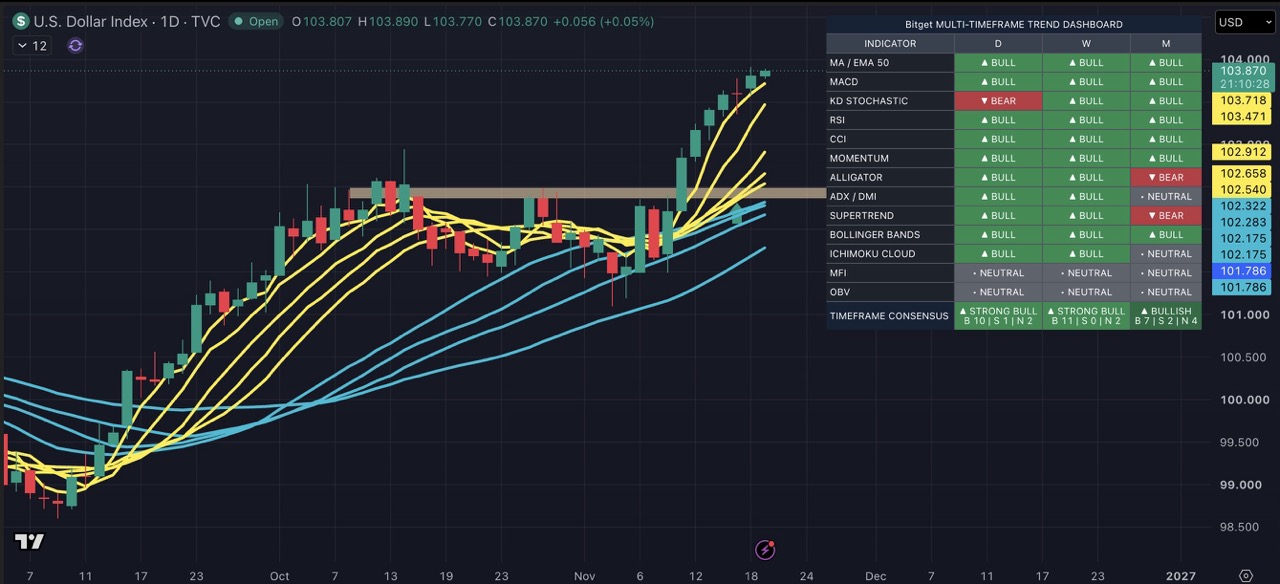
The dollar is generally more likely to find support when U.S. interest-rate expectations rise relative to those of other major economies. However, its rate advantage may not widen if other central banks also turn hawkish or if U.S. growth expectations weaken.
-
EURUSD / GBPUSD: Monitor differences in policy paths and growth prospects between the euro area and the U.S., and between the U.K. and the U.S.
-
USDJPY: Beyond U.S.–Japan rate differentials, watch Bank of Japan signals, currency intervention, and the risk of carry-trade unwinds.
-
DXY: If hawkish policy news fails to produce further dollar gains, assess whether it was already priced in rather than immediately concluding that the trend has reversed.
Gold: Higher Nominal Yields Do Not Necessarily Mean Higher Real Yields
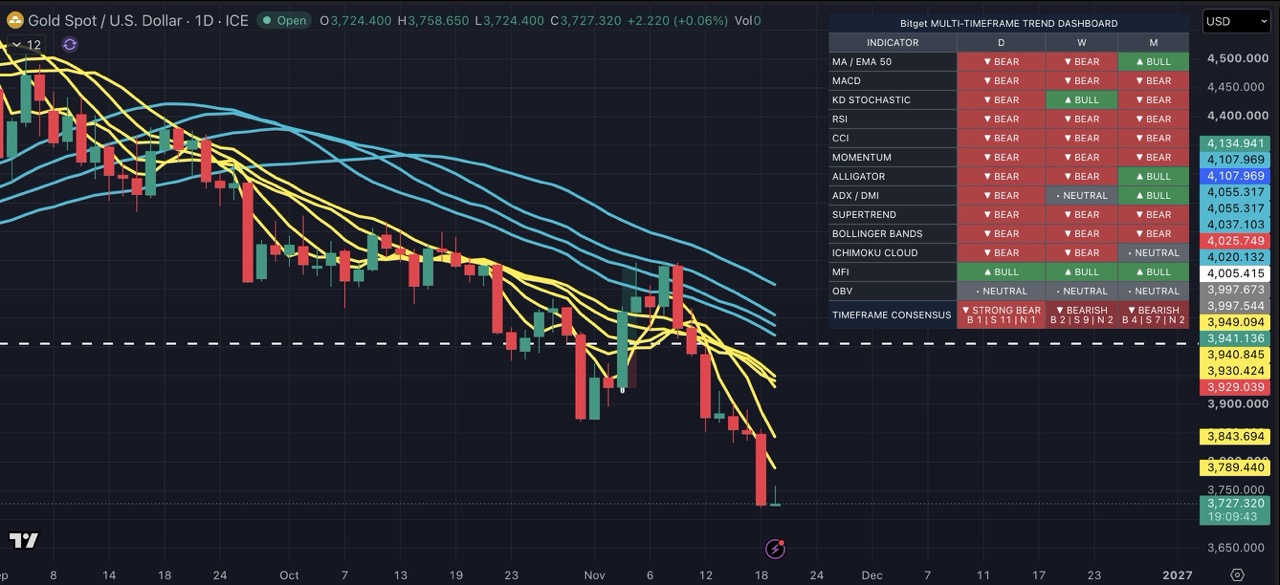
Gold pays no interest, so higher real rates typically increase the opportunity cost of holding it. A stronger dollar also often creates pressure. However, nominal yields and inflation expectations can change simultaneously, meaning the direction of U.S. Treasury yields alone is not enough to assess gold’s outlook.
If tightening expectations trigger financial-market stress, safe-haven demand may offset some of the negative impact. The dollar and gold could also rise together.
This week’s material does not include current gold prices or chart data. Last week’s levels, including $4,100 and the 4,140–4,210 zone, should therefore not automatically be treated as valid support and resistance this week. These levels should be reassessed using the latest swing highs and lows, pre-event trading ranges, and daily closes.
Instruments to watch: DXY, EURUSD, GBPUSD, USDJPY, XAUUSD; monitor real yields as a supporting indicator.
4. The AI Investment Boom: Growth Momentum Alongside Cost and Financing Risks
The source material indicates that officials are monitoring the effects of AI-related demand on inflation and financial stability. However, AI’s impact on prices is not one-directional.
| Area |
Potential Impact |
What to Watch |
| Near-term investment demand |
Greater demand for data centers, chips, electricity, and construction could push up certain costs |
Equipment supply, power constraints, construction costs |
| Medium- to long-term productivity |
Effective deployment could reduce unit costs |
Whether efficiency gains translate into profits and cash flow |
| Financing structure |
High rates could magnify the burden of debt and committed spending |
Debt levels, maturity profiles, leases, and other payment commitments |
| Investment returns |
Valuations could come under pressure if monetization lags spending |
Capital expenditure, free cash flow, earnings guidance |
For technology stocks, increased AI spending may support suppliers’ revenue while reducing the free cash flow of companies making those investments. The entire value chain should not be treated as a single directional trade.
-
NAS100: Relatively sensitive to real rates, technology valuations, and returns on AI investment.
-
US500: Monitor whether earnings growth broadens beyond technology, alongside market breadth.
-
US30: Track whether industrial, financial, and domestic-demand businesses can absorb financing and input costs.
Instruments to watch: NAS100, US500, US30, US10Y
III. Trading Framework for Major CFD Assets
| Instrument |
Potential Support Factors |
Main Risks / Confirmation Indicators |
| DXY |
Wider U.S. rate differentials, hawkish policy repricing |
Positive news already priced in; monitor short-term yields and policy paths abroad |
| EURUSD / GBPUSD |
Reduced dollar-bullish expectations, relatively tighter local policy |
A widening U.S. rate advantage, weaker local growth |
| USDJPY |
Wider U.S.–Japan rate differentials, carry demand |
A hawkish Bank of Japan shift, intervention, and deleveraging |
| XAUUSD |
Lower real rates, a weaker dollar, safe-haven demand |
Rising real rates; technical zones need to be rebuilt using current price action |
| NAS100 |
Resilient technology earnings, improved AI monetization, easing rate pressure |
Valuation compression, excessive capital expenditure, cash-flow pressure |
| US500 / US30 |
Economic resilience, broader earnings growth |
Financing-cost pressure, weaker margins, and deteriorating market breadth |
This is conditional analysis, not a record of this week’s actual price performance. Trading symbols and available products vary by platform.
IV. What to Watch in the Week Ahead
1. Verify official minutes and recent remarks: Distinguish between views expressed at the meeting, comments made after the minutes were released, and formal policy decisions.
2. Follow the official data calendar: Confirm release dates for inflation, employment, and consumption data rather than assuming all relevant indicators will be published next week.
3. Track changes in policy pricing: When using FedWatch or interest-rate futures, record the meeting date, data capture time, and target rate range. Avoid directly comparing or adding probabilities from different timestamps.
4. Check cross-asset confirmation: A simultaneous rise in the dollar and short-term yields is more consistent with a tightening trade. If gold and the dollar rise together, investigate safe-haven drivers.
5. Validate technology fundamentals: Monitor AI capital expenditure, free cash flow, and financing arrangements—not just revenue growth.
6. Review holiday trading schedules: The following week includes the U.S. Thanksgiving holiday. Check platform closures, early closes, and quoting hours, as reduced liquidity may widen spreads and increase slippage.
From a positioning perspective, going long the dollar while shorting gold and technology stocks may concentrate exposure to the same “tighter-than-expected policy” risk. Trading different instruments does not, by itself, provide adequate diversification.
Around data releases, maintain a margin buffer and assess overnight financing charges and gap risk. Standard stop-loss orders do not guarantee execution at the specified price.
V. Weekly Takeaways
The central message of this week’s material is that a pause in rate hikes does not necessarily signal a policy pivot. However, conditional discussions by two participants are also insufficient to establish that the Fed will raise rates by 50 basis points in December.
Three short-term scenarios provide a useful framework:
| Scenario |
Potential Cross-Asset Response |
Key Confirmation Indicators |
| Inflation runs hot and markets price in further tightening |
The dollar could benefit; gold and richly valued technology stocks could face pressure if real rates also rise |
Interest-rate futures, US02Y, real yields |
| Data do not deteriorate further and the risk of a larger hike recedes |
Rate-differential support for the dollar could weaken, while gold and equity indices may gain some breathing room |
Whether policy pricing eases and earnings remain resilient |
| Tightening concerns develop into growth or financial stress |
Equities could come under pressure; U.S. Treasuries, the dollar, and gold may benefit from safe-haven demand |
Credit spreads, liquidity, and market breadth |
These responses are not fixed rules. Outcomes still depend on whether the news exceeds expectations and how crowded market positioning has become.
💡 More important than “how much the Fed hikes” is “how much the market expected.” First assess the data, policy pricing, and price reaction, then size leverage and correlated positions according to the losses you can afford to bear.
All trading education provided by Bitget is for educational purposes only and should not be considered financial advice. The strategies and examples shared are for reference only and may not reflect actual market conditions. CFD trading involves significant risk, including the potential loss of capital. Past performance does not guarantee future results. Please conduct thorough research and ensure that you understand the risks involved. Bitget is not responsible for any trading decisions made by users.


- I. Weekly Market Overview
- II. Key Market Themes
- III. Trading Framework for Major CFD Assets
- IV. What to Watch in the Week Ahead
- V. Weekly Takeaways
 NVIDIA Q3 Earnings Beat, but the Post-Huang Era Is Unpriced2026-11-19 | 5m
 Part 4 | How to Place Your First Options Trade2026-11-19 | 5m
 Part 3 | How to Read an Options Chain2026-11-19 | 5m