
Gold surges as US Treasury faces a credit crisis

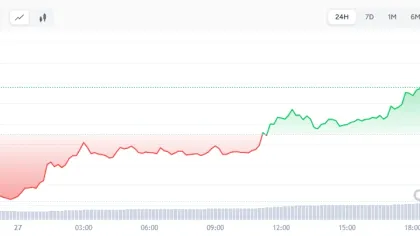
In recent days, gold prices have surged significantly. On the 26th, the domestic gold price once again broke through the 1,000 yuan/gram mark, and internationally, London spot gold soared to $4,696.80/ounce, up 16.6% since early August. Many people are puzzled: what is behind this sudden surge in gold prices?
The answer lies not in the gold market, but in the U.S. Treasury market. On August 18, the yield on 30-year U.S. Treasury bonds jumped to 5.33%, the highest in 19 years, while the 10-year yield spiked to 4.748%.
What are U.S. Treasuries? They are known as "the world's safest asset." When Treasury yields rise, it means the market is selling off long-term Treasuries. Investors are no longer willing to take on the United States' long-term IOUs, so capital naturally flows toward assets like gold that are not constrained by sovereign credit, pushing up gold prices. So, the root of this gold rally is essentially a decline in confidence in the U.S. dollar.
So, why are U.S. Treasuries being sold off? Why has the market lost confidence in them?
In the 2026 fiscal year, the full-year federal fiscal deficit is expected to reach $2.1 trillion, with the deficit accounting for as much as 6% of GDP—an extremely high historical level. Even more alarming is interest expenditure: in the first ten months of the fiscal year, it increased 14% year-on-year, with spending exceeding $963 billion, surpassing defense spending for the same period.
The more you borrow, the higher the interest; the higher the interest, the bigger the deficit; the bigger the deficit, the more you have to issue debt. This is a death spiral. Seeing the pressure mounting, Treasury Secretary Bessent took action—increasing long-term Treasury buybacks from $2 billion each time to $4 billion, and even signaling that $1 trillion from the Treasury account could be deployed to support the market.
But the market only responded for less than a day. Yields fell first, then rebounded, quickly returning to high levels. The dollar fell by almost 1% that week, while gold gained even more momentum.
Why? Because Bessent's move is essentially "borrowing short to pay long"—using money raised from short-term bonds to buy back long-term bonds. The total debt amount hasn't decreased; the long-term pressure has just been shifted to the short term. As one analyst described it: "It's like rearranging chairs on the deck of a sinking ship"—if the ship is going to sink, it will sink anyway.
With Bessent unable to fix the problem, the pressure has shifted to Federal Reserve Chair Walsh. The whole market is watching for Walsh's statement at the Jackson Hole Symposium this Friday. After all, while the Treasury can adjust the maturity of its debt, only the Federal Reserve can truly anchor inflation expectations. But this is a tough dilemma: if the Fed accommodates fiscal pressure, inflation will surge again; if it sticks to fighting inflation, the government's interest burden will keep rising—either way, it's a difficult choice.
For ordinary investors, $40 trillion in U.S. Treasuries may seem distant, but their effects ripple out into prices of stocks, precious metals, and more around the world. This crisis serves as a wake-up call for everyone: in this world, there is no truly "risk-free asset." After decades of "borrowing new to pay old," the drama around U.S. Treasuries is far from over.
Editor: Zhu Henan

Disclaimer: The content of this article solely reflects the author's opinion and does not represent the platform in any capacity. This article is not intended to serve as a reference for making investment decisions.
You may also like
SOL Jumps 13% Amid Charles Schwab Trading Plans and Solana Deflationary Vote
Pi Network News: Smart Contracts Go Live on Testnet, Will Pi Price Breakout?

Euro extends losses below 1.1650 with all eyes on Jackson Hole
British Pound: Limited downside inside tight corridor against US Dollar – UOB
Crypto prices
More


