
Wall Street Veteran Analyst David Woo: AI Trading Driven by 'Fear of Missing Out', Shorting Is Difficult Now

Wall Street veteran analyst David Woo warns that the AI valuation logic contains fundamental flaws, and if the narrative breaks, it will deliver a catastrophic blow to the US stock market.
As Nvidia's earnings spark a fresh round of scrutiny over the AI frenzy, David Woo stated bluntly on a podcast that the core risk of today's AI trading is not a single quarter's performance but the underlying assumptions supporting the entire AI valuation system. He believes that AI narratives—from Anthropic's sky-high $2 trillion valuation target to tech giants’ aggressive capital spending—are increasingly driven by "fear of missing out" rather than economic logic.
Woo made it clear that he had previously shorted AI-related assets, but is currently staying on the sidelines, waiting for more clarity—stressing that this is only a tactical retreat and not a change in his overall view. He warned that if the AI narrative collapses, it will be "catastrophic" for the US stock market—nearly every investor in the S&P 500 would face massive hidden exposure.
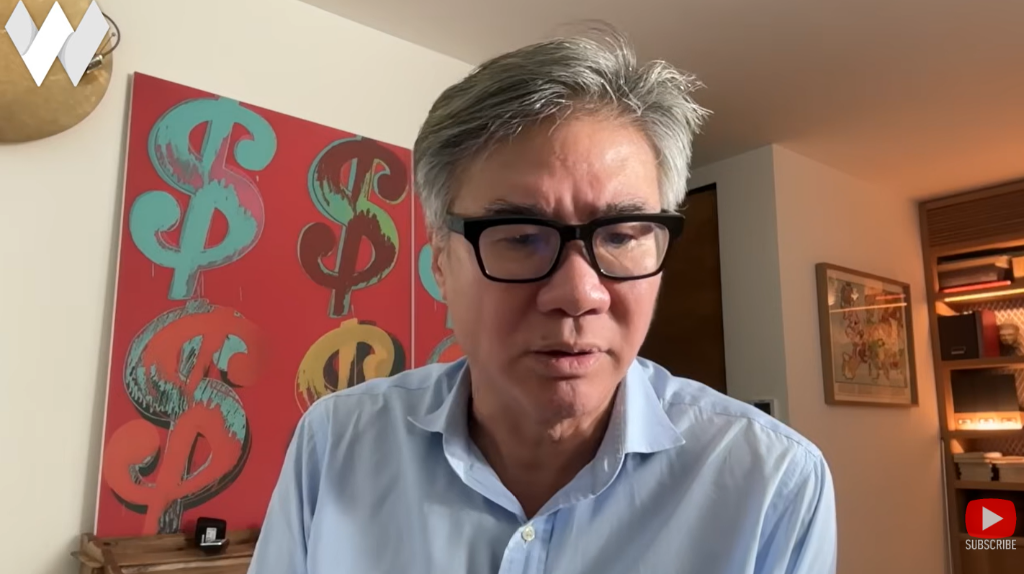
The "winner-takes-all" assumption underpins sky-high valuations—but the logic is questionable
Woo directly targets Anthropic’s roughly $2 trillion valuation goal, arguing that this number is based on an assumption of "winner takes all," which he believes is fundamentally unjustified.
“People’s mindset is, oh, we’re about to see the next Google or Apple,” he said:
“But one thing I am very certain of is that, no matter how great Anthropic is, it could never dominate its field the way Google did with Search.”
He further pointed out that the nature of AI is commoditization and erosion—not building a moat. “If you can protect something with a natural moat, that’s one thing. But I don’t see any natural moats here. What I see is erosion, commoditization, and any attempt to protect it would be an expensive waste.”
In his view, even Google Search—a business once thought unassailable—will become a "big loser" in the era of AI. And it’s not because Google Search is bad, but because traditional search is now dwarfed by AI’s capabilities.
Capital spending driven by fear; accounting practices questioned
Woo questions the nature of this round of tech giants' AI capital expenditures, believing that the driving force behind it is "fear of missing out" rather than careful economic calculation.
“The whole capital expenditure story is driven by fear—it’s the fear of falling behind, not by economic rationale,” he said:
“What I know about fear is this: fear has no logic, no economic logic, and there’s no upper bound to fear.”
He cites Microsoft as an example, expressing strong skepticism toward its accounting treatment. According to Woo, Microsoft's depreciation figure last quarter was zero because the company decided to extend the depreciation period of some AI data center projects from 15 years to 25 years. Woo believes this is completely unreasonable—60% of a data center’s costs come from chips, and these chips only last at most two to three years in practice, so depreciation should be taken quickly. “To me, it all feels like accounting games,” he said.
Earnings numbers are significantly "beautified", actual growth is much lower than it appears
Beyond accounting, Woo also criticized the quality of overall tech company earnings this results season, arguing that the strong numbers are largely shielded by one-off factors.
He estimates that once you exclude the investment gains Amazon and Google reaped from their holdings in Anthropic, the overall earnings growth rate of big tech would drop by about 30%. And if you further discount the benefits from tariff waivers, growth would drop another 30%. “The earnings numbers are essentially dressed up for the market,” he said plainly.
Shorting window blocked, but risks cannot be ignored
Despite his view that AI valuations are fundamentally flawed, Woo admits that it is extremely difficult to short this sector right now.
He points out that the Trump administration is adept at spinning narratives whenever needed, and the market seems to firmly believe it. Meanwhile, companies like Nvidia are deeply embedded in the political and commercial fabric of the AI ecosystem—for example, Nvidia is said to have provided $125 billion in guarantees to OpenAI, and SpaceX was reported to have announced an exclusive partnership with Nvidia to build the next generation of data centers—backed by $250 billion in commitments. “How do you fight against that?” he asks.
However, he emphasized that this waiting posture is tactical, not a surrender of his short thesis. If cracks appear in the AI narrative, because almost every investor holding the S&P 500 carries massive hidden exposure to AI-related assets, any shock will quickly spread throughout the US stock market. “That would be a disaster,” he said.
Disclaimer: The content of this article solely reflects the author's opinion and does not represent the platform in any capacity. This article is not intended to serve as a reference for making investment decisions.
You may also like
After five consecutive months of gains, European stocks face a stress test! Can ASML-led semiconductor equipment and HALO themes break the "September curse"?
European stock markets, after five consecutive months of gains, are about to enter one of their historically most challenging periods, while macroeconomic risks continue to accumulate. For the STOXX Europe 600 Index, September is usually the worst-performing month of the year, with the index averaging a 2.1% decline over the past five years.

‘Make tokens great again!’ — ENA hits yearly high after Ethena makes 4 changes
OneKey finds critical vulnerability in old Ledger Ethereum app, no user funds affected
SHIB Price Breakout Ends 11-Month Downtrend After Japan’s Nomura Approval
Crypto prices
More


