
Yen: Intervention is a cycle

Morning FX
Yesterday, just a month after the Japan-US joint intervention, USDJPY once again broke through 160 during the day, as if ridiculing the futility of the Japan-US actions.
But at the same time, the Bank of Japan moved quickly. Governor Ueda Kazuo said, “Monetary conditions remain accommodative, so we wish to continue raising rates,” while Policy Board Member Takata Hajime stated, “We need to be more flexible regarding rate hikes; the next increase may not necessarily be 0.25 percentage points,” another classic episode of “hike rates to prop up the currency.”
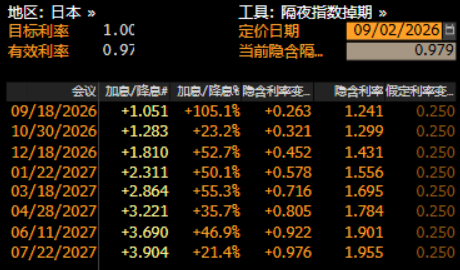
Chart: Market pricing in 4 × 25bp BOJ rate hikes over the next year
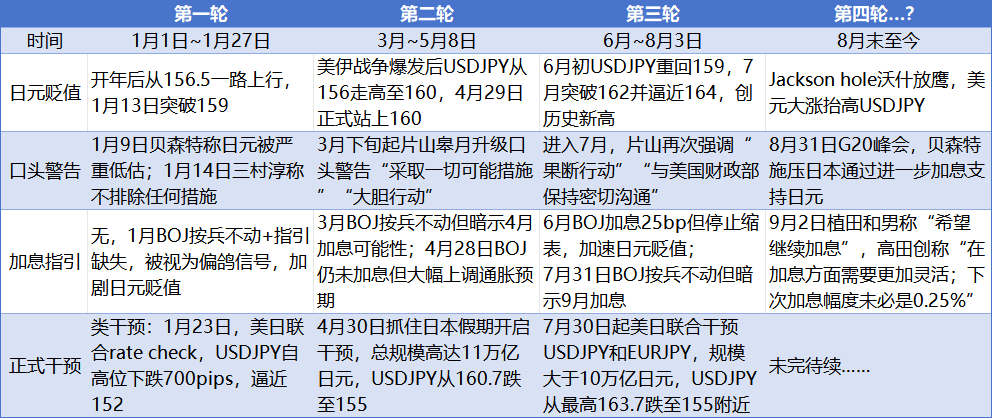
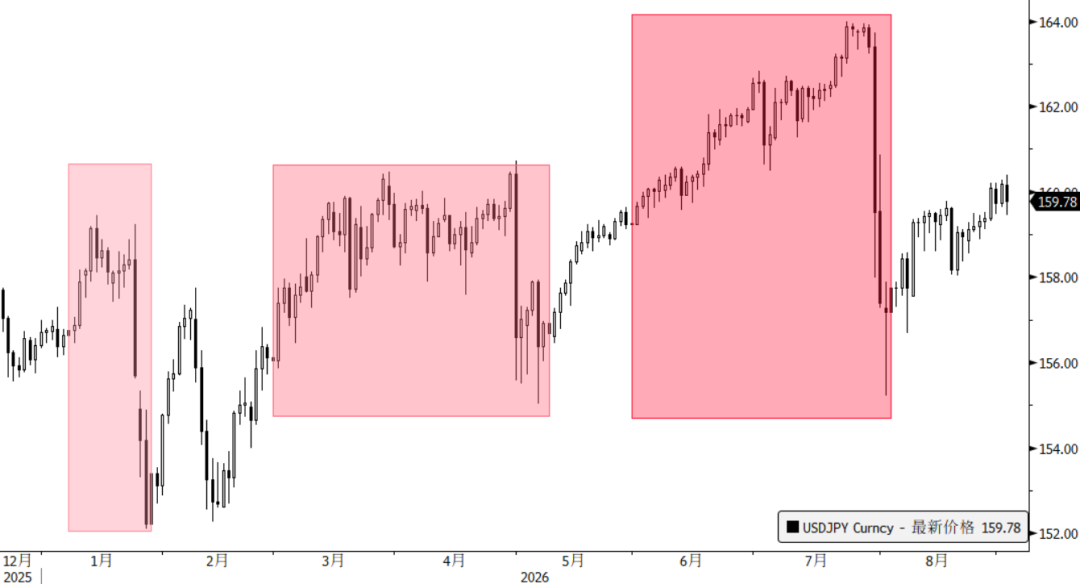
In fact, looking back at the yen’s exchange rate this year, we see that the “cycle” of yen intervention has played out three times: depreciation → verbal warning → rate-hike guidance → official intervention → further depreciation. Each time, official moves are worn down by market forces, but every time, officials are forced to act again, hoping to buy time with their actions.
Now, however, expectations for Japanese rate hikes are unprecedentedly high and long-term bond yields are surging—is this time different? Will the yen repeat the same pattern? In my view, in the short term, rising BOJ rate hike expectations may indeed support the yen, but fundamentally the yen’s endogenous strength remains weak. As for external factors, especially the Fed and its “Schrödinger’s rate hike,”there remains two-way uncertainty.
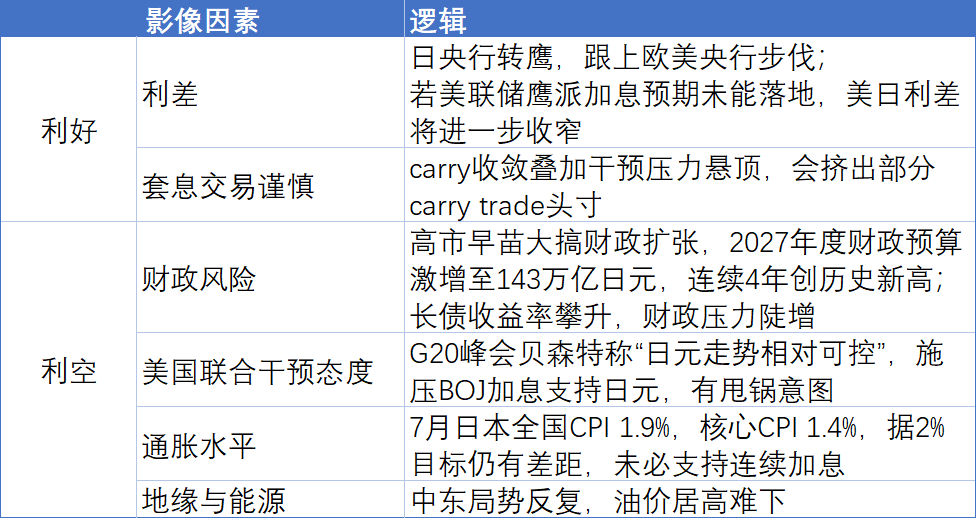
If Non-farm Payroll and CPI fall short of expectations, or if Trump triggers another US-Iran “TACO,” causing Fed rate hike expectations to quickly fall for this year, then with BOJ rate hike expectations and favorable external circumstances combined, a yen short squeeze is not impossible. For instance, last night when Williams said “the inflation trend is slowly downward,” USDJPY flash crashed. But after panic passes, USDJPY may still crawl back up gradually.
Conversely, if the Fed hikes rates more than once this year, or if international oil prices continue to rise, and USDJPY climbs back above 160 or even attempts previous highs, when will intervention occur?
Levels: 163–165 are pressure zones for intervention.
Timing: The current timing is close to the late-July joint intervention, so in the short term, rate guidance may temporarily suppress USDJPY; after October, intervention risk rises.
Trigger for another joint intervention: If US long-term bond yields keep rising, and the Japanese Ministry of Finance needs to sell US treasuries to intervene in FX and increase pressure on US bonds, the US may still cooperate with Japan, helping each other to address respective issues.
Disclaimer: The content of this article solely reflects the author's opinion and does not represent the platform in any capacity. This article is not intended to serve as a reference for making investment decisions.
You may also like
Today's Fear & Greed Index rises to 65, indicating the market is in a 'greed' state.
CFTC files motion to dismiss CME's motion regarding perpetual contracts lawsuit
At a sensitive moment of the "bond market storm," the market focuses on today's 30-year Japanese government bond auction.
Japan’s 30-year government bond yield has risen to 4.155%, approaching a historic high. The 30-year bond auction scheduled for Thursday is drawing significant attention. Analysts generally expect a weak result and warn that if the auction goes poorly, it could put reverse pressure on US Treasuries, prompting a repricing of the global fixed income market and potentially becoming a new trigger for rising global borrowing costs.
2-Yr Benchmark Govt Yields - Germany vs Other Nations
Crypto prices
More


