
Non-farm payroll night saw a shocking reversal: layoffs continued in July, but surged unexpectedly in August! Will the Fed’s September rate hike “sword” hang over us again?

Huitong Finance, September 4—— On Friday (September 4) at 20:30 (GMT+8), the U.S. Bureau of Labor Statistics released the August Non-Farm Payrolls report. The data showed that non-farm payrolls increased by 162,000, far exceeding the market expectation of about 55,000 to 56,000. The unemployment rate remained steady at 4.1%, in line with expectations. The private sector added 127,000 jobs, also significantly higher than expected; manufacturing rose by 16,000 jobs and average weekly hours rose to 34.4 hours. Employment data for the previous two months was revised up by a total of 55,000, with July changing from an initial decrease to a gain of 21,000.
On Friday (September 4) at 20:30 (GMT+8), the U.S. Bureau of Labor Statistics released the August Non-Farm Payrolls report. The data showed that non-farm payrolls increased by 162,000, far exceeding the market expectation of about 55,000 to 56,000. The unemployment rate remained steady at 4.1%, in line with expectations. The private sector added 127,000 jobs, also significantly higher than expected; manufacturing rose by 16,000 jobs and average weekly hours rose to 34.4 hours. Employment data for the previous two months was revised up by a total of 55,000, with July changing from an initial decrease to a gain of 21,000. 
Prior to the release, the market generally expected continued cooling in employment. July had seen an unexpected loss in jobs, combined with downward revisions to previous data. Institutional forecasts were mostly in the 40,000–80,000 range, with the most optimistic estimates at 80,000 to 125,000. Institutional accounts posted consensus forecasts before the release, while retail discussions focused on "sharp deterioration in employment" and "rising risk of recession." Rate futures had already partly priced in the possibility of a hold or rate cut in September. On the same day, Canada unexpectedly reported a decrease of 41,700 jobs in August, with the unemployment rate holding steady, but USD/CAD strengthened as the U.S. data dominated markets.
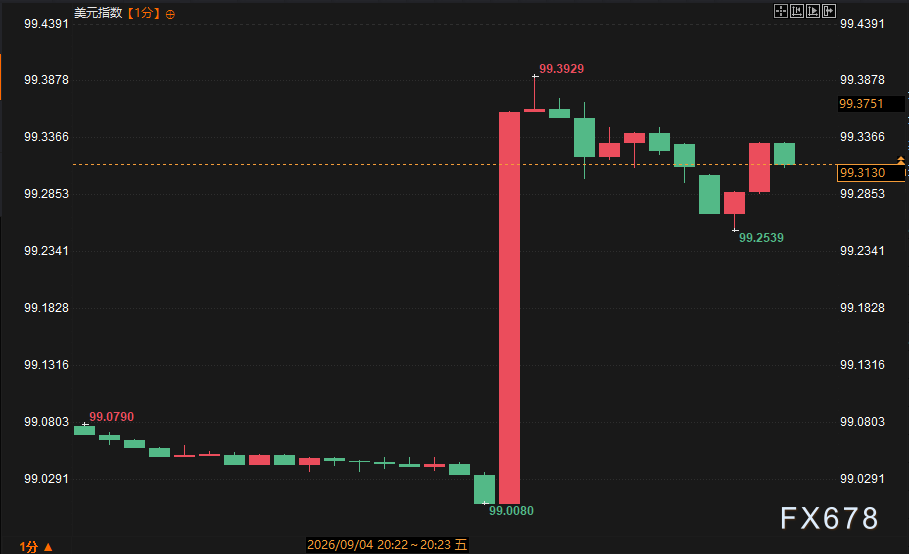
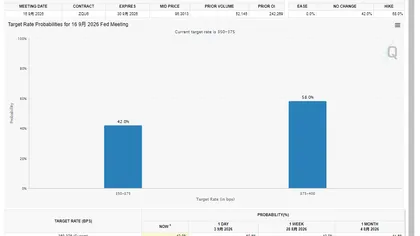
After the data release, the market repriced quickly. The US Dollar Index rose about 35 points in the short term, reaching as high as 99.35; 10-year Treasury yields widened gains, briefly approaching 4.79%; spot gold plunged over $70 from near $4,470, with an intraday drop of more than 2%, trading around the $4,383–4,390 range; US equity futures edged lower. Rate futures traders clearly increased bets on a Fed rate hike in September. 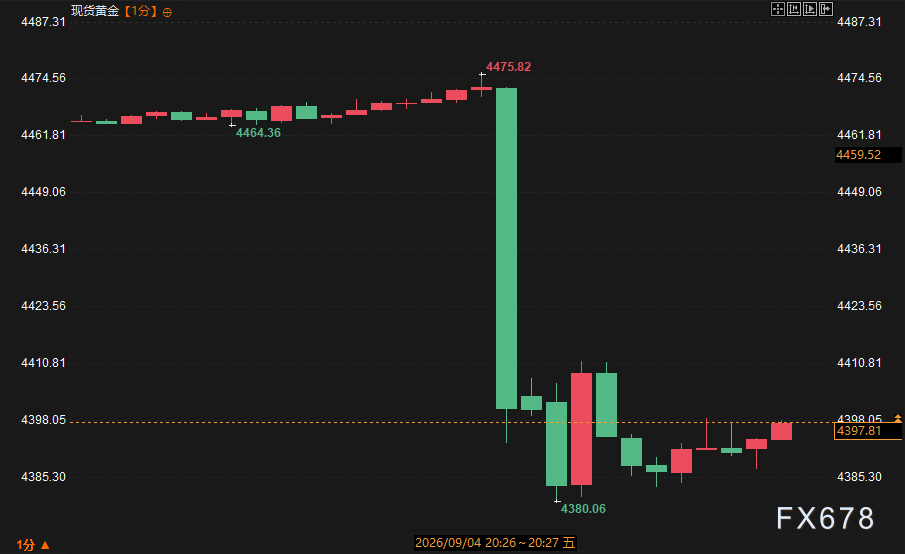
DeepLink Analysis
From a fundamental perspective, this report has completely reversed the previous narrative of a rapidly deteriorating labor market. Job growth far exceeded consensus, with both the private sector and manufacturing showing strength, and labor force participation picked up to 61.6%, alleviating concerns that last month’s drop in participation could have distorted the unemployment rate. The U-6 broad unemployment rate was recorded at 7.7%, indicating that underemployment remains under control. Compared historically, the average monthly job gains in recent months had been significantly lower; August’s 162,000 figure is not only above the 12-month average, but also notably higher than most institutional models. The upward revision to previous numbers further underscores the market's resilience.
Technical factors aligned closely with immediate market response. Gold tumbled through several round-number thresholds upon the release, reflecting the pressure on precious metals from rising risk-free rate expectations. The US Dollar Index and Treasury yields climbed in tandem, in line with the classic path of “strong jobs → higher policy rate expectations → stronger dollar and yields.” S&P 500 futures edged lower, showing equities’ caution as they recalibrate the rate outlook. Compared to similar strong Non-Farm Payrolls in history, this reaction was sharper, mainly due to overly bearish prior expectations, which were suddenly corrected.
Views shifted sharply. Before the data, institutions and retail investors mostly emphasized cooling jobs and more room for policy easing; after the release, institutions stressed that the actual data even exceeded the highest Wall Street forecasts. Retail discussions quickly shifted from “recession concerns” to “renewed Fed policy uncertainty” and “increased probability of a September rate hike.” Major institutions had previously underestimated, and the actual data completely crushed consensus—expectation deviations became the main driver of this round of volatility.
Canada’s weak employment data stood in stark contrast to the U.S. strength, but global fund flows remained dominated by the U.S. data, with USD/CAD jumping roughly 70 pips in the short term. Overall, the confirmation of fundamental resilience and instant technical repricing support each other—short-term shocks are due to expectation adjustments, and medium-term logic points to a labor market that is not as fragile as previously priced.
Trend Outlook
Strong jobs numbers have significantly reduced the urgency for a Fed rate cut in September, and the market’s anticipated policy path for the rest of the year needs to be recalibrated. Next week’s key inflation data will be the new focus; with jobs as the anchor, CPI readings will determine further rate expectations. On the technical front, US dollar and Treasury yields may remain under upward pressure, while gold and other rate-sensitive assets will be pressured in the short term; risk assets will become more sensitive to policy uncertainty. It is essential to watch for the continuity of job details and confirmation from inflation data; market volatility may revolve around policy expectation shifts.
Frequently Asked Questions
Q: Why did August Non-Farm Payrolls far exceed market expectations?
Actual job growth was 162,000, markedly above the 55,000 consensus, with especially strong contributions from the private sector and manufacturing, while previous numbers were revised higher. Institutions had previously leaned too far towards pessimism, magnifying the upside surprise.
Q: Why did gold plunge sharply after the data release?
Strong jobs data boosted expectations for the Fed to hold or hike, pushing up risk-free rates, weakening the appeal of gold. Spot gold immediately dropped over $70, with intraday losses exceeding 2%.
Q: What does a steady 4.1% unemployment rate mean?
The unemployment rate met expectations and did not rise, combined with a pickup in participation, indicating no significant deterioration in the job market. The rise in participation addresses earlier concerns about possible data distortion.
Q: What does this data mean for the Fed's September meeting?
It substantially weakens the urgency for a rate cut, while rate futures increased bets on a September hike. Ultimately, subsequent inflation data will determine the next step—job market resilience makes price stability a more intense policy focus.
Disclaimer: The content of this article solely reflects the author's opinion and does not represent the platform in any capacity. This article is not intended to serve as a reference for making investment decisions.
You may also like
Zcash jumps into crypto top 10 as ZEC surges, leveraged liquidations hit $36.6 million
Solana climbs above $103 as whale accumulation and ETF inflows support price rally
162,000 Nonfarm Payrolls Soar: Now All Eyes on CPI
Ripple CEO joins CFTC advisory panel, XRP surges as CLARITY Act gains momentum
Crypto prices
More


