
30-year government bonds at 5.82%! UK borrowing costs soar to highest since 1998, fiscal budget pressures surge

Britain’s long-term borrowing costs have risen to their highest levels in nearly thirty years, as the global bond sell-off is placing direct pressure on the UK’s public finances.
On Tuesday, the UK Debt Management Office (DMO) completed a £4 billion 30-year gilt issuance, with a pricing yield as high as 5.82%, marking the highest issuance rate since the DMO’s establishment in 1998. This figure not only signifies that Britain’s long-term borrowing costs have reached the highest point in thirty years, but also tightens the constraints for the upcoming fiscal budget.
Fund manager Gordon Shannon stated that the upward movement in UK gilt yields is directly linked to global market trends, but "the significant rise in domestic borrowing costs will undoubtedly compress the government’s policy space in next month’s budget."
Meanwhile, the yield on the 10-year UK gilt has risen to 5.2%, the highest among the Group of Seven (G7) nations. In a speech on Monday, UK Chancellor John Healey candidly admitted that Britain’s annual debt interest payments have soared to £110 billion, exceeding all major government expenditure items except healthcare, and pledged to ‘honestly face’ the necessity of controlling spending in the budget.
Issuance Attracts Strong Demand, High Yields Lure Investors
Despite market turbulence, the gilt issuance still saw active subscription from investors. According to early information sent to investors, the order book for this syndicated deal exceeded £85 billion in total, overwhelmingly oversubscribed compared to the issuance size.
Stephen Jones, Chief Investment Officer at Aegon Asset Management, commented: “It’s painful for some, but an opportunity for others. Investors consider the current UK gilt yields attractive enough to warrant an increased allocation.”
Jessica Pulay, CEO of the DMO, also remarked that the transaction was successfully completed amid a volatile market environment, "further demonstrating the sustained strength and depth of the UK gilt market, as well as robust support from market participants for the financing programme."
The DMO plans to issue a total of £250 billion in gilts this year to support the government’s spending plans.
Global Bond Sell-off Adds Momentum
The surge in UK borrowing costs is not an isolated event but a microcosm of persistent stress across the global bond markets.
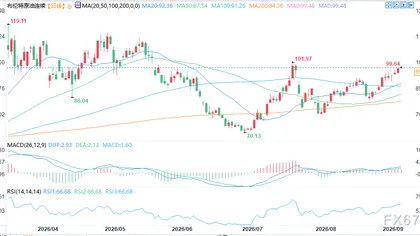
The main driver of this global bond sell-off is the sharp rise in energy prices following the outbreak of war in Iran—Brent crude oil prices have once again neared $100 per barrel, significantly dampening market expectations for major central bank interest rate cuts and delivering ongoing shocks to global growth and inflation prospects.
Long-dated yields in other major European economies also hit new highs on Tuesday: French 30-year government bond yields rose to 5.02%, a new high since September 2008; while German 30-year government bond yields climbed to 3.86%, the highest since 2011.
For the UK, market pricing shows traders expect the Bank of England (BoE) to raise rates by at least another 25 basis points this year. The hike is not expected to come at this month’s meeting, but investors widely anticipate the BoE will slow the pace of its gilt sales (quantitative tightening), as the operation has placed further upward pressure on long-term gilt yields.
Debt Interest Pressures Force Fiscal Consolidation
Skyrocketing borrowing costs are driving UK public finances into a more severe predicament. The UK’s annual debt interest payments of £110 billion have become the “second largest department” in the government budget—Chancellor John Healey used this metaphor in his Monday speech, noting that if debt interest were regarded as a government department, its scale would be second only to the Department of Health, and larger than the combined total of the Ministry of Defence, Home Office, and Ministry of Justice.
Since the onset of the COVID-19 pandemic, the UK’s long-term yields have been on a sustained upward trajectory. The energy price shock triggered by war in Iran and concerns over a global glut of debt supply have further accelerated this trend. The 30-year gilt’s pricing at 5.82% fixes this three-decade high into the coupon cost of new bonds, meaning that the fiscal burden for decades to come will increase as a result.
Against this backdrop, the upcoming fiscal budget is likely to face even more constrained policy space, making the government’s choices between expanding spending and fiscal consolidation all the more challenging.
Disclaimer: The content of this article solely reflects the author's opinion and does not represent the platform in any capacity. This article is not intended to serve as a reference for making investment decisions.
You may also like


Crypto prices
More


