
How Do Collateral Limits Work for Master and Sub-accounts on Bitget?
[Estimated reading time: 3 minutes]
This article explains the platform and user master/sub-account collateral limits, including their definition, applicable account types, affected scenarios, and interface prompts, helping you better manage your collateral usage on Bitget.
Scope of affected accounts
The platform and user master/sub-account collateral limits apply to all margin account types, including:
-
Isolated margin accounts
-
Cross margin accounts
-
Unified trading accounts
These limits are determined by factors such as:
-
Asset liquidity
-
Market depth
-
Platform-wide collateral and borrow volumes
Their purpose is to enhance risk control for collateralized borrowing.
What happens when the collateral limit is reached?
When the collateral amount of a specific asset reaches the platform and user master/sub-account collateral limits, and your trading account holds that asset, its usability will be limited as follows:
1. Isolated margin accounts
-
If borrowing to trade margin pairs related to that asset:
-
The asset will not count toward available margin
-
It cannot be used as collateral for borrowing
-
-
You will be unable to transfer in that asset
2. Cross margin accounts
-
If borrowing to trade on margin:
-
The asset will not count toward available margin
-
It cannot be used as collateral for borrowing
-
-
You will be unable to transfer in that asset
3. Unified trading accounts
-
During cross-mode margin, cross-mode Futures or isolated-mode futures
-
The asset will not count toward available margin
-
It cannot be used as collateral for borrowing or opening positions
-
-
When trading spot while your account has outstanding borrows or contracts occupying margin:
-
The asset will not count toward available margin
-
Trading may be unavailable due to insufficient available margin
-
-
When transferring out:
-
The asset will not count toward available margin
-
The maximum transferable amount will be reduced
-
Scenarios that remain unaffected
Even if the collateral amount of an asset reaches the limit, the following actions are not affected:
1. Isolated margin accounts
-
You can transfer out the asset normally
-
Margin trading in pairs unrelated to the limited asset is unaffected
-
Repayment of outstanding loans in that asset remains available
-
The asset continues to count toward effective equity
-
The maintenance margin ratio remains unaffected
-
The limit does not trigger forced liquidation
2. Cross margin accounts
-
You can transfer out the asset normally
-
Repayment of outstanding loans in that asset remains available
-
The asset continues to count toward effective equity
-
The maintenance margin ratio remains unaffected
-
The limit does not trigger forced liquidation
3. Unified trading accounts
-
You can transfer in the asset normally
-
Repayment of outstanding loans in that asset remains available
-
The asset continues to count toward effective equity
-
The maintenance margin ratio remains unaffected
-
The limit does not trigger forced liquidation
-
If the asset is not enabled as collateral, spot trading is unaffected
-
Closing positions in cross-margin and isolated-margin contracts is unaffected
How do I identify when the collateral limit is reached?
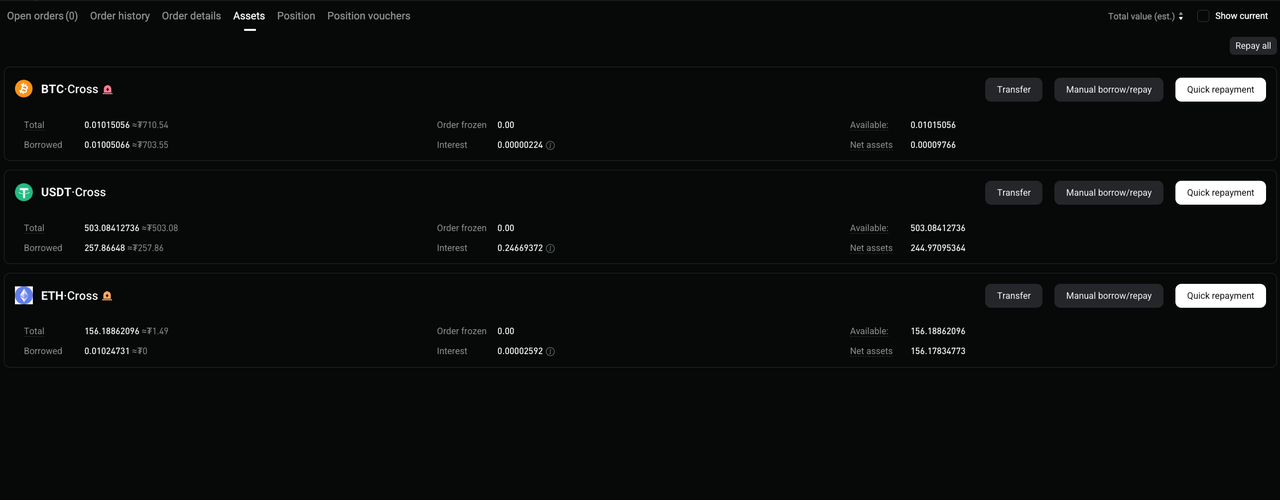
Bitget offers real-time visual indicators to help you monitor collateral usage:
-
Yellow warning indicator
-
Appears when the asset is approaching the collateral limit
-
Visible in the trading account asset list
-
Indicates a potential risk of hitting the limit
-
-
Red warning indicator
-
Appears when the asset reaches the collateral limit
-
Indicates that the asset:
-
Can no longer be counted in available margin
-
Cannot be used as margin for borrowing or derivatives trading
-
-
FAQs
1. What is the platform and user master/sub-account collateral limit?
It is a platform-level limit that restricts how much of a specific asset can be used as collateral across all accounts. Once the limit is reached, that asset can no longer be used as margin for new borrowing or position opening.
2. Does hitting the collateral limit mean I will be liquidated?
No. Reaching the collateral limit does not impact your maintenance margin ratio and will not trigger forced liquidation. The asset still counts toward effective margin for your existing positions.
3. Why can't I use certain assets as collateral in margin or derivatives trading?
If the asset has reached the collateral limit, it will not count toward available margin and cannot be used as collateral for borrowing or opening new positions. Transfers may also be restricted.
4. Can I still repay loans using the asset after the limit is reached?
Yes. Repaying outstanding loans in that asset remains available even after the collateral limit has been reached.
5. How do I know if an asset is approaching or has reached the collateral limit?
Bitget displays real-time warnings in your trading account asset list. A yellow indicator appears when the asset is nearing the limit. A red indicator indicates that the limit has been reached and the asset is no longer available as margin.
Join Bitget, the World's Leading Crypto Exchange and Web3 Company


