Weekly Market Outlook | U.S. PCE Takes Center Stage: Will Rate-Hike Expectations Heat Up Again?
This week, global markets will focus on the U.S. Personal Consumption Expenditures (PCE) Price Index. As a key inflation gauge monitored by the Federal Reserve, the report will test whether price pressures remain persistent and could reshape the outlook for the U.S. dollar, Treasuries, gold, and U.S. equities.
For CFD traders, the key is not simply whether inflation is high, but how the data compares with market expectations—and how that surprise could change the pricing of the rate-hike path.
The Fed’s Hawkish Signals Continue, With Differences Over the Size and Pace of Hikes
According to the reports provided, St. Louis Fed President Alberto Musalem believes the U.S. may need several interest-rate increases before spring 2027 to bring inflation back to 2% in a timely manner. He argues that the real policy rate needs to rise further, reflecting doubts about whether current policy is sufficiently restrictive to curb inflation.
By contrast, New York Fed President John Williams has taken a more measured stance. He downplayed the need for a single 50-basis-point increase in December, but did not rule out further rate hikes.
Their shared message is clear: The fight against inflation is not over. The difference lies in how quickly and how aggressively the Fed needs to tighten policy. Still, individual officials’ remarks do not represent a collective decision by the Federal Open Market Committee (FOMC). This week’s PCE report will be an important input as markets assess the policy outlook.
What to Watch in PCE: Monthly Core Inflation and the Breadth of Price Pressures
The report warrants attention in three key areas:
-
Month-over-month core PCE inflation: Excluding food and energy helps assess whether underlying price pressures are genuinely cooling, rather than relying solely on year-over-year figures influenced by base effects.
-
Year-over-year headline and core inflation: These readings show how far inflation remains from the 2% target and whether progress has stalled.
-
Component-level changes: Price increases concentrated in energy carry different policy implications from broad-based increases across goods and services.
The source material cites Musalem’s estimate that October headline and core PCE inflation could reach 3.8% and 3.2% year over year, respectively. These are his estimates, however, not market consensus forecasts—and certainly not published results. Before trading, compare the release with the latest consensus estimates and any revisions to prior readings.
Three Data Scenarios and Their Cross-Asset Implications
Scenario 1: PCE Comes in Above Expectations—Markets Could Price In More Tightening
If monthly core inflation exceeds expectations and price pressures are broad-based, markets may increase their bets on larger or more frequent rate hikes.
The U.S. dollar and short-dated Treasury yields could find support, while rate-sensitive technology and growth stocks could face valuation pressure. Gold may also come under near-term pressure from a stronger dollar and higher real yields. However, if safe-haven demand strengthens at the same time, its direction may be less straightforward.
Scenario 2: PCE Meets Expectations—The Focus Shifts to Details and Existing Pricing
An in-line reading does not mean markets will remain calm. Upward revisions to previous data or continued stickiness in core components could still prompt a hawkish interpretation.
Conversely, if elevated inflation is already fully priced in, the dollar’s advance could lose momentum and equities could stage a short-term rebound—even if inflation remains high. In this scenario, pay particular attention to whether the initial post-release move has follow-through.
Scenario 3: PCE Comes in Below Expectations—Tightening Concerns Could Temporarily Ease
If core inflation shows clear signs of cooling, markets may scale back expectations for aggressive rate hikes. The dollar and Treasury yields could come under pressure, potentially giving gold and U.S. equities some breathing room.
However, one month of data is not enough to confirm a policy pivot. If cooling inflation is accompanied by a marked slowdown in demand, growth concerns could still weigh on equities.
CFD Trading Watch: Track the Rates Reaction, Then Confirm Price Direction
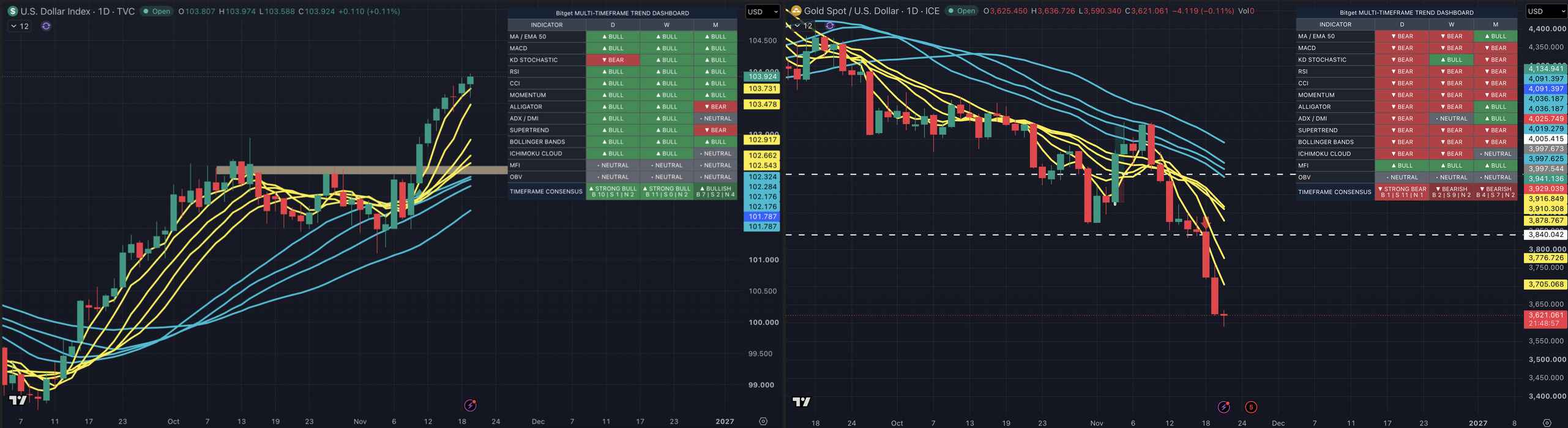
After the release, watch whether the U.S. two-year Treasury yield and the dollar move in the same direction, then cross-check the reaction in gold and U.S. equity indices. If signals diverge across markets, the initial move may reflect short-term position adjustments rather than an established trend.
From a risk-management perspective, major data releases can trigger wider spreads, slippage, and rapid reversals. Keep leverage and position sizes under control, define an acceptable loss in advance, and remember that stop-loss orders do not guarantee execution at the specified price.
This week’s central trading theme is whether PCE changes the market’s assessment of the Fed’s rate-hike pace—not simply whether the inflation figures rise or fall.
Follow the PCE Market Reaction and Plan Your Trades With Bitget CFD
Looking to turn macro analysis into a trading plan? Explore Bitget CFD trading to review the products available in your region, contract specifications, margin requirements, and trading costs. Plan long and short strategies around different data scenarios, with risk management in place before entering a trade.
This article provides market analysis and does not constitute personalized investment advice. CFDs are high-risk leveraged products that can result in substantial losses rapidly. Product availability and trading eligibility are subject to local regulations and platform announcements.
All trading education provided by Bitget is for educational purposes only and should not be considered financial advice. The strategies and examples shared are for reference only and may not reflect actual market conditions. CFD trading involves significant risk, including the potential loss of capital. Past performance does not guarantee future results. Please conduct thorough research and ensure that you understand the risks involved. Bitget is not responsible for any trading decisions made by users.


- The Fed’s Hawkish Signals Continue, With Differences Over the Size and Pace of Hikes
- What to Watch in PCE: Monthly Core Inflation and the Breadth of Price Pressures
- Three Data Scenarios and Their Cross-Asset Implications
- CFD Trading Watch: Track the Rates Reaction, Then Confirm Price Direction