
Bitcoin capital markets platform Avalon Labs burns 80M AVL, slashing circulating supply by 44%

Avalon Labs has burned 80 million AVL tokens, permanently removing them from circulation in a move that reduces the circulating supply by roughly 44%.
Announced on X on June 9, the tokens, worth an estimated $16 million, were mostly unclaimed airdrop allocations from a March 2024 campaign. Avalon framed the burn as the start of a “deflationary cycle” that aligns with long-term incentives.
Over the past year, more than 100,000 users have claimed $20 million in AVL through the airdrop. The company thanked its users for helping shape the ecosystem and said it remains focused on aligning incentives between the project and its community.
Token burns are designed to reduce supply, potentially increasing scarcity and price over time. In this case, market response was swift. AVL surged over 18% shortly after the announcement and ranked #1 in futures buys on Bybit.
Avalon Labs is a financial technology company that is building Bitcoin-backed on-chain capital markets. The platform has already disbursed more than $1.2 billion in overcollateralized BTC-backed loans. To extend this model to institutional clients, it recently obtained a $2 billion credit line from prominent Asian conglomerates.
In addition to lending, Avalon created USDa, the first Bitcoin-backed stablecoin, allowing users to unlock liquidity without selling their Bitcoin ( BTC ). Through its CeDeFi protocol, Avalon also offers yield-generating savings products.
Users can deposit FBTC, a 1:1 Bitcoin-pegged asset, and borrow Tether ( USDT ) at fixed rates, funds that are deployed into high-yield strategies via platforms like Ethena Labs ( ENA ). Avalon operates across 20+ public blockchains and 50+ isolated lending markets, with total value locked exceeding $1.1 billion, as per DefiLlama data .
The burn follows several major developments for Avalon Labs. On May 26, YZi Labs, formerly Binance Labs, announced an undisclosed investment in Avalon, boosting the project’s institutional backing.
And in February, the firm revealed it was exploring a Bitcoin-backed public debt fund under Securities and Exchange Commission oversight, a step that could bring more traditional investors into the crypto credit market.
Disclaimer: The content of this article solely reflects the author's opinion and does not represent the platform in any capacity. This article is not intended to serve as a reference for making investment decisions.
You may also like
A decade-long tug-of-war ends: "Crypto Market Structure Bill" sprints to the Senate
At the Blockchain Association Policy Summit, U.S. Senators Gillibrand and Lummis stated that the "Crypto Market Structure Bill" is expected to have its draft released by the end of this week, with revisions and hearings scheduled for next week. The bill aims to establish clear boundaries for digital assets by adopting a classification-based regulatory framework, clearly distinguishing between digital commodities and digital securities, and providing a pathway for exemptions for mature blockchains to ensure that regulation does not stifle technological progress. The bill also requires digital commodity trading platforms to register with the CFTC and establishes a joint advisory committee to prevent regulatory gaps or overlapping oversight. Summary generated by Mars AI. The accuracy and completeness of this summary, generated by the Mars AI model, is still being iteratively updated.

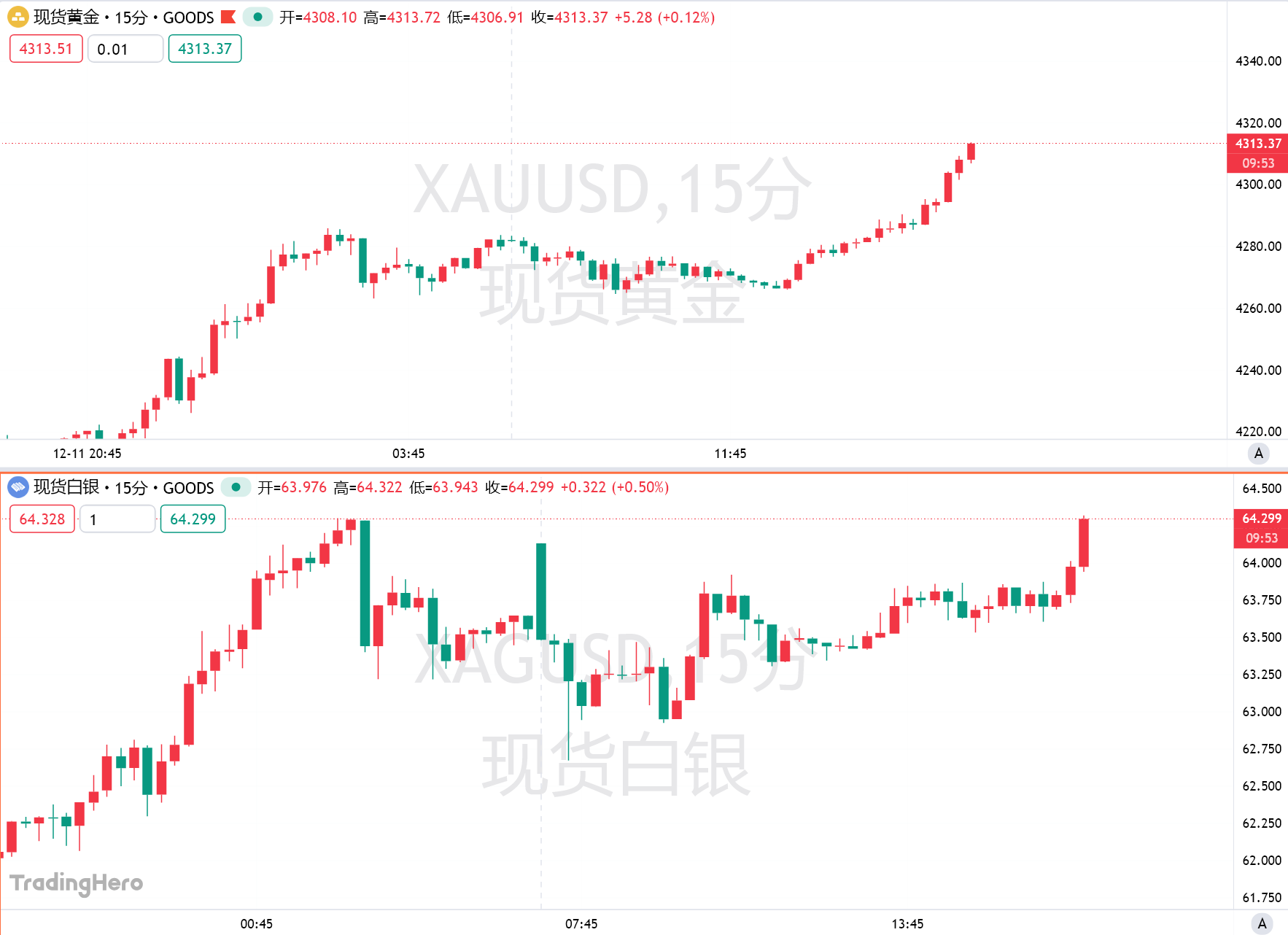
Gold surpasses the $4,310 mark—Is the "bull frenzy" returning?
Boosted by expectations of further easing from the Federal Reserve, gold has risen for four consecutive days. Technical indicators show strong bullish signals, but there remains one more hurdle before reaching a new all-time high.
Trend Research: Why Are We Still Bullish on ETH?
Against the backdrop of relatively accommodative expectations in both China and the US, which suppress asset downside volatility, and with extreme fear and capital sentiment not yet fully recovered, ETH remains in a favorable "buy zone."

Trending news
MoreCrypto prices
More





