
Hungary enforces strict crypto restrictions, including penalties for unlicensed exchange users

Quick Take Hungary’s new law makes using unlicensed crypto exchanges a felony punishable by up to five years in prison and up to eight years for operators. Some international platforms like Revolut and Bitstamp have suspended services, and critics say the rules go far beyond EU MiCA requirements.

Hungarian authorities have introduced new restrictions on cryptocurrency trading, creating a legal grey area for an estimated 500,000 Hungarians who own digital assets.
A law was passed through parliament on June 17. It has been enforced since July 1, criminalizing the use of unlicensed exchanges and unauthorized high-value crypto trades, defined as transactions above 50 million Hungarian forints ($146,000) and up to 500 million forints ($1.46 million). Violators face up to two years and five years in prison, respectively, under the updated criminal code. Service providers face even harsher punishment, as rule-breaking could attract as much as eight years in jail.
The new rules , which put the Hungarian National Bank in charge of policing the sector, require all crypto-asset service providers operating in Hungary to obtain a license from the central bank to continue operations legally.
Holding bitcoin or other cryptocurrencies remains legal. The Supervisory Authority for Regulated Activities has yet to publish application procedures, leaving domestic firms in limbo and global exchanges no path to compliance. Revolut and Bitstamp have already reportedly halted crypto services for Hungarian residents in response.
Regulators say the rules align with the EU’s Markets in Crypto-Assets framework, adding extra safeguards such as a mandatory “conversion-validation certificate” for each trade. Some industry members counter that the penalties—far harsher than those in MiCA—and the absence of any licensing window look designed to stamp out trading rather than regulate it.
Hungarian officials have not commented on a timetable for releasing licensing criteria.
Disclaimer: The content of this article solely reflects the author's opinion and does not represent the platform in any capacity. This article is not intended to serve as a reference for making investment decisions.
You may also like
Mars Morning News | The crypto market rebounds across the board, Bitcoin rises above $94,500; The "CLARITY Act" draft is expected to be released this week
The crypto market has fully rebounded, with bitcoin surpassing $94,500 and US crypto-related stocks rising across the board. The US Congress is advancing the CLARITY Act to regulate cryptocurrencies. The SEC chairman stated that many ICOs are not securities transactions. Whales are holding a large number of profitable ETH long positions. Summary generated by Mars AI. The accuracy and completeness of the content generated by the Mars AI model is still being iteratively updated.

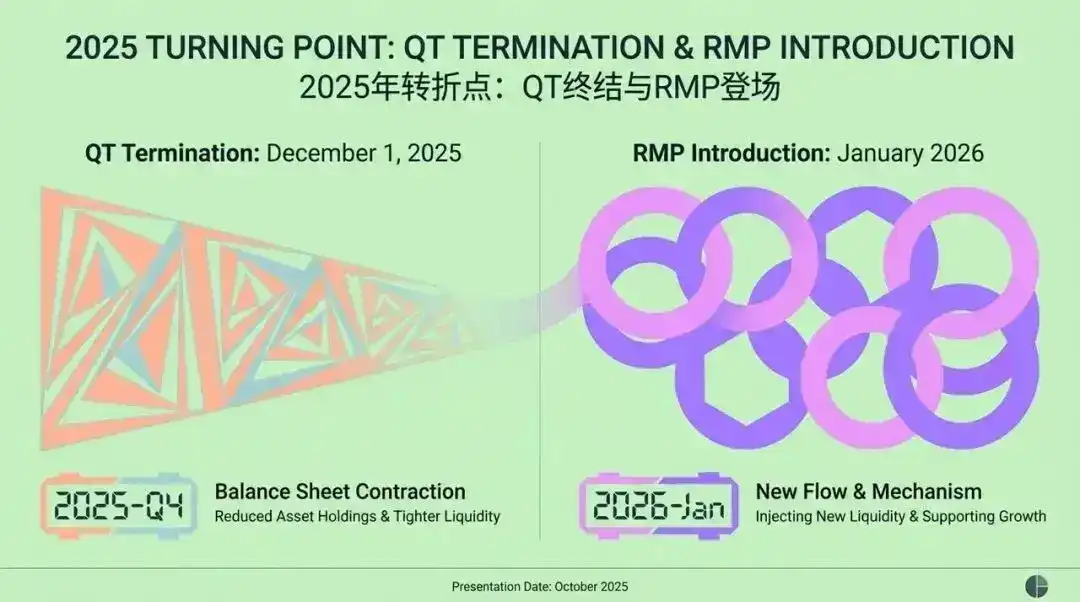
Federal Reserve’s Major Shift: From QT to RMP, How Will the Market Transform by 2026?
The article discusses the background, mechanism, and impact on financial markets of the Federal Reserve's introduction of the Reserve Management Purchases (RMP) strategy after ending Quantitative Tightening (QT) in 2025. RMP is regarded as a technical operation aimed at maintaining liquidity in the financial system, but the market interprets it as a covert easing policy. The article analyzes RMP's potential effects on risk assets, the regulatory framework, and fiscal policy, and provides strategic recommendations for institutional investors. Summary generated by Mars AI This summary was generated by the Mars AI model, and the accuracy and completeness of its content are still in the process of iterative improvement.
Rate Hike in Japan: Will Bitcoin Resist Better Than Expected?

Crucial Decision: Trump’s Final Interviews for Federal Reserve Chair Could Reshape Markets
Trending news
MoreCrypto prices
More





