
Circle Explores Reversible USDC Payments on Arc Blockchain

Contents
Toggle- Quick Breakdown:
- Balancing speed with settlement finality
- Institutional-grade blockchain for USDC
Quick Breakdown:
- Circle tests a Refund Protocol on Arc to enable reversible USDC payments for fraud or disputes.
- Smart contracts allow escrow and on-chain refunds with mutual agreement.
- Aims to combine fast blockchain settlement with user protection for institutions.
Circle is considering a controversial feature that could allow certain payments on its Arc blockchain to be reversed in cases of fraud or disputes—an idea that challenges one of crypto’s core principles of irreversible transactions.
Balancing speed with settlement finality
In a September 25 interview with the Financial Times, Circle President Heath Tarbert said the company is examining whether reversibility can coexist with the need for settlement finality. “There’s an inherent tension between being able to transfer something immediately, but having it be irrevocable,” Tarbert explained. The company’s goal is to maintain the speed of blockchain payments while providing a mechanism to return funds in the event of fraud or errors.
Stablecoin issuer Circle examines ‘reversible’ transactions in departure for crypto
— Financial Times (@FT) September 25, 2025
To address this, Circle has introduced a smart contract tool called Refund Protocol, which allows payments to remain in escrow, supports dispute resolution through an arbiter, and enables refunds if all parties agree. Rather than directly reversing transactions, the system would permit counterparties to agree on counter-payments or refunds—similar to a merchant issuing a refund, but executed entirely on-chain.
Institutional-grade blockchain for USDC
The initiative comes alongside the rollout of Arc, an institutional blockchain designed to support USDC as native money. Arc aims to attract financial institutions by combining the speed and efficiency of blockchain with programmable features like refunds and mediated settlements.
If implemented, Circle’s approach could redefine how stablecoin payments work, offering a safety net for users without undermining the trustless nature of blockchain. The proposal signals a potential shift in how crypto platforms balance user protection with the industry’s long-standing commitment to final, irreversible transactions.
The move follows Circle’s partnership with Rise to modernize global payroll using USDC, enabling near-instant, low-cost cross-border payments for contractors and employees, further highlighting Circle’s strategy to merge blockchain technology with traditional financial safeguards. With 53% of users opting for stablecoin withdrawals, USDC now accounts for over 80% of crypto payments processed on Rise’s platform.
Take control of your crypto portfolio with MARKETS PRO, DeFi Planet’s suite of analytics tools.”
Disclaimer: The content of this article solely reflects the author's opinion and does not represent the platform in any capacity. This article is not intended to serve as a reference for making investment decisions.
You may also like
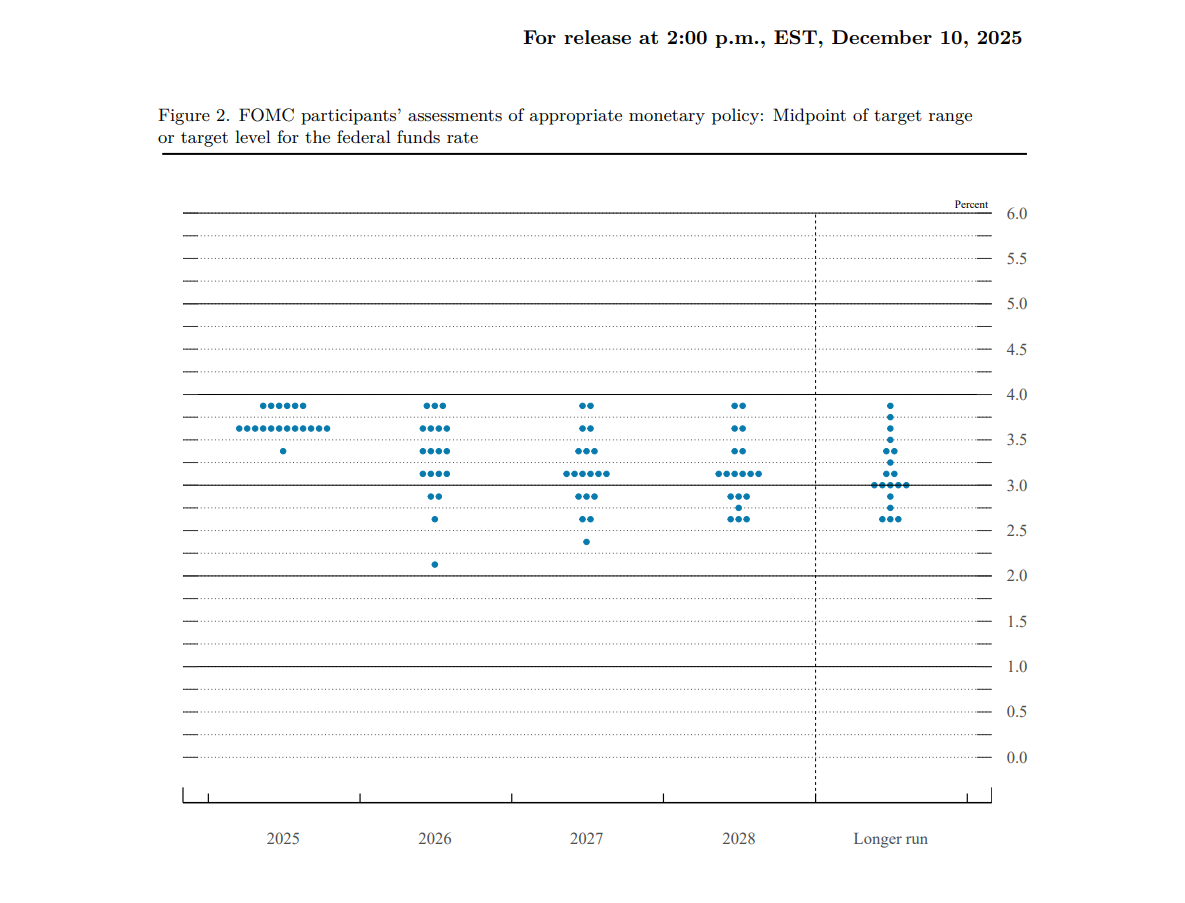
Full text of the Federal Reserve decision: 25 basis point rate cut, purchase of $4 billion in Treasury bills within 30 days
The Federal Reserve cut interest rates by 25 basis points with a 9-3 vote. Two members supported keeping rates unchanged, while one supported a 50 basis point cut. In addition, the Federal Reserve has restarted bond purchases and will buy $40 billion in Treasury bills within 30 days to maintain adequate reserve supply.
HyENA officially launched: Perp DEX supported by Ethena and based on USDe collateral goes live on Hyperliquid
The launch of HyENA further expands the USDe ecosystem and brings institutional-grade margin efficiency to the on-chain perpetuals market.
Elon Musk at the Center of an Unprecedented Showdown with the EU

Stablecoin Payments: Stripe’s Tempo Blockchain Launches Public Testnet

Trending news
MoreCrypto prices
More





