
Another roundabout investment! OpenAI acquires a stake in a platform owned by its investor

OpenAI and Thrive have deepened their cooperation once again, redefining the capital structure of the AI era by exchanging equity without monetary investment. As technology and investment become increasingly intertwined, the industry’s concerns and expectations regarding circular trading are rising simultaneously.
According to foreign media reports, OpenAI will take a stake in Thrive Holdings, an investment vehicle established earlier this year by Thrive Capital, further expanding the growing cycle of circular transactions between the ChatGPT developer and its investors.
As one of OpenAI's main investors, Thrive Capital established Thrive Holdings this year with the goal of founding and acquiring businesses that can benefit from AI. According to the partnership announced on Monday, OpenAI will collaborate with Thrive Holdings to accelerate enterprise adoption of AI, with the initial focus areas being accounting and information technology services.
An OpenAI spokesperson stated that the company has not invested in Thrive Holdings. Instead, OpenAI will exchange opportunities for companies under Thrive Holdings to access its team in return for equity. Both parties stated that the goal is to embed OpenAI employees in these companies to enhance speed, accuracy, and cost efficiency.
Thrive was founded by Josh Kushner in 2010 and is known for its small number of high-value, long-term investments. In recent years, Thrive has shifted its focus to AI. The company first invested in OpenAI in 2023, when its valuation was $27 billion.
Later that same year, Thrive led a $6.6 billion investment in OpenAI, pushing its valuation up to $157 billion, an astonishing figure at the time. In April this year, Thrive launched Thrive Holdings, beginning to draw on private equity operational models.
The collaboration between OpenAI and Thrive Holdings aims to strengthen enterprise adoption of AI, a key focus for both parties. OpenAI and its competitors are striving to demonstrate the commercial value of their systems and attract more customers to offset the enormous costs of building and operating AI systems.
OpenAI Chief Operating Officer Brad Lightcap said in a statement that this partnership with Thrive Holdings is intended to demonstrate how cutting-edge AI research and applications, when rapidly deployed across organizations, can transform the way businesses operate and interact with customers. He expressed hope that this collaboration would become a model for deep cooperation between global enterprises, industries, and OpenAI.
However, this move has also intensified external criticism of OpenAI's circular transactions. As technology companies exchange funds and services through equity, chip agreements, and cloud computing contracts in the AI race, investors and analysts are increasingly concerned about these arrangements.
In the current deal, OpenAI will take a stake in a branch of a venture capital company that holds OpenAI shares. According to a person familiar with the matter, this arrangement is intended to better align the incentives of both parties over time. In other words: OpenAI is taking a stake in a company established by its own investor's investment vehicle.
Such collaborations raise concerns that a complex and highly interconnected network of transactions is artificially propping up the AI boom.
For example, Nvidia (NVDA.O) once agreed to invest up to $100 billion in OpenAI to help it build data centers; in exchange, OpenAI committed to deploying millions of Nvidia chips in these data centers. Weeks later, OpenAI reached a partnership with Nvidia's competitor AMD (AMD.O), planning to deploy AMD chips worth tens of billions of dollars. As part of the collaboration, OpenAI is expected to become one of AMD's largest shareholders.
Disclaimer: The content of this article solely reflects the author's opinion and does not represent the platform in any capacity. This article is not intended to serve as a reference for making investment decisions.
You may also like
Economic Truth: AI Drives Growth Alone, Cryptocurrency Becomes a Political Asset
The article analyzes the current economic situation, pointing out that AI is the main driver of GDP growth, while other sectors such as the labor market and household finances are in decline. Market dynamics have become detached from fundamentals, with AI capital expenditure being key to avoiding a recession. The widening wealth gap and energy supply are becoming bottlenecks for AI development. In the future, AI and cryptocurrencies may become the focus of policy adjustments. Summary generated by Mars AI This summary was generated by the Mars AI model, and its accuracy and completeness are still in the process of iterative improvement.

AI unicorn Anthropic accelerates IPO push, taking on OpenAI head-to-head?
Anthropic is accelerating its expansion into the capital markets, initiating collaboration with top law firms, which is seen as an important signal toward going public. The company's valuation is approaching 300 billions USD, and investors are betting it could go public before OpenAI.
Did top universities also get burned? Harvard invested $500 million heavily in bitcoin right before the major plunge
Harvard University's endowment fund significantly increased its holdings in bitcoin ETFs to nearly 500 million USD in the previous quarter. However, in the current quarter, the price of bitcoin subsequently dropped by more than 20%, exposing the fund to significant timing risk.

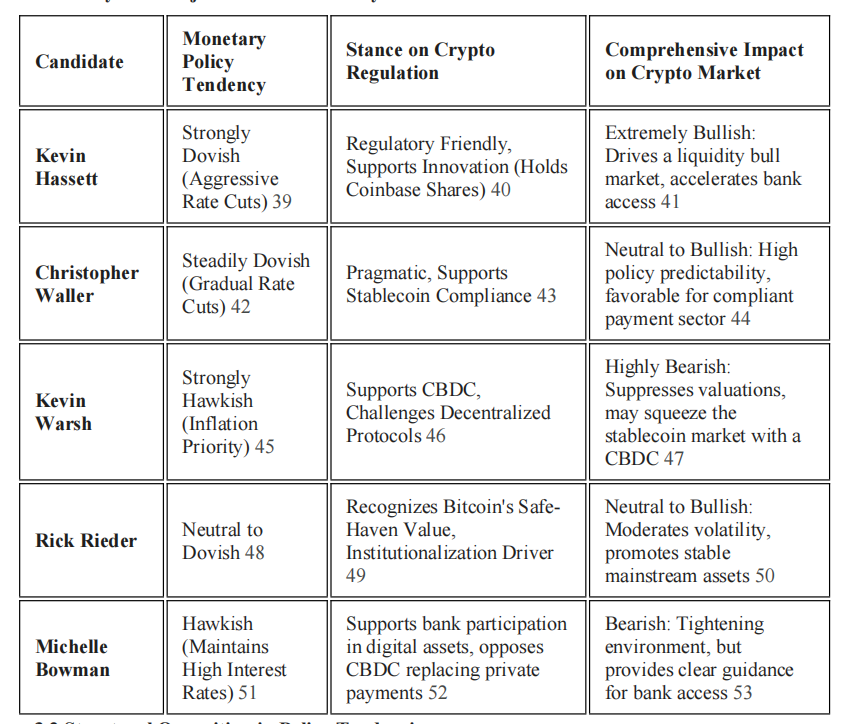
The Structural Impact of the Next Federal Reserve Chair on the Cryptocurrency Industry: Policy Shifts and Regulatory Reshaping
The change of the next Federal Reserve Chair is a decisive factor in reshaping the future macro environment of the cryptocurrency industry.
Trending news
MoreCrypto prices
More






