
Middle East conflicts boost safe-haven demand for the US dollar, putting pressure on gold; experts say traditional correlation between gold prices and the dollar has broken down

Forex Media March 17th News—— Amid the ongoing escalation of the Middle East conflict between the US, Israel, and Iran, surging energy prices, and a revival in inflation expectations, the US dollar is once again strengthening as a safe-haven asset, exerting significant pressure on gold. Robert Minter, Strategy Director of abrdn ETF, points out that since 2022, the traditional correlation between gold and the US dollar has completely broken down. Future price movements will be more driven by global structural forces and continued gold buying by central banks.
With the ongoing escalation of the US-Israel-Iran conflict in the Middle East, soaring energy prices, and resurging inflation expectations, the gold market is once again being put to the test. In the short term, gold prices are struggling to maintain the support level near $5,000 per ounce as the market tries to digest the potential impact of US and Israeli military actions on a global liquidity crisis and inflation threats.
Short-Term Headwinds: High Interest Rates and Strong Dollar Suppress Gold Prices
Currently, the Federal Reserve's policy stance remains the main obstacle for gold. Inflation remains elevated, and even as economic growth slows, aggressive rate cuts are difficult for the Fed to implement. Prolonged high interest rates support both the dollar exchange rate and bond yields, which traditionally puts significant pressure on the non-yielding asset, gold.
This dynamic directly explains gold’s recent consolidation. Those investors who originally anticipated a turn towards looser monetary policy are now being forced to adjust their expectations. In the short term, high interest rates increase the opportunity cost of holding gold and limit its upside potential.
Strengthened Long-Term Logic: Central Bank Gold Purchases and Sovereign Debt Crisis as Core Support
Robert Minter emphasizes that
He adds that for many investors, this dynamic has become increasingly evident in their daily lives: rising living costs are continuously eroding purchasing power. Financial advisers are increasingly receiving client inquiries on how to protect portfolios from ongoing monetary devaluation. Robert Minter says, “Advisers are hearing clients complain about the erosion of purchasing power in their daily lives. They’re looking for an asset to put in their portfolios to offset this loss, and obviously commodities—especially gold—can play this role.”
He further points out,
Bullish Technical Trend Remains Intact, Short-Term Volatility Aside
He believes that geopolitical tensions and continued conflict only strengthen the current trend,
Investor Hesitation Remains, but Further Rallies May Attract New Flows
Despite gold’s strong rally in recent years, many investors remain hesitant to enter the market. Robert Minter says: “It may take another wave of gold rallies to bring those watching from the sidelines into the market.”
Continued central bank gold purchases, a sovereign debt crisis, geopolitical uncertainty, and currency devaluation pressures—these structural forces are providing solid long-term support for gold’s bull market. Short-term fluctuations and frustrated investor sentiment may dominate for now, but the long-term bullish narrative remains intact.
Robert Minter’s analysis reminds market participants: gold is no longer simply an anti-dollar instrument, but a strategic asset for countering systemic risk in the global financial system.
Investors should evaluate allocation opportunities from a long-term perspective; short-term pullbacks may present better buying opportunities.
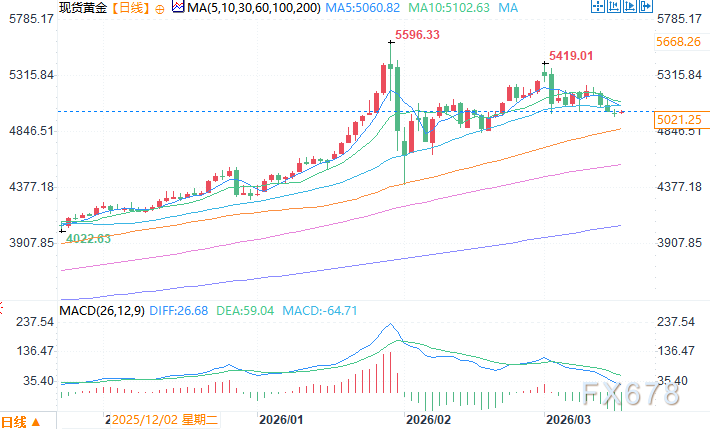
Spot gold daily chart Source: FXHuichong
GMT+8 March 17th, 10:38 am: Spot gold quoted at $5,023.25/oz
Disclaimer: The content of this article solely reflects the author's opinion and does not represent the platform in any capacity. This article is not intended to serve as a reference for making investment decisions.
You may also like
Motorsport Games (MSGM) Quarterly Earnings Conference Call Transcript
Contango ORE’s Merger Makes a Bold Wager on Steady Gold Prices and Strategic Commodity Cycle Timing

SEC seeks comment on crypto handling in OTC broker-dealer rule
NCR Voyix’s Japan Unit Sale Is a Strategic Cleanup—Focus Shifts to Core Retail Platform Growth

Trending news
MoreCrypto prices
More





