
Oil Shock Tests Market Resilience—S&P 500 Defies Energy Spike as Fed Prepares to Weigh In

The Federal Reserve's policy meeting this week was a classic case of a non-event. The market had fully priced in a hold, with CME FedWatch showing 99% odds of rates remaining unchanged. That expectation was the baseline for trading. The real story, however, was a shock that arrived from a different quarter entirely.
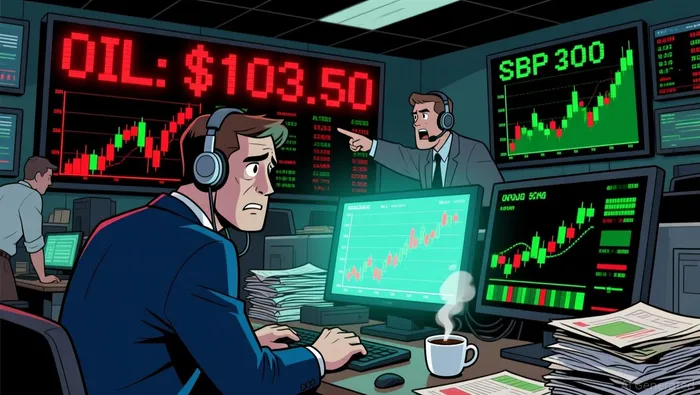
The unexpected catalyst was a surge in oil prices driven by renewed Middle East conflict. As the Fed gathered, fresh attacks and escalating tensions sent Brent crude futures jumping to around $103.50 per barrel. This wasn't just a minor uptick; it was a resumption of a conflict-driven rally that directly challenges the narrative of easing inflation. The move introduced a new, conflicting reality that the market had not anticipated.
This created a clear expectation gap. The Fed meeting itself was a textbook "buy the rumor, sell the news" event. The rumor was the potential for a cut, which had already been discounted by the market. The news was the hold, which was already priced in. The action, therefore, had to come from somewhere else. That "somewhere" was the oil shock. The surge in energy prices complicated the global outlook for central banks, introducing a fresh inflationary risk just as markets were preparing for rate cuts. The Fed's decision was a non-starter, but the oil price move was the real game-changer.
Market Resilience: A Break from the Oil-Stock Correlation
| Total Trade | 12 |
| Winning Trades | 6 |
| Losing Trades | 6 |
| Win Rate | 50% |
| Average Hold Days | 11.25 |
| Max Consecutive Losses | 2 |
| Profit Loss Ratio | 0.82 |
| Avg Win Return | 1.32% |
| Avg Loss Return | 1.58% |
| Max Single Return | 2.37% |
| Max Single Loss Return | 3.36% |
It suggests the market's primary focus remains firmly on the "soft landing" narrative and AI-driven growth, which are currently overshadowing the oil risk. The rally was modest, but its existence is notable. It indicates that the powerful relief rally sparked earlier in the week by falling energy prices and a perceived contained geopolitical shock had not been fully reversed. The market is signaling that it believes the current oil spike is a manageable, supply-side disruption rather than a broad-based inflationary shock that would derail the economic outlook.
Yet, the modest gains also reveal the persistent overhang. The oil shock is not a priced-in event; it's a new variable that could cap further upside. The market is not ignoring it, but it is choosing to bet that the positive drivers-cooling tensions, a contained energy shock per Goldman Sachs, and robust AI momentum-will ultimately win out. This creates a fragile equilibrium. For now, the expectation gap is being bridged by the strength of the growth thesis. But if oil prices continue to climb, that balance could shift quickly, turning the current resilience into a vulnerability.
Catalysts and Risks: What's Next for the Expectation Gap
The market's current optimism now faces its first major test. The catalyst is the Fed's own release of its first Summary of Economic Projections (SEP) for 2026 and Chair Powell's press conference. This is where the oil shock will be formally incorporated into the central bank's outlook. The market's expectation is that the Fed will remain on hold, but the critical question is how long. Powell's comments will clarify whether the recent oil spike is seen as a temporary blip or a persistent inflationary force that demands a longer wait for cuts.
The major risk is that the oil price shock forces a delay in the market's anticipated rate cuts. Currently, traders expect the Fed won't cut rates until October or December. If the Fed's projections or Powell's remarks signal that inflation risks have risen materially due to energy prices, that timeline could be pushed further out. This would reset expectations downward, potentially triggering a repricing of bonds and equities that had already discounted a near-term easing cycle.
Sector rotation is the likely outcome if the oil shock persists. Energy stocks may benefit from higher prices, while discretionary and consumer staples face margin pressure from higher fuel costs. The recent rally in consumer discretionary stocks despite rising oil prices shows this dynamic is already at play. But if the oil shock becomes a broader inflationary concern, that rotation could accelerate, with the market shifting away from growth and cyclicals toward more defensive sectors. The expectation gap is now between the market's growth narrative and the Fed's inflation watch. The SEP and Powell's presser will determine which side wins.
Disclaimer: The content of this article solely reflects the author's opinion and does not represent the platform in any capacity. This article is not intended to serve as a reference for making investment decisions.
You may also like
AUD/JPY Price Forecast: Positive bias prevails, eyes resistance above 113.50

Pudgy Penguins (PENGU) Picks Up Speed Thanks to Latest Gaming Initiative

Meta to shutter Horizon Worlds metaverse on VR in favor of mobile

Trending news
MoreCrypto prices
More





