
Israel’s shifting strategy could extend conflict with Iran and trigger oil prices to surge back to $147

How Markets Respond to Different Conflict Scenarios
Market movements will depend heavily on which of three possible conflict scenarios materializes. Each scenario brings its own set of financial consequences, influenced by the length of disruption, the outcome, and the broader geopolitical effects. Looking at past events can help gauge the likelihood of each path and anticipate their impact on energy markets, inflation, and risk premiums.
Scenario 1: Brief Conflict and Swift U.S. Withdrawal
The first scenario envisions a short-lived conflict followed by a rapid U.S. exit, which is the preferred outcome for the current administration. This would require a decisive military campaign that achieves its main goals within a matter of weeks. President Trump initially suggested a four-to-five-week timeline, reflecting this as the expected baseline. The main challenge is whether targeted U.S. and Israeli strikes—focusing on missile sites, naval assets, and vital infrastructure such as Kharg Island—can sufficiently weaken Iran’s capacity to threaten shipping and regional allies. If successful, the U.S. could quickly declare victory and scale back its involvement. In this case, market volatility would be limited. Goldman Sachs models predict a sharp but brief surge in oil prices, with Brent crude averaging about $98 in March and April, then falling back to around $71 by year-end. However, reopening the Strait of Hormuz could prove more complicated than the initial strikes, possibly requiring ongoing naval patrols and international coordination, which might extend U.S. involvement and keep markets on edge.
Scenario 2: Negotiated Ceasefire
The second scenario, which is becoming more likely, involves a diplomatic resolution. Iran’s control over the Strait of Hormuz—through which roughly 20% of the world’s oil exports pass—gives it significant leverage. Even if heavy strikes diminish Iran’s military power, the regime could still disrupt shipping, prompting external powers like Europe and China to push for negotiations. Differences between U.S. and Israeli objectives complicate matters: while both want to weaken Iran, Israel prioritizes regime change, a goal the U.S. is less willing to pursue due to the risks of a prolonged conflict. A ceasefire would likely see Iran agreeing to limit its military activities in exchange for de-escalation, but underlying tensions would remain. For markets, this means a longer period of uncertainty and volatility, with oil prices staying higher than before the conflict but avoiding the extreme spikes of a drawn-out war.
Scenario 3: Prolonged Escalation Aimed at Regime Change
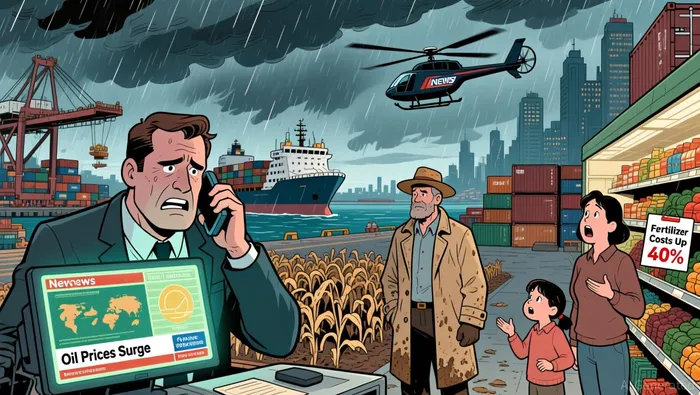
The third and most disruptive scenario involves a sustained campaign with the explicit goal of undermining or toppling the Iranian regime—a path seemingly favored by Israel. This would require ongoing U.S. military involvement, straining resources and potentially impacting other strategic interests. The market consequences would be severe and long-lasting, likely causing a persistent surge in oil prices. Some analysts warn that prices could surpass the 2008 peak of $147 per barrel if disruptions in the Strait of Hormuz continue. Global inflation would rise, and risk premiums in both equity and credit markets would widen, reflecting deep uncertainty and the risk of further regional instability. This scenario would test U.S. resolve and come with the highest economic costs.
Historical Parallels: What Past Crises Teach Us
Markets have faced similar challenges before when geopolitical events threatened the flow of key commodities. History shows that when physical supply chains are at risk, volatility spikes as traders react to immediate supply concerns. The current situation echoes this pattern, with the Strait of Hormuz serving as a critical chokepoint. Whether shipping resumes normal operations or remains stalled will determine if this volatility persists, especially if high insurance costs and safety fears linger.
Should the conflict drag on, it could resemble the 2003 Iraq War, when oil prices surged and remained elevated for months as the market adjusted to ongoing instability. In that case, Brent crude jumped from around $30 to over $30 in just weeks, with prices staying high as uncertainty persisted. Markets can often look past the initial shock, but sustained uncertainty about the conflict’s length keeps volatility high.
Strategic ambiguity can have an even greater impact than physical disruptions. The 2014 Ukraine crisis is a prime example: even though energy supplies continued, the prolonged standoff and risk of escalation led to a lasting risk premium in financial assets. Markets priced in the unknowns—such as the cost of a frozen conflict and the risk of broader war. This is highly relevant today, as differing goals between the U.S. and Israel could prolong negotiations and strategic uncertainty. This uncertainty could become embedded in market pricing, keeping volatility and risk premiums elevated even if the Strait remains open.
Ultimately, the market’s direction will depend on how long the conflict lasts and how clear the outcome is. A quick, decisive resolution would provide the cleanest exit, but the evidence suggests a more complicated scenario is likely. With a vital chokepoint at stake and the potential for a drawn-out campaign, markets may face persistent volatility, echoing lessons from previous geopolitical shocks.
Scenario-Based Financial Impacts: From Oil to Food Prices
The economic consequences of each scenario will be reflected in energy prices, fertilizer availability, and inflation rates. The most sensitive areas are energy, food, and the inflationary pressures they generate.
- Short War and Rapid U.S. Exit: This scenario would bring a sharp but contained market shock. Initial strikes would likely push oil prices higher, with Goldman Sachs projecting Brent crude to average $98 in March and April before quickly retreating. Fertilizer markets would be less affected; while the Strait is crucial for global fertilizer trade, a swift resolution would likely prevent a prolonged price surge. The result would be a brief spike in volatility and limited inflationary impact.
- Negotiated Ceasefire: This path poses the greatest risk to global food prices. Ongoing uncertainty over shipping through the Strait could disrupt fertilizer supplies at a critical time—just as farmers prepare for spring planting. Over one-third of global fertilizer trade passes through the Strait, and U.S. urea import prices have already surged 30% in a week. Economists warn this could push "food-at-home" inflation up by about 2 percentage points. If farmers cut back on fertilizer due to cost or shortages, crop yields could fall, creating a longer-term inflationary cycle. This scenario challenges the market’s ability to look past uncertainty, as food supply disruptions become a persistent burden for consumers.
- Rapid, Regime-Focused Escalation: The most severe scenario would likely cause a prolonged disruption in energy supplies, putting the Federal Reserve in a difficult position. Morgan Stanley estimates that a 10% increase in oil prices from a supply shock could raise U.S. consumer prices by about 0.35% over three months, with the potential for even greater inflation if disruptions persist. This would force policymakers to balance inflation concerns with the risk of slowing growth, possibly leading to a pause in interest rate changes. The conflict could also drive up U.S. defense spending and deficits, pushing long-term bond yields higher and creating headwinds for both stocks and bonds. This scenario combines a major energy shock with fiscal and monetary policy challenges, resulting in a complex and damaging environment for financial markets.
Key Signals: What Investors Should Watch
The direction of the conflict—and its market impact—will become clear through a series of observable developments. Investors should focus on three main indicators to assess which scenario is unfolding:
- Shipping Activity and Insurance Costs in the Strait of Hormuz: This is the primary test for the Negotiated Ceasefire scenario. The chokepoint is already under pressure, with insurance premiums for cargo ships soaring. If shipping remains stalled even when the route is technically open, it signals ongoing risk aversion and could keep oil prices and fertilizer costs elevated. Conversely, a clear improvement in shipping, supported by new insurance and escort measures, would point toward de-escalation.
- Official Messaging from the U.S. and Israel: This is crucial for the Short War and Rapid U.S. Exit scenario. Mixed signals from the administration have fueled uncertainty. While President Trump has claimed victory even as fighting continues, calls for allied support to reopen the Strait suggest the conflict is far from over. A decisive shift in rhetoric—such as a formal victory declaration or a clear exit strategy—would confirm a rapid withdrawal. Ongoing ambiguity and requests for foreign naval assistance would indicate a longer campaign.
- Fertilizer and Food Commodity Prices: This is the key economic indicator for the Negotiated Ceasefire scenario. Disruptions are already affecting the spring planting season, with U.S. urea import prices up 30% in a week. Continued price pressure would confirm that the conflict’s economic fallout extends beyond energy, creating persistent inflationary challenges and highlighting unresolved tensions.
In summary, these real-time signals will offer insight into the conflict’s direction. Market volatility will closely track the clarity—or ambiguity—of these developments.
Disclaimer: The content of this article solely reflects the author's opinion and does not represent the platform in any capacity. This article is not intended to serve as a reference for making investment decisions.
You may also like
Kingsway's NOL Tax Advantage Threatened by Bold M&A Driving EBITDA Expansion

Corning (GLW) Soars Over 3% Amid AI Infrastructure Momentum and Earnings Optimism

Olema Pharmaceuticals (OLMA) Drops 33.4% Over Past Month, Reasons Suggest a Potential Turnaround Ahead
Should You Keep or Offload HOLX Shares as It Approaches the Conclusion of Its Public Phase?
Trending news
MoreCrypto prices
More





