
Firefly Aerospace Supports U.S. Space Force VICTUS DIEM Exercise

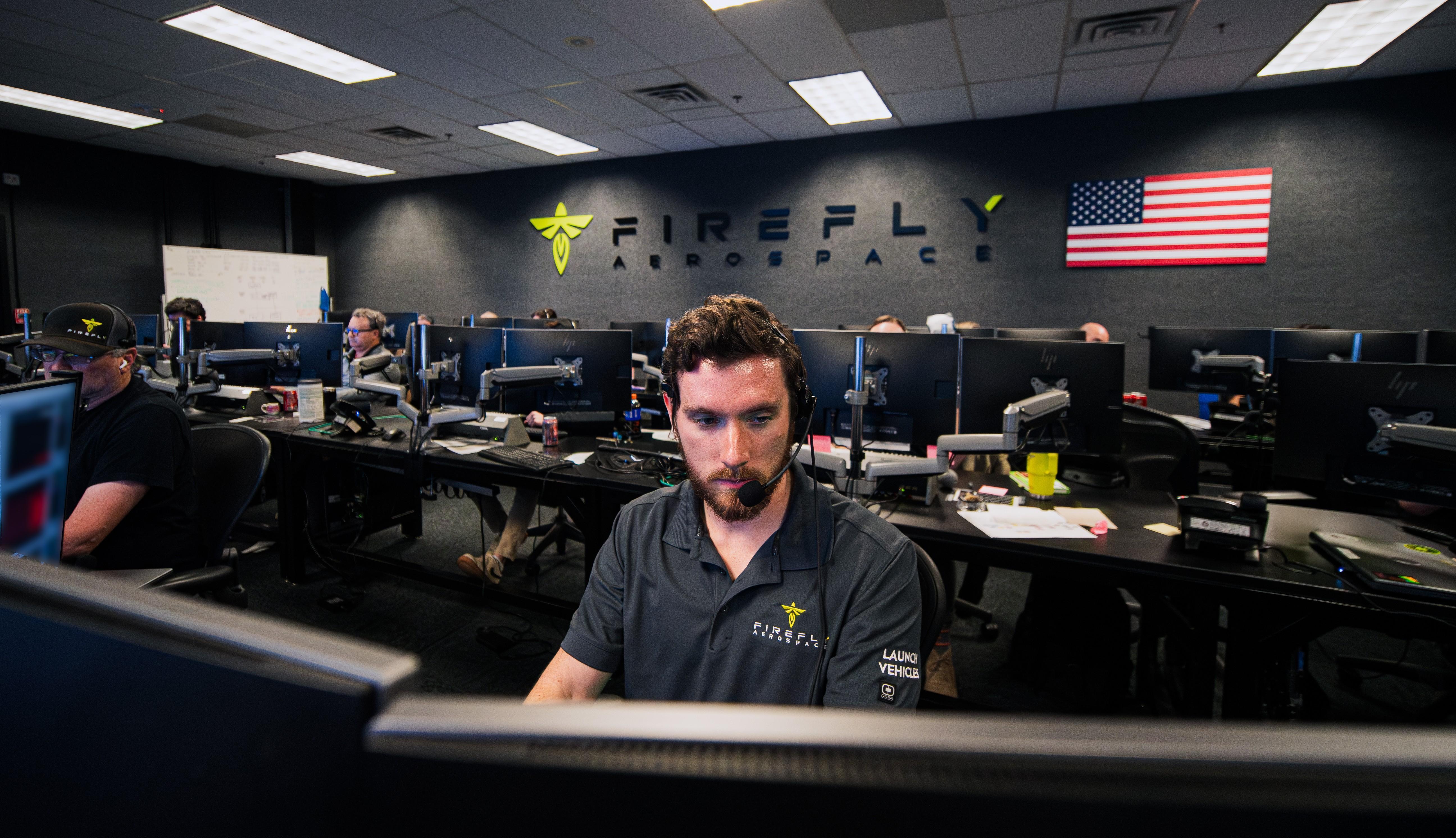
LOMPOC, Calif., March 25, 2026 -- Firefly Aerospace (Nasdaq: FLY), a market-leading space and defense technology company, today announced it supported Lockheed Martin in two responsive space exercises for the U.S. Space Force as part of the VICTUS DIEM mission.
The first exercise included a rapid payload processing demonstration where spacecraft arrival operations, checkouts, mating, and encapsulation were completed in under 12 hours. The second exercise included a 36-hour rapid launch simulation to practice and advance emergency launch protocols required to execute tactically responsive space missions in a real threat scenario.
In collaboration with Space System Command’s (SSC) System Delta 89 Tactically Responsive Space Program, known as Space Safari, and SSC’s Space Launch Delta 30, the team completed the initial mission design, flight trajectory planning, launch collision avoidance analysis, range safety protocols and authorizations, and all final launch operations within 36 hours of receiving a simulated notice to launch.
VICTUS DIEM was created to generate additional opportunities to exercise rapid launch capabilities through commercial partnerships within the government process. The results provide a continued focus on refining and codifying a repeatable process for rapid launch as part of the broader VICTUS program.
About Firefly Aerospace
Firefly Aerospace is a space and defense technology company that enables government and commercial customers to launch, land, and operate in space – anywhere, anytime. As the partner of choice for responsive space missions, Firefly is the only commercial company to launch a satellite to orbit with approximately 24-hour notice. Firefly is also the only company to achieve a fully successful landing on the Moon. Established in 2017, Firefly’s engineering, manufacturing, and test facilities are co-located in central Texas to enable rapid innovation. The company’s small- to medium-lift launch vehicles, lunar landers, and orbital vehicles are built with common flight-proven technologies to enable speed, reliability, and cost efficiencies for each mission from low Earth orbit to the Moon and beyond. For more information, visit .
Media Contact
Disclaimer: The content of this article solely reflects the author's opinion and does not represent the platform in any capacity. This article is not intended to serve as a reference for making investment decisions.
You may also like
Egrag Crypto Presents the Most Confluent XRP Price Target
PowerAlgo: Making Bitcoin Cloud Mining Smarter, Simpler, and More Accessible
AcuCort partners with Glenmark to distribute Zeqmelit in Ukraine
Crypto prices
More


