
Kermode Resources Removal Highlights Survival Challenges Amid Funding Shortfall Putting Kena Gold Project at Risk

Kermode Resources Concludes TSX Venture Exchange Delisting
Kermode Resources has finalized its departure from the TSX Venture Exchange, with its shares officially removed from public trading as of October 5, 2023. This decision, endorsed by shareholders, marks a significant change in direction for the company, which has been under considerable financial pressure.
The company’s financial report for the year ending October 2025 highlights escalating challenges. Kermode posted a net loss of CAD 1.41 million, a sharp rise from the previous year’s CAD 0.49 million loss. This growing deficit points to worsening operational and fiscal health. The balance sheet reveals negative shareholder equity of CA$-239,700 and a debt-to-equity ratio of -10.4%. In effect, the company’s liabilities of CA$255,500 far outweigh its assets of only CA$15,800—a precarious position for a resource explorer.
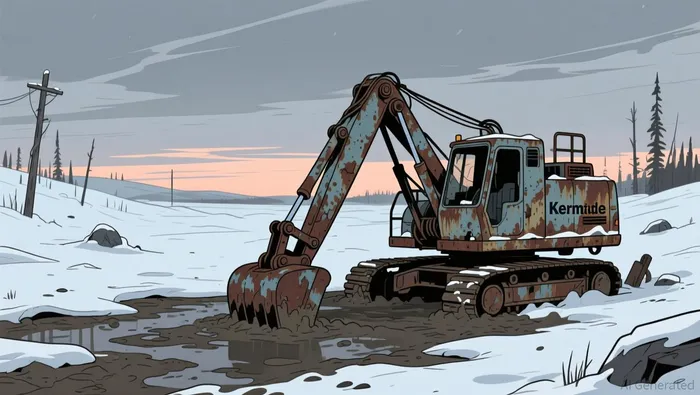
This delisting signals a period of transition for Kermode, as it steps away from public markets amid severe cash shortages and rising debt. While the move may be part of a broader plan to seek alternative funding or restructure, the company’s primary asset, the Kena Gold Project, remains far from production. The financials indicate a focus on survival rather than advancing toward mine development.
Project Scale Versus Market Impact
When considering the company’s position in the gold sector, a stark mismatch in scale becomes apparent. Kermode’s Kena Gold Project boasts a historical resource of 3.33 million ounces, but it remains an early-stage exploration asset. In the context of the global gold market—where annual production is about 112 million ounces—Kermode’s resource is less than 3% of yearly output. Even if fully developed, its impact on global supply would be minimal.
Currently, the gold market is balanced, with production meeting demand. Kermode’s limited resources and lack of progress toward production mean it has no influence on this equilibrium. The company’s recent capital raise of CAD 0.1 million is insufficient for the costly steps required to advance the project, such as feasibility studies and permitting. The gap between available funds and what’s needed for development remains vast.
Financial and Operational Hurdles
Kermode’s immediate challenge is to secure significant new investment to ensure its survival. The recent CAD 0.1 million raised is a fraction of what is needed to move the Kena Gold Project toward a bankable feasibility study, which typically requires tens of millions of dollars. Without this capital, the project remains stalled at the exploration stage.
To preserve cash, Kermode has issued shares for services at a heavily discounted price of $0.0171 per share. While this is a common tactic for struggling explorers, it signals financial distress and results in significant dilution for existing shareholders. The company’s exit from the TSX Venture Exchange may reduce regulatory expenses, but it also limits access to public capital, making future fundraising more difficult. Kermode must now rely on private placements, debt, or strategic partnerships—each challenging given its negative equity and history of losses.
Ultimately, the company’s ability to bridge its funding gap will determine its future. Until Kermode secures the substantial investment needed for project development, its gold resource will remain irrelevant to the broader market.
Risks and Key Developments to Monitor
The greatest risk facing Kermode is its inability to attract the capital required to advance its projects. With just CA$15,800 in cash and liabilities totaling CA$255,500, the company’s financial runway is extremely short. The recent CAD 0.1 million funding round offers only temporary relief. Without new investment, Kermode risks liquidation or dissolution, likely without ever producing gold or impacting the market—leaving shareholders with nothing.
Operationally, maintaining control of the Kena Gold Project’s 10,200-hectare land package is critical. Ongoing fees and exploration spending are required to keep these claims in good standing. With negative equity and mounting debt, the company is at risk of losing its assets if it defaults on these obligations. Any notice of default or changes in land status would be an important warning sign.
For investors, the most promising sign of a turnaround would be news of a major joint venture or partnership. Only such an arrangement could provide the capital and expertise needed to move the project forward. Without this, Kermode will likely continue to rely on small, high-risk funding rounds, often involving deeply discounted share issuances—another signal of distress and a deterrent to future investment. The terms of any new funding, especially share price and dilution, should be closely watched.
Summary Table: Kermode Resources Financial Snapshot
- Net Loss (Year Ended Oct 2025): CAD 1.41 million
- Negative Shareholder Equity: CA$-239,700
- Debt-to-Equity Ratio: -10.4%
- Cash on Hand: CA$15,800
- Liabilities: CA$255,500
- Recent Funding: CAD 0.1 million
- Share Issuance Price for Services: $0.0171 per share
Disclaimer: The content of this article solely reflects the author's opinion and does not represent the platform in any capacity. This article is not intended to serve as a reference for making investment decisions.
You may also like
US Dollar Index holds losses near 99.50 as US-Iran talks face uncertainty
Momentum Plunges on Volume Spike: Can MMT Hold 0.1145?
ALLOTRY Crashes Below 5.30 on 10x Volume Spike
American Airlines Shares Surge Amid Fuel Price Rally as Profits Challenge Lofty Valuation
Trending news
MoreCrypto prices
More





