
South Korea's KOSPI Faces Mispricing Setup After Iran Ultimatum Extension

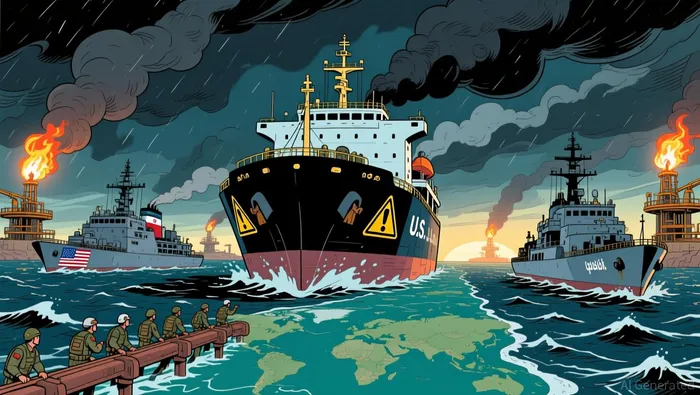
The catalyst was a direct, high-stakes ultimatum. On Saturday, President Trump threatened to "obliterate" Iran's power plants within 48 hours if Tehran did not fully reopen the Strait of Hormuz. The market's immediate reaction was a classic risk-off panic. Major Asian indices sold off sharply, with Japan's Nikkei 225 and South Korea's KOSPI each plunging about 4% in early trading on Monday. The Hang Seng Index tumbled roughly 2%. This wasn't just a dip; it was a full-scale flight from risk.
The most extreme case was South Korea. In the two days following the escalation, the benchmark KOSPI fell over 18%, posting its worst-ever daily selloff. This violent move was driven by the region's direct exposure. For a country like South Korea, which receives a majority of its energy from the Middle East via the strait, the threat of a prolonged closure was a severe operational and economic shock. The panic selling hit the most liquid sectors-technology, industrials, and chemicals-where investors were forced to raise cash.
Then came the pivot. On Thursday, Trump announced he was extending the ultimatum by another 10 days, pushing the deadline to April 6. This created a fragile negotiation window, offering a temporary reprieve from the immediate threat of strikes. The market's response was swift relief. Asian equity markets came off their lows on Friday, with the Hang Seng Index even rising 0.8% and the Shanghai Composite up 0.75%. Wall Street futures also bounced, and oil prices, which had spiked, eased.
This sequence-sharp escalation, violent panic, and a sudden, tactical pause-creates the setup. The initial sell-off was a direct, event-driven reaction to a clear and present danger. The 10-day extension, however, introduces a period of uncertainty where the outcome is not guaranteed. The market's relief rally suggests the worst-case scenario has been deferred, not eliminated. For a tactical investor, this creates a potential mispricing: the initial panic may have over-sold the risk, while the fragile negotiation window offers a short-term reprieve that could be reversed if talks fail. The event has reset the immediate risk/reward, but the underlying tension remains.
The Mechanics: Oil Shock and Sector Vulnerability
The event's direct financial impact is a severe energy shock. Oil prices have surged over 50% this month, with Brent crude hitting $112.18 a barrel. This isn't a minor spike; it's a fundamental repricing of global supply risk. The threat to the Strait of Hormuz-a chokepoint for roughly 20% of the world's energy-has already caused a loss of a full four days of global supply. For major Asian economies, this isn't theoretical. The region's vulnerability is structural. Japan and the Philippines rely on the Middle East for almost 90% of their oil needs, while South Korea received 70% of its crude from the region in 2025. This heavy dependence creates a direct pipeline from geopolitical tension to domestic inflation and corporate costs.
The immediate risk is a technical recession in energy-intensive industries. Chemicals, base metals, and heavy manufacturing face a serious squeeze. Higher oil prices directly raise input costs for petrochemical feedstocks and power, while also increasing transportation expenses. For a country like South Korea, where the energy mix remains heavily fossil-fuel based, this pressure is acute. A prolonged disruption would push up the country's input costs, stoke inflation, and squeeze corporate margins, as noted in the evidence.
This creates a clear sector vulnerability map. The most exposed are the industries that are both major oil consumers and key components of regional export engines. The panic selling in South Korea hit technology, industrials, chemicals, and consumer discretionary hardest. These are the sectors where higher energy costs can quickly translate into lower earnings and weaker demand. The market's relief rally on Friday may have been premature, as the underlying economic pressure from the oil shock remains. The 10-day negotiation window delays the worst-case scenario, but it does not eliminate the risk that this energy shock will persist, forcing a painful recalibration of growth forecasts across Asia's manufacturing core.
The Setup: A Fragile Rebound and Key Catalysts
The market's reaction has been textbook event-driven. It sold off violently on the escalation, then bounced on the de-escalation signal. The 10-day pause creates a fragile negotiation window, offering a tactical reprieve that could be reversed. This sets up a clear mispricing opportunity: the initial panic may have over-sold the risk, but the underlying tension remains unresolved.
The immediate catalyst is Iran's response by the April 6 deadline. The White House has extended the pause until then, but Iran has not formally requested the extension and has yet to submit its final response to the U.S. 15-point plan. If Tehran fails to reopen the Strait of Hormuz by that date, the market's fragile recovery is likely to unravel, triggering another sharp sell-off. The evidence shows this risk is not hypothetical; the market has already priced in a high probability of failure, with the U.S. dollar and oil prices remaining under pressure despite the pause.
Another critical variable is the potential for U.S. troop escalation. The Pentagon is considering sending up to 10,000 additional ground troops to the Middle East, a move that would add to the existing 5,000 Marines and paratroopers already deployed. This plan, reported by the Wall Street Journal, directly contradicts the narrative of productive negotiations and reignites fears of a ground conflict. Any confirmation of such a buildup would likely reignite volatility and undermine the current relief rally.
For now, the setup is one of short-term reprieve. Asian markets, including South Korea's benchmark KOSPI, have pared losses and seen some recovery. Yet the rebound is thin and uneven, with foreign investors continuing to sell. The key point is that the event has reset the immediate risk/reward. The initial panic created a mispricing, but the 10-day window is a temporary fix. The market is now waiting for a binary outcome: either a breakthrough that de-escalates the threat, or a failure that forces a painful recalibration of growth and inflation expectations.
Disclaimer: The content of this article solely reflects the author's opinion and does not represent the platform in any capacity. This article is not intended to serve as a reference for making investment decisions.
You may also like
Guy Spier Exits Amid AI Disruption—Value Investing’s Core Edge May Still Be Buyable

Artificial Superintelligence Alliance Gains Momentum Amid AI Development Shifts
YFI Rises 0.44% as Marriott and Ethiopian Announce Loyalty Program Partnership

Trending news
MoreGoldman Sachs Head of Hedge Fund Business: Almost all the institutions I deal with are bearish; those who understand spot commodities are even more concerned. The longer Iran drags on, the more the market leans toward short-term investments.
Guy Spier Exits Amid AI Disruption—Value Investing’s Core Edge May Still Be Buyable
Crypto prices
More





