
Nokia (NOK) Aims for 6G Dominance Powered by AI With $1 Billion Investment in Nvidia—Will It Shape the Future of Networking?

Nokia’s Strategic Leap: Building the Foundation for 6G Connectivity
Nokia’s recent stock momentum is driven by more than just its current 5G business. The company is positioning itself at the heart of the next generation of connectivity by pioneering the development of AI-powered radio access network (RAN) software for 6G. This initiative represents a major transformation, not just an incremental improvement.
Central to this effort is Nokia’s partnership with NVIDIA. Together, they are advancing AI-RAN software on GPU-accelerated platforms, moving from initial validation to real-world operator trials. This collaboration has already yielded successful tests with major telecom players such as T-Mobile, Indosat, and SoftBank Corp. By bringing in partners like Dell and Red Hat, Nokia is creating a robust, software-centric ecosystem designed for intelligent, adaptive networks.
Nokia’s timeline is ambitious: the company targets the release of 6G network hardware by 2027 and aims for commercial rollout by 2029—outpacing the Korean government’s roadmap and preceding the official 3GPP standardization. By focusing on both software and hardware now, Nokia is working to shape the future architecture of 6G before industry standards are finalized.
AI’s Role in Network Evolution
Artificial intelligence is fundamentally altering network design. As AI-driven data traffic expands, the need for distributed intelligence across mobile, fixed, and transport networks grows. This shift increases demand for smart, software-defined connectivity at the network edge. Nokia’s dual approach—enhancing 5G while investing in GPU-powered RAN for 6G—reflects a belief that future value will be captured in the intelligent infrastructure layer that links distributed AI workloads, rather than in traditional radio hardware alone.
The NVIDIA Effect: Driving AI-RAN Forward
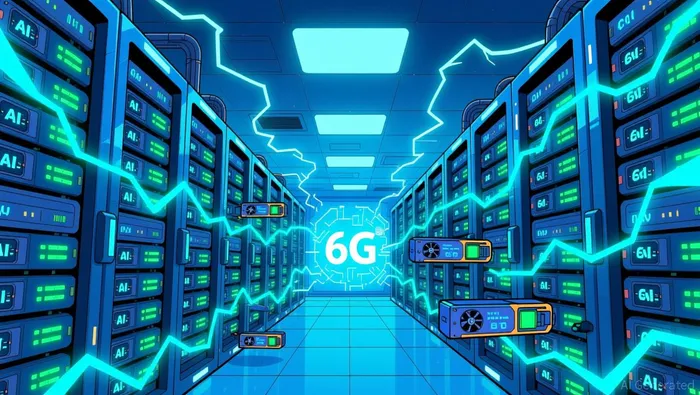
NVIDIA’s involvement is a game-changer for Nokia’s AI-RAN ambitions. In October, NVIDIA announced a $1 billion investment in Nokia and introduced the NVIDIA Arc Aerial RAN Computer, a purpose-built platform for telecom applications. This partnership delivers both the financial resources and the advanced hardware needed to transition from pilot projects to commercial deployment.
The ecosystem around this NVIDIA-powered stack is expanding rapidly. Companies like Dell Technologies, Quanta Inc, Red Hat, and SuperMicro are contributing to the server and software infrastructure, creating a multi-vendor foundation. Nokia has already completed successful functional tests with leading operators, including T-Mobile, Indosat, and SoftBank.
Early Adoption and Market Positioning
Leading operators such as BT, Elisa, NTT DOCOMO, and Vodafone are moving from lab validation to field trials, expected to start in 2026. By working closely with these early adopters, Nokia and NVIDIA can refine their technology and establish a reference architecture before the broader market adopts it. Their goal is to set the standard for AI-native 6G during this critical pre-standardization window.
Adoption Risks and Market Dynamics
The main challenge lies in the pace of adoption. Nokia’s strategy depends on rapid growth in AI traffic translating into increased investment in its AI-RAN solutions. While AI is reshaping telecom spending, operators are also focused on reducing energy costs and automating operations, which may divert capital to other parts of the network infrastructure. Nokia’s approach is designed to hedge against these uncertainties, but convincing operators that GPU-accelerated RAN is the best investment for the future remains crucial.
Financial Perspective: Valuation and Growth Potential
Nokia’s current stock price reflects a tension between present-day financial results and expectations for future growth. The market is valuing the company at a trailing P/E ratio of 61.4, indicating that investors are betting on the long-term promise of AI-RAN and 6G, rather than current earnings (with EPS at just $0.13). This is a clear growth-oriented valuation.
Analyst sentiment is cautiously optimistic, with a consensus rating of "Moderate Buy" and an average price target of $7.01—close to recent trading levels. The range of forecasts, from $5.00 to $8.00, highlights the uncertainty around Nokia’s future. While some see the NVIDIA partnership and 6G roadmap as transformative, others are wary of near-term spending shifts.
Trading activity has surged, with volume reaching 50.5 million shares, about 20% above average. This reflects heightened interest in the 5G and AI infrastructure story, but price volatility remains high as the market debates whether current valuations are justified by future growth or are running ahead of reality.
Ultimately, Nokia’s financials lag behind the strategic narrative. The company’s value proposition is tied to its ability to capture a leading role in the infrastructure layer for distributed AI and 6G. Until there is clear evidence of operator investment in this direction, the stock’s performance will be driven more by milestones in the NVIDIA partnership and field trials than by quarterly earnings.
Risks and Catalysts on the Road to 2029
Nokia’s investment case now depends on a series of near-term milestones. The most important is the announcement of new commercial AI-RAN contracts in the coming quarters. Securing deals with major operators like BT, Elisa, and Vodafone will signal that the NVIDIA-powered platform is moving from pilot to scalable, revenue-generating product. Recent successful tests with T-Mobile, Indosat, and SoftBank are encouraging, but the market is waiting for binding commercial agreements to confirm momentum.
The main risk is failing to expand beyond initial pilot projects. With a tight timeline—targeting 6G equipment by 2027 and commercialization by 2029—Nokia must not only build its technology stack but also persuade the industry to adopt its architecture before global standards are set. There is a risk that competitors or the standardization process itself could define the architecture, leaving Nokia at a disadvantage.
North American telecom spending is a key external factor. Recent market commentary highlights its importance as a driver for the 5G-Advanced and AI-RAN investment cycle. Strong capital expenditure from U.S. carriers like T-Mobile and Verizon is essential for funding AI-RAN upgrades and the broader 5G-Advanced rollout. Any slowdown in spending would directly impact Nokia’s near-term revenue prospects.
In summary, Nokia faces a race on two fronts: scaling its NVIDIA partnership into commercial contracts and keeping pace with the evolving 3GPP standardization process. The next few quarters will be critical in determining whether Nokia can turn its technological lead into market dominance before the next era of connectivity is defined.
Disclaimer: The content of this article solely reflects the author's opinion and does not represent the platform in any capacity. This article is not intended to serve as a reference for making investment decisions.
You may also like
Strength Observed in Marex Group PLC (MRX): Will Its 5.9% Surge Lead to Further Gains?

Cloudflare (NET) Plummets Over 5% – What’s Triggering This Sharp Sell-Off?

Hut 8 Plunges 10% on Intraday Freefall — What’s Behind the Sudden Drop?

Trending news
MoreCrypto prices
More





