
LyondellBasell’s 2026 Recovery Depends on Supply Reductions Surpassing Slow Demand Rebound

LyondellBasell Faces a Challenging 2025: Navigating Market Turbulence
In 2025, LyondellBasell experienced the harsh realities of the commodity market’s volatility. The company reported a net loss of $738 million for the full year, which equated to a diluted loss per share of $2.34. This downturn was primarily driven by sluggish demand and elevated input costs, which significantly compressed margins across its main business segments. Even after adjusting for major one-off expenses, the company’s core operations remained under strain, with annual EBITDA reaching just $1.1 billion.
Strategic Response: Cash Generation and Portfolio Streamlining
To counter these headwinds, LyondellBasell’s leadership implemented a focused turnaround strategy. Central to this was the Cash Improvement Plan, which exceeded expectations by delivering $800 million in savings during 2025—well above the original $600 million target. Buoyed by this achievement, the company has now set its sights on a cumulative $1.3 billion in improvements by the close of 2026. Progress was also made in optimizing the business portfolio, with the sale of four European assets expected to conclude in the second quarter of 2026. These initiatives, combined with robust operational cash flow of $2.3 billion, have helped maintain liquidity and establish a more stable foundation for the future.
Ultimately, 2025 was marked by significant losses and necessary restructuring. The company’s ability to generate cash, divest non-core assets, and enforce cost controls will be critical as it seeks to recover in 2026. The effectiveness of these measures will be closely watched as market conditions evolve.
Balancing Supply and Demand: Can Capacity Cuts Outpace Uncertain Demand?
The industry’s path to recovery depends on whether planned reductions in production capacity can offset the slow and unpredictable return of demand. LyondellBasell is at the forefront of this effort, anticipating that around 21 million tonnes of ethylene capacity will be removed from the market, with 9.5 million tonnes already shut down or announced. These closures, especially in oversupplied regions like China, are seen as vital to correcting the persistent surplus that has suppressed profitability for years.
Reflecting this urgency, the company temporarily shut down its Wesseling, Germany cracker for 40 days in November—not just for maintenance, but to better align output with global demand and control costs. This move highlights the company’s commitment to operational discipline in response to market realities.
However, demand recovery remains slow and uneven. CEO Peter Vanacker observed that demand for certain chemicals improved in the third quarter, marking the first uptick since the downturn began in 2022. Strong fundamentals were noted in polyethylene, particularly from consumer packaging markets. Still, the rebound is not widespread or guaranteed. Vanacker also pointed out that Chinese producers may have to operate at lower rates, with LyondellBasell’s joint venture running at minimum technical capacity—indicating that, despite closures, effective supply may remain elevated in some regions for longer than anticipated.
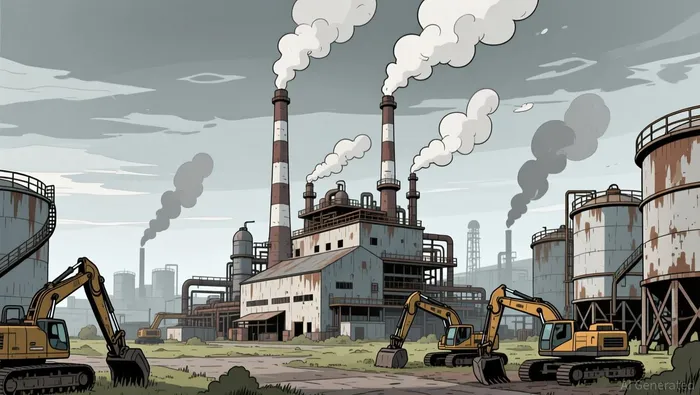
This situation creates a clear tension: while aggressive capacity reductions are underway, demand is only showing tentative signs of improvement. The industry’s recovery will depend on which side—supply cuts or demand growth—proves stronger. For now, the balance is being managed through production cuts and plant idling, a strategy that offers temporary relief but is highly dependent on the unpredictable global economic outlook.
Stock Performance and Valuation: Navigating Investor Skepticism
LyondellBasell’s share price has mirrored the volatility of its business environment. After plummeting 36% in 2025, the stock rebounded sharply, closing at $71.20 on March 17, 2026. This places it near the upper end of its 52-week range ($41.58 to $75.62), representing a 66% surge from the previous year’s close. The rally reflects investor optimism about the company’s strategic initiatives and the potential for a supply-demand reset. However, this optimism is being tested by a disconnect between the stock’s performance and the company’s underlying financial health.
Analysts remain cautious, with recent price targets suggesting limited upside or even modest declines. For example, Wells Fargo’s target of $70 implies a 4.7% drop from the current price, while the consensus average of $65.50 points to a potential 9.4% decrease. This caution is rooted in recent financial results, including a GAAP net loss of $140 million for the quarter ending December 31, 2025. The stock’s recovery has outpaced improvements in earnings, making it vulnerable if operational progress stalls.
Further complicating the outlook is a rise in insider selling over the past quarter, which may signal doubts about near-term prospects. This stands in contrast to the company’s strong cash generation, with $2.3 billion in operating cash flow last year. The divergence between insider actions and financial performance underscores the uncertainty surrounding the timing and durability of the recovery.
In summary, the current stock valuation reflects hope for a turnaround rather than confirmed results. The wide trading range highlights the market’s uncertainty as it weighs LyondellBasell’s financial strength against the fragility of demand. The company’s ability to convert cost savings and production cuts into lasting profitability will determine whether the stock can revisit its 2024 highs.

Key Factors for a 2026 Recovery: What Investors Should Monitor
The outlook for a turnaround in 2026 depends on progress in three critical areas: actual reductions in supply, a broadening of demand, and successful execution of internal financial strategies.
- Supply Rationalization: The most important catalyst is the pace at which announced capacity closures translate into real plant shutdowns. LyondellBasell expects about 21 million tonnes of ethylene capacity to be removed, with 9.5 million tonnes already addressed. The market will be watching closely for further closures, especially from loss-making producers. CEO Vanacker has noted that Chinese producers may be forced to operate at lower rates, with LyondellBasell’s joint venture running at technical minimums. Accelerated closures would support the recovery narrative, while delays could prolong oversupply and margin pressure.
- Demand Expansion: Sustained growth in key end markets is essential for driving higher volumes of polypropylene and other chemicals. While polyethylene demand has shown resilience, broader recovery depends on sectors like housing and durable goods, which are major consumers of the company’s products. LyondellBasell’s expansion projects, such as the new propylene unit at Channelview, are predicated on a rebound in these markets. Positive economic data later in the year will be crucial for validating this outlook.
- Execution of Financial Plans: Completing the sale of four European assets, expected in the second quarter of 2026, will not only generate cash but also streamline operations. Achieving the $1.3 billion cash improvement target by year-end will demonstrate management’s discipline and provide a financial buffer against demand volatility. These funds also support the company’s growth initiatives, which are key to a longer-term recovery.
In essence, 2026 will be a year of proof. While market optimism is already reflected in the share price, the company’s trajectory will depend on meeting these specific milestones—actual plant closures, expanding demand, and flawless execution of its cash improvement plan. Falling short on any front could quickly alter investor expectations.
Disclaimer: The content of this article solely reflects the author's opinion and does not represent the platform in any capacity. This article is not intended to serve as a reference for making investment decisions.
You may also like
Barclays Upgrade Sends PHAT Surging—But Volume Remains Unconvincing

Women creators reclaim ownership through Web3 payment rails
Bullfrog AI Jumps 90% on New Platform — But Where’s the Volume?

Fannie Mae Stock Attracts Attention as Bill Ackman and Michael Burry See 10X Upside Potential

Trending news
MoreCrypto prices
More





