
Korea Electric Power Faces Commodity Margin Squeeze as Grid Bottlenecks Delay Cost Relief

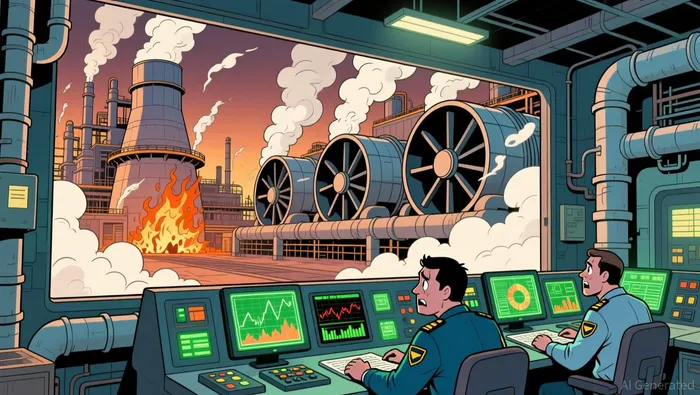
The recent downgrade by BofA Securities frames a classic commodity cycle trade-off for Korea Electric PowerKEP+3.23%. The firm cited the company's increasing cost burden due to recent energy price hikes for oil and liquefied natural gas amid rising geopolitical tensions. This sets up the core tension: KEPKEP+3.23% is a massive consumer of volatile commodities, but its ability to pass those costs through to consumers is structurally limited. The result is a near-term squeeze on margins that the market is pricing in, creating a temporary disconnect from the company's underlying asset value.
The cycle-driven nature of this pressure is clear. High input costs are not immediately reflected in revenues because of constrained pass-through of escalating costs into retail electricity tariffs. This lag is the heart of the problem. While the company may be paying more for fuel today, its tariffs often remain fixed by regulation for months. This creates a direct hit to profitability, which analysts see as dampening expectations for second-half margins.
Structural bottlenecks in the power grid compound this issue. The firm noted that structural power grid bottlenecks likely limit the immediate impact of such a shift toward alternative fuels like coal and nuclear. This means KEP cannot easily pivot to cheaper inputs to offset the LNG and oil price spikes, locking it into a high-cost fuel mix for longer than it might like. The downgrade, therefore, is not a rejection of the business model but a recognition of a cyclical misalignment-where commodity prices are rising, but the revenue mechanism is stuck in a lower gear.
The bottom line is that KEP's stock decline reflects a near-term earnings overhang. The company's low P/E ratio of 3.69 suggests the market is pricing in this headwind aggressively. From a cyclical perspective, this sets up a potential opportunity if and when the macro backdrop shifts. The thesis hinges on the expectation that commodity prices will eventually moderate and that regulatory constraints on tariff adjustments will loosen, allowing margins to re-rate. For now, the cycle is working against the stock.
The Structural Backdrop: Grid Constraints and Market Reform
The path to a cyclical recovery for Korea Electric Power is not a simple matter of commodity prices falling. The company's ability to act on that shift is fundamentally constrained by its physical and regulatory infrastructure. The analyst note from BofA Securities highlights this directly: while increasing coal and nuclear utilization is being discussed as an alternative to expensive LNG, structural power grid bottlenecks likely limit the immediate impact of such a shift. This isn't a minor operational hiccup; it's a hard ceiling on operational leverage. KEP cannot simply flip a switch to burn cheaper fuel because the grid cannot handle the power flow, locking the company into a high-cost fuel mix for longer.
This mirrors a broader industry challenge, particularly in the nuclear sector. Companies like China General Nuclear Power Group are facing deep pressure from the same forces. As China's power market reforms deepen, nuclear power companies need to more actively adapt to competitive pricing. The result is a decline in both revenue and net profit for CGN in 2025, driven by an overall decline in transaction prices in China's power market. The parallel is clear: even when nuclear plants are running, their profitability is squeezed by market dynamics that favor lower, traded prices over stable, regulated tariffs.
For KEP, these structural constraints act as a double bind. On one hand, grid bottlenecks prevent a swift pivot to cheaper fuels. On the other, the broader trend toward market-based pricing and reform pressures the economics of its existing nuclear fleet. This creates a ceiling on any cost pass-through. The company's financial flexibility is not just about its balance sheet but about its physical capacity to respond to the commodity cycle. Until grid constraints are resolved and regulatory mechanisms provide clearer, more stable tariff pathways, KEP's operational leverage will remain capped. The cyclical recovery, therefore, depends not just on falling input costs but on a simultaneous easing of these structural bottlenecks.
Valuation and Scenario Implications
The current valuation of Korea Electric Power presents a stark contrast to its operational reality. Despite the near-term headwinds, the stock trades at a notably low P/E ratio of 3.69. This extreme discount suggests the market is pricing in significant downside risk, likely a combination of the immediate margin squeeze from high fuel costs and the structural constraints that limit the company's ability to respond. The sharp 14% drop over the past week reflects a clear flight from perceived near-term earnings overhang.

The key scenario driver for any re-rating is the duration and magnitude of the current commodity price cycle. A sustained high-cost environment for oil and LNG will eventually force a reckoning. Regulatory constraints on tariff adjustments may be tight in the near term, but prolonged pressure on the company's profitability creates a powerful incentive for policymakers to allow a more meaningful pass-through. The cycle, in other words, may work in reverse: persistent cost inflation could become the catalyst for the very tariff relief that the market is currently discounting as unlikely.
For a longer-term bullish case, the analysis points beyond the commodity cycle to structural improvements. Success in grid modernization would directly address the bottleneck that currently locks KEP into expensive fuel. More broadly, policy support for baseload nuclear power-mirroring developments like the new pricing mechanism in Liaoning-could systematically improve the company's cost pass-through mechanism. The recent reforms in China, where a Contract for Difference (CfD) electricity pricing mechanism is being established, offer a potential blueprint. Such a model provides downside protection for tariffs, enhancing profit visibility and defensive value. If similar support were to emerge in South Korea, it would fundamentally alter the risk/reward equation, transforming KEP from a volatile commodity consumer into a more predictable, regulated utility.
The bottom line is that KEP's valuation is a bet on the macro and policy cycle. The low P/E is a floor for now, but the path to a re-rate depends on two converging forces: the eventual moderation of input costs and, more importantly, the easing of structural constraints that have isolated the company's earnings from its asset base.
Catalysts and Risks to Watch
The cyclical thesis for Korea Electric Power hinges on a few clear forward-looking tests. Over the coming quarters, investors should watch for specific signals that will confirm or challenge the path back to normalized margins.
First and foremost is any regulatory signal on electricity tariff adjustments. The market's low valuation reflects a belief that cost pass-through is constrained. The clearest catalyst for a re-rating would be a policy shift that allows KEP to more fully pass through its escalating fuel costs. While the BofA note cited constrained pass-through into retail electricity tariffs in the near term, sustained pressure on the company's profitability could force a regulatory response. Monitoring for announcements on tariff review processes or new mechanisms for cost recovery will be critical.
Second, progress on grid infrastructure projects is essential. The company's operational flexibility is currently capped by structural power grid bottlenecks. Any tangible advancement in resolving these constraints-whether through new transmission lines, grid upgrades, or policy changes-would directly address a key structural vulnerability. This would not only improve the economics of shifting to cheaper fuels like coal but also signal a long-term improvement in the company's ability to manage its cost structure. Watch for updates on specific projects and government funding allocations.
Finally, the broader macro cycle for LNG and oil prices remains the primary external risk. The recent downgrade was triggered by energy price hikes for oil and liquefied natural gas amid rising geopolitical tensions. Any sustained decline in these input costs would provide immediate relief to KEP's cost structure, regardless of regulatory or grid progress. Conversely, a further spike would deepen the near-term squeeze. The company's financial resilience will be tested by the volatility and direction of these global commodity markets.
The bottom line is that KEP's recovery is a multi-pronged bet. It requires a favorable macro backdrop for fuel prices, a regulatory shift to enable cost pass-through, and tangible progress on grid bottlenecks. Until these catalysts align, the stock is likely to remain volatile, trading on the expectation of a cyclical resolution that has yet to materialize.
Disclaimer: The content of this article solely reflects the author's opinion and does not represent the platform in any capacity. This article is not intended to serve as a reference for making investment decisions.
You may also like
UPCX (UPC) sees 46.0% volatility in 24 hours: trading volume surge triggers sharp price swings
NTRN 24-hour Amplitude 47.4%: Binance Delisting Approaching Triggers Surge in Trading Volume
Imunon’s 80-Patient Target Hinges on Enrollment Grit—Can It Deliver Before the Cash Runs Out?
Bitcoin, Crypto Stocks Climb on Reports That Iran's President Is 'Ready to End War'
Trending news
MoreCrypto prices
More





