
PNB’s Executive Reshuffle: Diverting Attention From Deep-Rooted Operational Issues and Escalating ESG Concerns

Overview of Recent Management Changes at Punjab National Bank
Punjab National Bank (PNB) recently announced a significant reshuffling of 13 senior leaders, effective April 1, 2026. This reorganization, which includes key General Manager and Zonal Manager positions across India, is a routine administrative measure typical for large public sector banks. Such periodic adjustments in senior management are standard practice and are not unusual for institutions like PNB.
For investors, the main question is whether this reshuffle is simply a routine internal adjustment or if it addresses deeper challenges within the bank. The timing is notable, coming shortly after PNB decided to keep all its MCLR lending rates unchanged. This move, announced in late February, signaled a commitment to stability in lending rates, often a sign of continuity in strategic direction following leadership changes.
From a tactical perspective, such management changes are typically seen as routine operational events that rarely move the market. The bank presents the reshuffle as a standard measure to enhance efficiency and maintain leadership continuity, with a focus on promoting internal talent. For those following event-driven strategies, the key question is whether this change creates any temporary market mispricing or simply reaffirms the status quo. Evidence points to the latter: this is a standard personnel adjustment that does not impact the bank’s short-term financial outlook or address underlying issues such as asset quality or profitability. The real investment story lies elsewhere.
Operational and Customer Service Issues Remain Unresolved
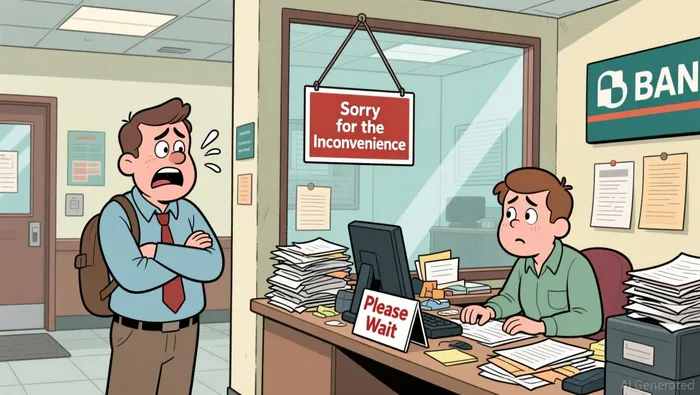
This wave of management changes appears to be a reaction to ongoing operational problems rather than a solution. Persistent customer service failures highlight serious breakdowns in execution that cannot be fixed by routine personnel moves. For example, one customer reported a ₹2000 lien and ₹7000 negative balance after more than ten visits to various branches, with no resolution and shifting explanations. Another individual described a four-day delay in an account transfer that caused significant inconvenience. These are not isolated incidents but point to systemic failures in accountability and service delivery.
Such operational shortcomings have direct implications for the bank’s ESG (Environmental, Social, and Governance) risk profile. The MSCI ESG rating, which evaluates social and governance practices, would likely flag these ongoing customer service issues as significant social risks. When a bank fails in its core mission of serving customers, it exposes weaknesses in governance and damages its reputation. The reshuffle may be an attempt to contain the fallout from these visible problems, rather than a proactive effort to address root causes.
Internal Transitions and Retirement Announcements
The inclusion of several retirement-related announcements further suggests that these changes are focused on managing internal transitions rather than driving external performance improvements. For instance, PNB has vacated the office of Chief General Manager, Sastra Division due to retirement and superannuated Shri Rakesh Grover from General Services. These are routine retirements, not promotions based on exceptional performance. Subsequent appointments, such as Mrityunjay’s move from Zonal Manager to Chief General Manager, are internal advancements. This pattern points to a bank managing an aging leadership team and administrative turnover, which can lead to instability during transitions. For investors, this focus on internal personnel matters, rather than addressing customer-facing challenges, signals a lack of urgency in tackling the most pressing issues.
Financial Implications and Valuation Perspective
The recent management changes do not affect PNB’s fundamental financial drivers. The reshuffle has no direct impact on net interest margins or the bank’s capital structure. The decision to maintain the one-year MCLR at 8.75% since March 1 indicates no immediate pressure on lending profitability. This stability, communicated before the personnel changes, suggests that the bank’s pricing strategy is not influenced by these internal moves. The MCLR is determined by funding costs and market conditions, not by who holds regional management roles.
Valuation for a public sector bank like PNB depends on asset quality, profitability, and capital adequacy—none of which are affected by this reshuffle. The bank’s business mix, with retail banking at 28.1% and treasury operations at 34.2%, remains unchanged. The appointments are internal shifts within the existing structure. For event-driven investors, this is a classic example of noise rather than signal; the market typically reacts little to routine management changes that do not alter the fundamental valuation drivers.
In contrast, meaningful catalysts for the stock would include a resolution of the customer service crisis or a sustained improvement in asset quality, such as a notable reduction in the gross non-performing asset ratio. These factors would directly enhance earnings and capital strength. The current reshuffle, focused on internal logistics and retirements, distracts from these more significant issues. The real catalyst for change lies elsewhere.
Key Catalysts and Risks for Investors
For those seeking actionable events, the true catalysts are not found in personnel announcements but in how the bank addresses its operational failures. The first sign to watch for is any official plan to resolve widespread customer complaints. So far, PNB has not released a public statement or a detailed framework to address issues like the ₹2000 lien and ₹7000 negative balance or the four-day transfer delay. A credible response—such as a dedicated task force, a timeline for clearing backlogs, or a commitment to internal accountability—would be a meaningful step toward restoring trust and reducing ESG risk. Without such action, the reshuffle risks being seen as a diversion from the real problems.
More importantly, investors should monitor changes in asset quality metrics. Management changes are lagging indicators; the real test is in the numbers. Key metrics like the gross non-performing asset ratio and provision coverage ratio will reveal whether the bank is making progress in improving its loan book. A sustained decline in NPAs would indicate better risk management and directly boost profitability and capital. Conversely, any deterioration would confirm ongoing credit stress, suggesting that the current operational issues are symptoms of deeper systemic problems. These financial indicators are far more significant than any internal appointment.
The main risk is that the reshuffle is perceived as an empty gesture, addressing only internal logistics while operational failures persist. This perception could negatively impact the bank’s social ESG score, which evaluates customer treatment and governance. Ongoing service failures, as reported by customers, represent a material social risk that could lower the MSCI rating. For investors, a declining ESG score is not just a reputational concern—it can affect capital flows and increase funding costs over time. The message is clear: unless PNB demonstrates real progress on customer service and asset quality, this management reshuffle will be remembered as a minor event amid a worsening situation.
Strategy Backtest: Absolute Momentum Long-only Approach
- Entry Criteria: Buy PNB when the 252-day rate of change is positive and the closing price is above the 200-day simple moving average (SMA).
- Exit Criteria: Sell when the closing price drops below the 200-day SMA, after 20 trading days, or if a take-profit of +8% or stop-loss of -4% is reached.
- Risk Controls: Take-profit at 8%, stop-loss at 4%, and a maximum holding period of 20 days.
Backtest Results
- Total Return: -45.29%
- Annualized Return: -14.06%
- Maximum Drawdown: 58.93%
- Profit-Loss Ratio: 0.44
- Total Trades: 9
- Winning Trades: 5
- Losing Trades: 4
- Win Rate: 55.56%
- Average Hold Days: 1.78
- Max Consecutive Losses: 2
- Average Win Return: 11.93%
- Average Loss Return: 22.48%
- Max Single Win: 25.64%
- Max Single Loss: 51.02%
These results highlight the challenges of relying solely on technical momentum strategies in the current environment, emphasizing the need for a focus on fundamental improvements within the bank.
Disclaimer: The content of this article solely reflects the author's opinion and does not represent the platform in any capacity. This article is not intended to serve as a reference for making investment decisions.
You may also like
Pan American Silver Jumps 6.78% Amid High Trading Volume and Positive Technical Indicators

BCG’s Profits Rebound Triggers 59% Surge After Hours—Is This a Genuine Breakthrough or Just Speculation?

Block Surges 5.52% Amid Positive Market Sentiment and Technical Validation

INVO Fertility's Reverse Stock Split Eliminates Delisting Threat—Will the $2.73 Barrier Support a New Valuation?

Trending news
MoreCrypto prices
More





