
Halliburton’s Strategic Move with Sekal: Confident Automation Investment During a Restrained Oilfield Capital Phase

Halliburton’s Strategic Acquisition: A Long-Term Investment in Automation
Halliburton’s purchase of Sekal represents a calculated move, rooted in a vision for sustained industry transformation rather than a short-term response to market fluctuations. This decision underscores the oilfield services sector’s ongoing transition toward digital automation, driven by economic trends such as steady commodity prices and the prospect of lower real interest rates. As financing becomes more accessible and energy demand stabilizes, companies are increasingly motivated to invest in technologies that enhance operational efficiency—precisely the advantage offered by advanced automation solutions.
Combining Technologies for Enhanced Drilling Automation
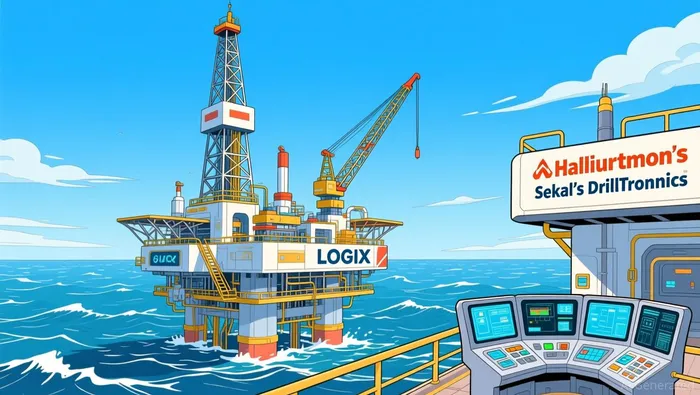
The merger brings together Halliburton’s established LOGIX® automation and remote operations platform with Sekal’s sophisticated DrillTronics® system. This integration aims to deliver a robust, unified solution for automated drilling, positioning Halliburton to reduce well construction expenses, boost hydrocarbon extraction, and minimize operational risks. By consolidating these complementary technologies, Halliburton seeks to capitalize on efficiency improvements that become increasingly attractive during periods of industry expansion.
This acquisition follows a carefully planned path, building upon a collaboration agreement from November 2023. That partnership laid the foundation for joint automation initiatives, now culminating in full integration. The combined platforms have already demonstrated their capabilities in real-world applications, such as the digitally automated well construction project offshore Guyana, where LOGIX and DrillTronics achieved fully automated geological well placement.
Accelerating FutureWell: Halliburton’s Unified Automation Vision
This acquisition aligns with Halliburton’s broader FutureWell initiative, which seeks to integrate subsurface analytics, automation, and rig systems. Sekal’s technology accelerates this vision, providing the essential automation layer needed to realize a closed-loop, automated well construction process. In a market environment where capital discipline and efficiency are paramount, Halliburton’s investment represents a forward-looking commitment to business transformation.
Macroeconomic Context: Oil Prices, Interest Rates, and Industry Cycles
Halliburton’s automation strategy is closely linked to broader economic and commodity trends that shape oilfield services demand. The current landscape is characterized by moderate oil prices and elevated real interest rates, which together pose challenges for capital-intensive investments. Despite these headwinds, the long-term outlook for the services sector remains positive.
Commodity forecasts suggest a stable, balanced market. According to J.P. Morgan Global Research, Brent crude is expected to average $60 per barrel in 2026, reflecting subdued supply-demand dynamics and visible surpluses. While geopolitical risks may cause short-term volatility, sustained disruptions are considered unlikely, resulting in a steady but not particularly stimulative price environment. Operators will have the resources to fund projects, but discretionary spending on new technologies may be limited.
Monetary policy further complicates the investment landscape. The Federal Reserve has paused rate cuts, keeping the federal-funds rate well above pre-pandemic levels at 3.50%-3.75%. Higher borrowing costs make it more expensive to finance drilling and production, prompting operators to focus on projects with guaranteed returns and potentially delaying investments in automation.
Despite these challenges, the oilfield services market is projected to grow from $203.66 billion in 2025 to $265.79 billion by 2030, a compound annual growth rate of 5.4%. Halliburton is betting that current macroeconomic obstacles are temporary, and that its automation technology will deliver efficiency gains compelling enough to justify investment even in a challenging environment. The aim is to enhance profitability per well and accelerate industry growth as conditions improve.
Automation as a Structural Growth Engine
The acquisition of Sekal targets a rapidly expanding segment within oilfield services. The oil and gas automation market is forecasted to grow from $43.35 billion in 2025 to $60.62 billion by 2030, with a compound annual growth rate of 6.94%—outpacing the broader services sector. The Asia-Pacific region is expected to lead this growth, reflecting global trends toward digitalization in major energy-producing areas.
- Rising energy demand: Automation enables operators to maximize production from existing fields.
- Modernization CAPEX: Investments in remote monitoring and predictive maintenance reduce site visits, improve safety, and lower costs.
- Regulatory requirements: Safety mandates are driving the adoption of automated systems.
- Infrastructure expansion: Growth in LNG and midstream facilities in Asia-Pacific and Africa is fueling demand for automation.
These factors create a reinforcing cycle, where efficiency gains from automation support further technological adoption. Halliburton’s recent stock performance, including a 4.38% weekly increase in late March 2026, reflects investor optimism about the company’s strategic direction and its ability to capture a larger share of this high-growth market.
Financial Strength and Execution Challenges
Halliburton’s solid financial position enables it to fund and integrate the Sekal acquisition. The company boasts an EBIT margin of 9.5%, a return on equity of 21.19%, and free cash flow of $828 million. With a debt-to-equity ratio of 0.78, Halliburton maintains prudent capital management, supporting its automation ambitions.
The key to unlocking value from this deal lies in the widespread deployment of the integrated automation platform. The Guyana project proved the technical feasibility of fully automated geological well placement. The next step is scaling this innovation across Halliburton’s global operations, both offshore and onshore. The market’s positive response to the Guyana milestone signals optimism, but sustained success depends on demonstrating that this technology can be replicated and generate consistent revenue.

Adoption Risks and Market Dynamics
A major risk to the automation thesis is the speed of adoption. Although the oil and gas automation market is projected to grow at a 6.94% CAGR, modernization CAPEX is expected to unfold over the next four years. This means the financial benefits of automation may take time to materialize. Operators may prioritize immediate efficiency improvements over large-scale automation, especially if oil prices remain low and interest rates stay high. The risk is that the return on investment is delayed, narrowing Halliburton’s window to establish market leadership before competitors catch up.
Execution risks include the challenge of integrating complex platforms at scale and the possibility of slower customer adoption. While Halliburton’s financial stability provides a buffer, its long-term growth now depends on successfully managing these risks. The automation cycle is real, but its timing and impact are influenced by broader economic and capital expenditure decisions within the oil and gas industry.
Key Catalysts and What to Monitor
The future success of Halliburton’s Sekal acquisition depends on several critical factors. The company has developed its automation platform; now, the market must validate its economic value. Investors should focus on three main areas:
- Commodity prices and monetary policy: The direction of Brent crude prices and Federal Reserve policy will directly affect oil company budgets for automation. A stable or rising oil price gives operators more flexibility, while elevated interest rates increase financing costs. Automation must deliver a strong ROI to justify investment in this environment.
- Integration and commercialization: Halliburton must demonstrate it can scale its closed-loop automation system across its global portfolio, moving beyond pilot projects to widespread adoption. The integration of Sekal’s DrillTronics with LOGIX should result in lower well construction costs, higher recovery rates, and reduced risks—benefits that need to be reflected in contract wins and improved financial performance.
- Industry-wide adoption: The ultimate validation will come when other major operators and service providers follow Halliburton’s lead, accelerating the adoption of automated workflows. The Guyana project sets a precedent, but broader industry uptake will determine the acquisition’s long-term impact.
Halliburton’s acquisition is a strategic wager on a fundamental industry shift. Its success will depend on the company’s ability to drive adoption, deliver measurable efficiency gains, and lead the transition toward automated well construction.
Disclaimer: The content of this article solely reflects the author's opinion and does not represent the platform in any capacity. This article is not intended to serve as a reference for making investment decisions.
You may also like
Sen. Tillis aims to release draft resolving Clarity Act's stablecoin yield dispute this week: report
Wegovy-maker Novo Nordisk partners with OpenAI to speed drug development
German wholesale prices in March 2026: an increase of 4.1% compared to March 2025
Factbox-Impact of Gulf crisis: Australian and New Zealand companies from airlines to banks experience pressure
Trending news
MoreCrypto prices
More





