
Market rebound fails, what's next from a technical perspective?

The brief rebound in U.S. stocks was "cleanly exited" at key resistance levels, with structural risks in the market accumulating.
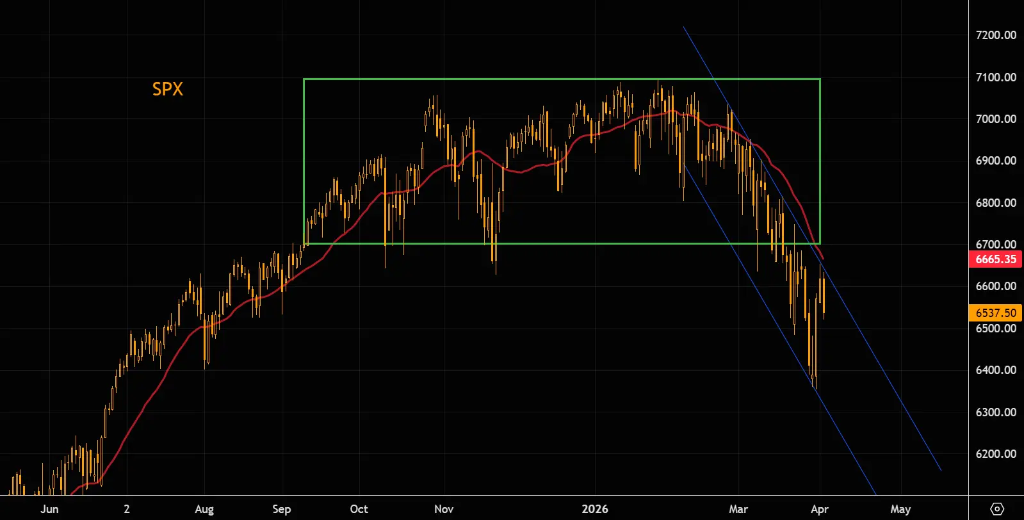
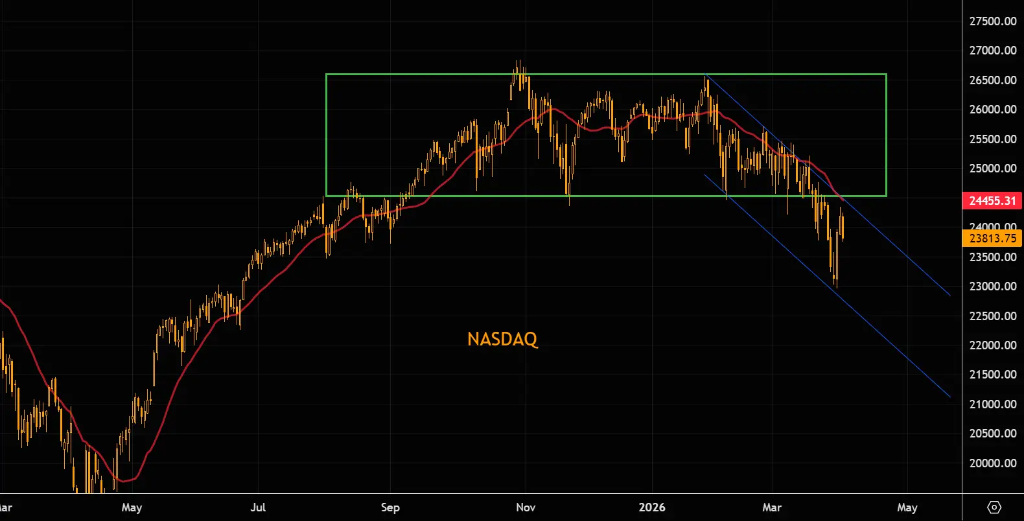
Both the S&P 500 index and Nasdaq index reversed at technical resistance levels, with market makers' positions heavily biased to the short side and liquidity continuing to deteriorate, placing the market in a fragile critical state—any additional shock could trigger a rapid downturn.
Specifically, the S&P 500 index saw a significant reversal after hitting the 21-day moving average and the upper edge of the downward channel; the Nasdaq's movement was almost identical, with former support levels now turning into strong resistance. This "failed rebound" sends an important signal: the technical repair logic the market had hoped for is now under severe test.
Meanwhile, geopolitical risks continue to escalate. Trump stated that extremely severe strikes will be carried out against Iran in the next two to three weeks, causing oil prices to surge and further intensifying market uncertainty.
Double technical breakdown, rebound logic collapsed
Both the S&P 500 and Nasdaq indices clearly exhibited a "false breakout" pattern technically. According to LSEG Workspace data, when both indices tested the upper edges of the steep downward trend channel and the 21-day moving average, they reversed, and the upward momentum previously seen as a potential breakout quickly dissipated.
The situation in the Nasdaq is particularly noteworthy: the previous range support lows have completely turned into resistance, meaning conditions for the needed structural market repair have not yet been fulfilled. From a technical trading perspective, channel trading strategies have continued to be effective over the past few weeks. The latest suppression near the upper channel further strengthens the bias toward downside operations.
Two reinforcing mechanisms, downside risks accumulating
Within the current market structure, two key mechanisms are reinforcing each other, leaving downside risk not to be underestimated.
According to Goldman Sachs data, market makers hold about $7 billion negative Gamma exposure in the S&P 500, the second largest short Gamma reading on record. Under this mechanism, market makers are forced to sell during declines and buy during rallies, in contrast to normal market-stabilizing mechanisms, significantly amplifying price volatility.
Meanwhile, market liquidity remains low. Goldman Sachs data show current low market depth means even moderately sized orders can disproportionately impact prices. This factor is often underestimated by the market and is a key reason behind the frequent abnormal price swings recently observed.
VIX cools off, but market pressure persists
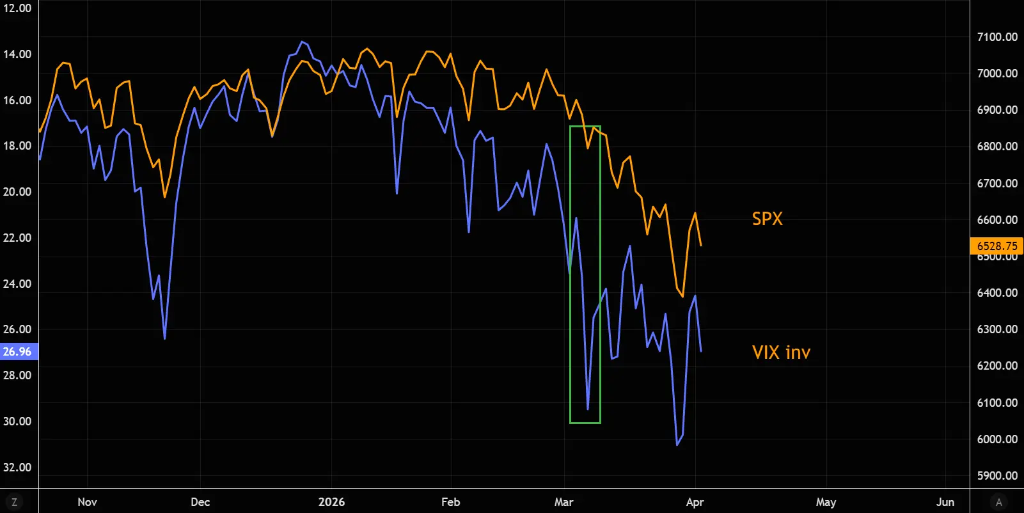
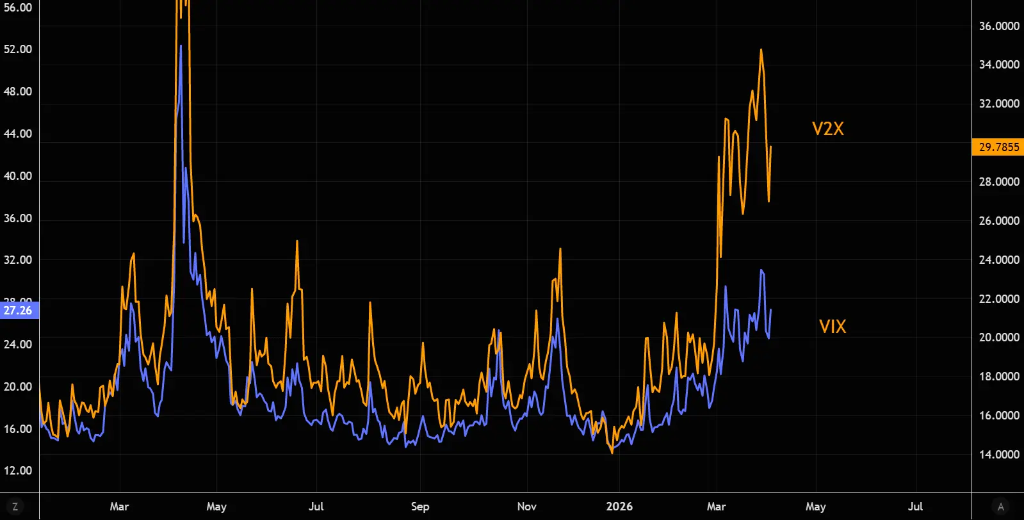
On the volatility front, the spike in the VIX in early March has clearly subsided, but the current reading of 27 still sends a clear signal of pressure. This level is enough to sustain a protective sentiment in the market, but has not reached panic thresholds, meaning the market can continue to slowly decline even without a major spike in volatility.
Concerns are even more pronounced in the European market. The gap between the European volatility index V2X and VIX has remained elevated, and the latest developments in the Iranian situation have further exposed the vulnerability of European assets. In the latest round of global risk asset adjustment, Europe remains in a relatively weak position.
Multiple pressures intertwined, market enters highly sensitive zone
Taking all the above into account, the current market landscape can be summarized on four levels: failed technical rebound, market maker hedging amplifying volatility, lack of liquidity magnifying price shocks, and ongoing spillover from geopolitical risk. Together, these have built a fragile market structure.
From an operational perspective, in an environment of deep negative market maker exposure and thin liquidity, if the market weakens further, the pace of the decline could be significantly faster than expected. For invested holders, the priority of dynamically adjusting protective positions is rising; for spectators, it is still not the time to boldly bottom-fish.
Disclaimer: The content of this article solely reflects the author's opinion and does not represent the platform in any capacity. This article is not intended to serve as a reference for making investment decisions.
You may also like
GV’s 151% Surge Stalls at MA20—Will Buyers Hold?

IMF Issues Alert: Tokenization as a $1 Trillion Catalyst and Potential Source of Systemic Risk

Can Qualcomm's advancements in Snapdragon technology for wearables boost expansion?
Can Mastercard Tap Into SMB Expenditures via Amazon's Platform?
Trending news
MoreCrypto prices
More





