
Trump’s Complete Drug Tariff Threat Pushes Pharmaceutical Companies Into a 120-Day Race to Relocate Production or Adjust Prices

Administration Unveils Sweeping Tariffs to Reshape Pharma Supply Chain
The U.S. government has introduced a robust new mechanism to overhaul the pharmaceutical supply chain, citing national security as the rationale for broad tariffs. This initiative stems from a recent Commerce Department investigation that found the nation’s heavy dependence on imported patented drugs and their components poses a risk to national security. The findings, under Section 232 of the Trade Expansion Act, provide the legal basis for these sweeping measures.
Tariff Structure: Incentives and Penalties for Drugmakers
The policy presents pharmaceutical companies with a clear-cut decision. Firms that have negotiated a "most favored nation" pricing agreement with the administration and are actively investing in U.S.-based production for patented drugs and their ingredients will benefit from a 0% tariff. Others face a more severe outcome: after a negotiation period of 120 to 180 days (with smaller companies granted more time), those without a deal will be subject to a 100% tariff. Companies that have started domestic projects but lack a pricing agreement will initially pay a 20% tariff, which will rise to 100% within four years.
This approach is designed to prompt immediate action, directly tying market access to two strategic objectives: lower prices for U.S. consumers and the relocation of manufacturing to American soil. The administration has already secured 17 pricing agreements—including with industry leaders like Pfizer and AstraZeneca—demonstrating the policy’s early impact. The result is a fundamental shift: maintaining offshore production is now far more costly.
Financial Consequences and Strategic Shifts
The new tariff system creates a sharp financial divide, compelling companies to choose between absorbing a sudden cost increase or investing strategically in U.S. manufacturing. For those hit by the 100% tariff, the cost of importing finished drugs and key ingredients will double, directly squeezing profit margins and making overseas sourcing unsustainable.
Absolute Momentum Long-Only Strategy: Case Study
- Entry Rule: Go long on SPY when the 252-day rate of change is positive and the price closes above the 200-day simple moving average (SMA).
- Exit Rule: Sell when the price closes below the 200-day SMA, after 20 trading days, or if a take-profit (+8%) or stop-loss (−4%) threshold is reached.
- Risk Controls: Take-profit at 8%, stop-loss at 4%, maximum holding period of 20 days.
- Strategy Return: 4.26%
- Annualized Return: 2.36%
- Max Drawdown: 9.38%
- Profit-Loss Ratio: 0.92
- Total Trades: 12 (7 wins, 5 losses, 58.33% win rate)
- Average Hold Days: 16.92
- Max Consecutive Losses: 3
- Average Win: 2.59%
- Average Loss: 2.68%
- Largest Single Gain: 3.91%
- Largest Single Loss: 4.46%
The policy’s structure ensures that this financial pressure is both swift and significant, with larger companies facing the full tariff in as little as 120 days.
Yet, this shock is also a catalyst for redirecting capital. The clear incentive is to ramp up investment in U.S. manufacturing. Early agreements with major players like Pfizer and AstraZeneca highlight the administration’s leverage, and the broader industry is already responding. Companies such as Eli Lilly and Johnson & Johnson have committed billions to expand domestic production, marking a shift from stockpiling inventory to building real capacity. The aim is to meet the January 2029 deadline for new facilities to qualify for tariff exemptions, turning regulatory pressure into a multi-year capital expenditure plan.
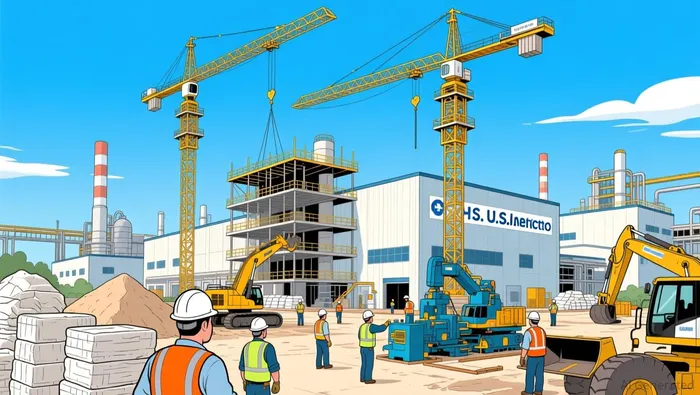
Beyond the immediate tariff implications, the policy is likely to accelerate a broader operational transformation: diversifying supply chains. Dependence on single-source foreign suppliers for critical ingredients is a well-known vulnerability. The looming threat of a 100% tariff on active pharmaceutical ingredients encourages companies to build redundancy and seek alternative sources, even within allied countries. This shift reduces operational risk and supports the administration’s goal of a more secure, domestic supply chain. Ultimately, financial pressure is being used to drive investment in strategic resilience.
Market Impact: Valuation and Strategic Certainty
Initial market reactions are expected to be limited, as the direct financial effects are concentrated in a small segment of branded drug portfolios. The 100% tariff only applies to patented drugs and their active ingredients from companies without a "most favored nation" deal and no active U.S. production plans. For most pharmaceutical revenues—which come from generics, biosimilars, or non-patented products—the policy has little effect. As a result, a broad sell-off in pharmaceutical stocks is unlikely; instead, attention will focus on the high-value portfolio segments exposed to these new costs.
Valuation now hinges less on traditional metrics and more on the cost and timeline of relocating production versus the certainty of avoiding the 100% tariff. Early deals with companies like Pfizer and AstraZeneca, which secured 0% tariffs, underscore the immediate value of compliance. For others, the path involves significant, multi-year capital investment. The market will factor in the costs of building qualifying plants by the January 2029 deadline, while also considering the risk of future tariffs. This dynamic encourages accelerated investment but also embeds substantial long-term costs for those not yet exempt.
However, a significant uncertainty remains: the possibility of legal or regulatory challenges to the Section 232 authority. The administration’s use of national security as justification follows a pattern of aggressive trade actions, including the "Liberation Day" tariffs that were overturned by the Supreme Court earlier this year. While the new drug tariffs are presented as a separate national security measure, their legal standing is not assured. If challenged in court, the entire 100% tariff regime could be struck down, removing the main driver behind the current reshoring push. This adds a layer of regulatory risk that the market must weigh against the tangible costs of onshoring. For now, the policy is active, but its future remains uncertain.
Pfizer (PFE) Stock Snapshot

- Ticker: PFE (Pfizer)
- Exchange: NYSE
- Status: Closed
- Price: $28.32
- Change: -0.230 (-0.81%)
Key Catalysts and Risks: The Road Ahead
The true impact of this policy will be determined by the actions it prompts, not just its announcement. The coming months will reveal whether the administration’s leverage leads to genuine reshoring of production or simply temporary inventory stockpiling. Three main indicators will signal the depth of this structural change:
- New Pricing Agreements: Track the number and terms of new deals announced by the administration. The initial 17 agreements with major players like Pfizer and AstraZeneca show early momentum, but broader acceptance of price concessions across more products will be the real test. The 120-day negotiation window for large companies is crucial—new deals, especially with firms heavily reliant on offshore production, will indicate the market’s willingness to comply. A slow pace of agreements would suggest that financial pressure has not yet overcome entrenched interests.
- Capital Expenditure and Construction: Monitor announcements and progress on new U.S. manufacturing investments. Commitments from companies like Eli Lilly and Johnson & Johnson are encouraging, but the real measure is in actual construction. The January 2029 deadline for tariff exemptions sets a clear timeline. Look for formal CAPEX plans, groundbreaking events, and construction updates to distinguish genuine strategic investment from short-term stockpiling.
- Legal Challenges: Watch for lawsuits challenging the Section 232 proclamation. The administration’s reliance on national security echoes previous aggressive trade actions, some of which have been overturned in court. Any legal challenge could create immediate uncertainty, potentially stalling investment and adding volatility to the sector. The outcome will directly affect the policy’s longevity and the industry’s reshoring strategies.
In summary, the next 120 days represent a critical negotiation period. The market will be closely watching for signs that the threat of a 100% tariff is driving long-term investment, not just short-term inventory moves. The pace of new agreements, the speed of construction, and the evolving legal landscape will collectively determine whether this policy brings about lasting change in the pharmaceutical industry.
Disclaimer: The content of this article solely reflects the author's opinion and does not represent the platform in any capacity. This article is not intended to serve as a reference for making investment decisions.
You may also like
Microsoft’s AI Conversion Rate Hike Signals High-Stakes Monetization Play
Crypto Trends Compared to Asian Market Risk: A Data-Driven Perspective
Jade Biosciences' Talent Strategy Moves from Fundraising to Leading Clinical Performance by 2026
Trending news
MoreCrypto prices
More





