
Solana DeFi Hit by $285 Million Drift Protocol Exploit as Circle Freeze Sparks Debate

Gibbs Mura Launches Inquiry into Circle's Response to Drift Protocol Breach
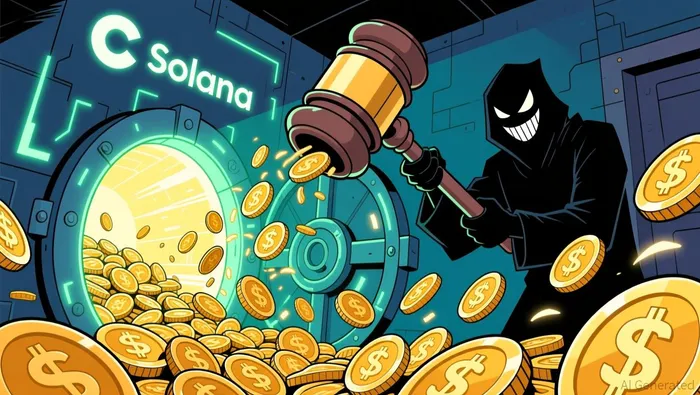
The law firm Gibbs Mura has begun an investigation into Circle Internet Financial following the April 1, 2026, Drift Protocol hack, which resulted in the loss of approximately $285 million in digital assets. The firm is examining whether Circle failed in its responsibilities by not freezing the stolen funds, despite having both the technical means and a history of similar interventions. This event has sparked debate over how consistently stablecoin issuers exercise their authority to freeze assets during major DeFi security incidents.
Details of the Drift Protocol Attack
Drift Protocol, a prominent decentralized exchange operating on Solana, experienced a dramatic drop in total value locked, plummeting from $550 million to below $250 million after the exploit. The attackers used an innovative approach involving durable nonces to gain administrative access, which was further enabled by social engineering tactics that compromised employee credentials. Industry experts point out that human error, rather than software vulnerabilities, played a central role in this breach.
Regulatory Developments and Ecosystem Growth
The Drift incident occurred during a period of significant progress for Solana. On March 17, joint guidance from the SEC and CFTC officially recognized SOL as a digital commodity, exempting protocol staking from securities oversight. This regulatory clarity coincided with the value of Real-World Assets (RWA) on Solana surpassing $2 billion, fueled by institutional interest and new settlement solutions.
Circle's Asset Freeze Practices Under Scrutiny
Gibbs Mura is specifically evaluating whether Circle applied its freeze authority inconsistently in the aftermath of the Drift exploit. Reports indicate that Circle did not freeze the stolen funds, even though it had recently frozen 16 unrelated business wallets in a separate legal case just days earlier. The investigation is focused on whether Circle failed to adequately monitor its systems and neglected its obligations to users who depend on USDC as a regulated stablecoin.
Tracing the Stolen Funds and Attribution
The stolen assets were transferred via Circle's Cross-Chain Transfer Protocol (CCTP) over several hours without any intervention. Blockchain analytics firm Elliptic has suggested that North Korean state-sponsored hackers may be behind the attack, adding a geopolitical dimension to the case. Gibbs Mura is reviewing whether Circle failed to act despite having the technical, contractual, and operational ability to intervene.
Root Causes and Security Lessons
Drift attributed the breach to a compromised employee device and sophisticated social engineering, possibly orchestrated over a six-month period. The attackers reportedly stole assets including 120,000 stSOL and 293,000 JTO in addition to USDC. The incident highlights the distinction between governance failures (such as poor access control) and the exploitation of vulnerabilities.
Impact on Solana Ecosystem and Market Sentiment
The Drift hack underscored the need for immediate improvements in internal controls. Following the breach, the Fear & Greed Index dropped to 17, signaling extreme fear among investors. The DRIFT token lost over 40% of its value, and at least 20 other DeFi protocols reported indirect losses.
- Freeze unnecessary privileges immediately
- Rotate high-value cryptographic keys
- Require dual approvals for treasury transactions
- Implement allowlists for dependencies
- Conduct regular incident response drills
- Assign board-level responsibility for security
Experts recommend that emergency release mechanisms be pre-approved and logged, rather than handled on an ad hoc basis. The Drift exploit now ranks as the ninth largest crypto hack in history, reflecting a shift from external threats to internal risks involving compromised staff devices.
Solana's Broader Growth Amid Security Challenges
Despite the security setback, Solana achieved major milestones in March 2026, including regulatory recognition as a digital commodity in the U.S. Real-World Assets (RWA) became a key growth engine, with total value exceeding $2 billion and the number of holders reaching 182,000—surpassing Ethereum. Notable ecosystem developments included Ondo expanding tokenized stock offerings to over 250 assets and Loopscale introducing PRISM for RWA settlement liquidity.
Solana Trend Chart
Symbol: SOLUSD
Name: Solana
Exchange: BINANCE
Price: 82.850
Change: -2.910 (-3.39%)

Stablecoin Expansion and Institutional Growth
Stablecoin supply on Solana reached $17 billion, driven by the growth of World Liberty Financial's USD1 and new regional issuances. Circle minted an additional $1 billion in USDC on Solana, reflecting robust demand for on-chain dollar liquidity. By early April 2026, USDC supply on Solana had climbed to $7.62 billion, reinforcing the network's status as a leading platform for crypto payments.
Institutional and Enterprise Developments
SOL Strategies reported growth in institutional validator operations, supported by Balance, Canada's largest digital asset custodian, which integrated SOL Strategies' validator for its clients. The company also announced leadership changes, with Michael Hubbard becoming CEO and Steve Ehrlich appointed as Chief Strategy Officer in March 2026.
Enterprise infrastructure advanced with the launch of the Solana Developer Platform (SDP) on March 24, integrating over 20 providers for issuance, payments, and trading. Major partnerships were formed with Mastercard, Worldpay, Western Union, and Interactive Brokers, enabling SOL trading for European investors. Technological progress included Anza's proposal for Multiple Concurrent Proposers (MCP) to bolster censorship resistance on the network.
Disclaimer: The content of this article solely reflects the author's opinion and does not represent the platform in any capacity. This article is not intended to serve as a reference for making investment decisions.
You may also like
New Era Energy's $5M Note Deadline Forces Binary Capital-Raise Outcome by September 2026

SLNO Leaders Liquidate Holdings While Major Investors Withdraw Amidst Legal Turmoil

Xterio (XTER) fluctuates 43.2% in 24 hours: Trading volume surge drives sharp price swings
Trending news
MoreCrypto prices
More





