
Zaif's $60 Million Breach: Examining Liquidity and Reserve Movements

Immediate Financial Consequences
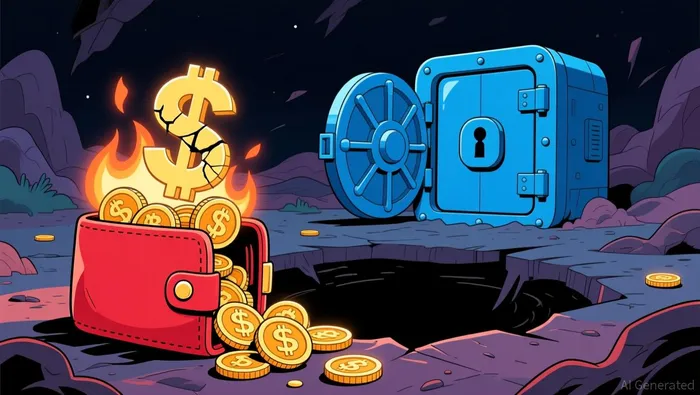
Zaif experienced a significant financial setback when hackers siphoned $60 million from its hot wallets, severely impacting its available funds for daily operations. The theft wiped out the exchange's entire asset reserve, which was reported at $20 million.
To address the deficit, Tech Bureau, Zaif's operator, arranged for a $44.5 million capital infusion from its partner Fisco. In return, Fisco acquired a substantial ownership stake, fundamentally altering the company's equity structure.
The breach exposed a glaring liquidity issue: the stolen amount was triple the reserve, leaving Zaif in a precarious financial position. This emergency funding highlighted the risks of maintaining only a modest internal buffer against major security incidents.
Security Dynamics: Cold Storage Versus Hot Wallet Exposure
Zaif's practice of keeping over 90% of assets in cold storage aligns with industry standards for safeguarding customer funds, as offline storage reduces exposure to cyber threats. This approach is widely regarded as essential for minimizing risk.
However, the $60 million breach exploited weaknesses in the transfer of assets to hot wallets. Hackers accessed these internet-connected wallets, which are used for rapid transaction settlements, revealing a critical vulnerability in the exchange's security protocols.
This imbalance in asset flow was directly responsible for the loss, as the hot wallets became the single point of failure, consuming the entire reserve and underscoring the dangers of insufficient protection for online assets.
The security measures implemented after 2018 were unable to safeguard the most vulnerable layer—hot wallets—where assets remained exposed.
Trading Activity and Regulatory Environment
Reduced trading volumes limit an exchange's ability to invest in ongoing security enhancements. With fewer transactions, revenue drops, restricting funds available for improvements to systems such as cold storage and intrusion detection. This creates a cycle where diminished activity leads to weaker defenses against future threats.
Zaif holds a JFSA license, but it is not classified as Tier-1 regulated. This means the exchange is subject to basic oversight, but investor protection and transparency standards may not match those of top-tier platforms. The regulatory framework sets minimum requirements but does not guarantee robust security or accountability.
Regulators were actively monitoring Zaif before the incident. In March, the FSA issued a business improvement order to Tech Bureau, focusing on security and anti-money laundering measures. The presence of this order just months before the hack highlights that Zaif was under scrutiny for its security practices, yet still suffered a major breach.
Absolute Momentum Long-only Strategy Overview
This momentum-driven approach for SPY initiates trades when the 252-day rate of change is positive and the price closes above the 200-day simple moving average (SMA). Positions are closed if the price falls below the 200-day SMA, after 20 trading days, or when either an 8% profit target or a 4% stop-loss is reached.
- Entry Criteria: 252-day rate of change > 0 and closing price > 200-day SMA
- Exit Criteria: Closing price < 200-day SMA, maximum holding period of 20 days, take-profit at +8%, or stop-loss at −4%
- Asset: SPY
- Risk Controls: Take-profit at 8%, stop-loss at 4%, maximum holding period of 20 days
Backtest Performance
- Strategy Return: 4.26%
- Annualized Return: 2.36%
- Maximum Drawdown: 9.38%
- Profit-Loss Ratio: 0.92
Trade Statistics
- Total Trades: 12
- Winning Trades: 7
- Losing Trades: 5
- Win Rate: 58.33%
- Average Holding Days: 16.92
- Maximum Consecutive Losses: 3
- Average Win Return: 2.59%
- Average Loss Return: 2.68%
- Maximum Single Trade Return: 3.91%
- Maximum Single Loss Return: 4.46%
Trading Trends and Regulatory Insights
Lower trading volumes restrict Zaif's ability to invest in security upgrades, as reduced activity means less revenue for reinvestment. This cycle perpetuates vulnerabilities, making it harder to strengthen defenses against future attacks.
Zaif's regulatory status provides basic oversight but does not ensure the highest standards of investor protection or transparency. The exchange was under active regulatory review prior to the breach, with the FSA issuing improvement orders focused on security and anti-money laundering. Despite this scrutiny, Zaif suffered a significant security failure.
Key Catalysts and Risks: Monitoring Liquidity Flows
The main driver for future developments is the FSA's ongoing evaluations of security protocols at exchanges. These intensified inspections, prompted by previous hacks, require Zaif to implement substantial improvements in its hot wallet security and overall defense systems. Stricter enforcement of regulatory orders may necessitate expensive upgrades, directly affecting financial resources.
Trading volume remains the most important metric. Sustained, higher volumes generate revenue that supports mandated security investments and a more stable financial structure. Conversely, stagnant activity limits available funds for system improvements, maintaining the vulnerabilities that led to past losses.
The greatest risk is another major breach. If Zaif experiences a similar-scale hack, it would severely strain its already diminished capital and further damage customer confidence. Unlike larger exchanges with dedicated protection funds, Zaif's operator would bear the full financial impact of any future loss, increasing liquidity risk.
Disclaimer: The content of this article solely reflects the author's opinion and does not represent the platform in any capacity. This article is not intended to serve as a reference for making investment decisions.
You may also like
USD/JPY Price Outlook: Stays under 159.00 as buyers remain wary with weaker USD interest
Hafnia’s Top Executives Sell Shares Amidst Faltering Growth Story—Be Alert for Potential Pump-and-Dump Signals

Gold Faces Potential Revaluation Challenges as Dollar Link Weakens and Momentum Appears Overstretched

Duni’s Postal Voting Choice and Ex-Dividend Timing Offer Strategic Opportunity to Impact Shareholder Voting

Trending news
MoreCrypto prices
More





