
Pirelli Faces Critical Juncture: Board Resists Imposed Cyber Tyre Separation as Geopolitical Deadline Approaches

Pirelli Faces Boardroom Tensions Amid Geopolitical Pressures
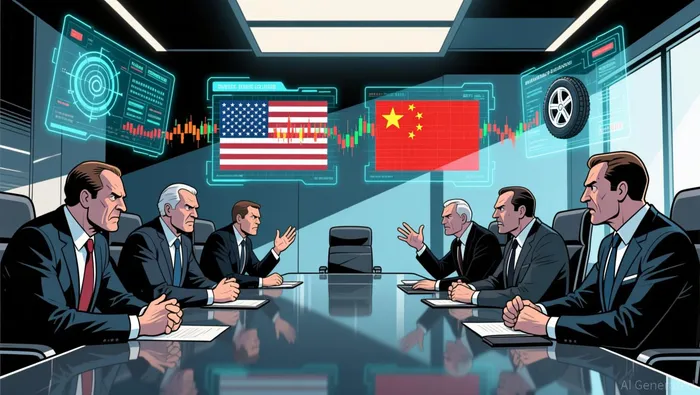
Pirelli’s leadership is grappling with mounting geopolitical challenges as the Italian government weighs intervention in response to new U.S. restrictions on Chinese automotive technology. With Sinochem, a Chinese state-owned entity, holding a 34% stake in Pirelli, authorities are considering options such as transferring this stake to a blind trust or suspending its voting rights. These measures reflect concerns that Chinese ownership could jeopardize Pirelli’s ambitions in the U.S. market.
At the heart of the dispute is Pirelli’s business strategy. North America accounts for approximately a quarter of the company’s revenue, making the region critical for future growth. The company’s Cyber Tyre technology, which gathers real-time data on tire performance, has drawn scrutiny from U.S. regulators. Italian officials and their allies believe that insulating this sensitive technology from Chinese influence is essential. However, Pirelli’s board has unanimously rejected any plan to separate or compartmentalize the Cyber Tyre business.
The board’s resistance is based on a fundamental evaluation of the company’s structure. They have made it clear that any attempt to divide or isolate parts of the business would be impractical and would erode value. According to the board, splitting off Cyber Tyre would disrupt the integrated business model, eliminate operational synergies, drive up costs, and weaken the company’s financial position. In an industry where connectivity and data are increasingly central, the board insists that the tire business cannot be artificially divided without significant harm.
This standoff introduces significant risks to Pirelli’s capital allocation and strategic direction. The company now faces a difficult choice: comply with a potentially damaging government-mandated separation, or continue searching for a solution that meets geopolitical demands without sacrificing competitiveness. For investors, this uncertainty means Pirelli’s future is closely tied to the outcome of ongoing political negotiations, complicating investment decisions based on a straightforward growth narrative.
Financial Performance and Valuation Outlook
Pirelli’s latest results highlight its ability to meet operational goals, but governance concerns cast a shadow over its prospects. The company achieved 4.2% organic revenue growth and improved its adjusted EBIT margin to 16%, supported by robust cash flow and a stronger net financial position, which surpassed expectations at negative €1.1 billion. The board’s confidence was reflected in the proposal of a special dividend, signaling financial strength and lower leverage.
Looking ahead, however, the outlook is less optimistic. Management’s forecast for 2026 anticipates only 2.7% revenue growth, with margins expected to remain at 16.2%. This slower growth trajectory, despite market optimism, has led to a higher valuation, with the price-to-earnings ratio rising from 11.7 at the end of 2025 to 15.4 in April 2026. This premium reflects investor hopes for a favorable resolution to the governance dispute, but it also means that any negative developments—such as a forced separation of Cyber Tyre—could undermine the financial assumptions supporting the current valuation.
Board’s Position on Business Structure
The board has reiterated that any form of business separation is both unworkable and destructive to value. They argue that such a move would dismantle operational synergies, raise costs, and weaken financial stability. For a company aiming for a 16% EBIT margin, these risks are significant. Forcing a split would likely damage the integrated, data-driven approach that underpins the value of the Cyber Tyre platform, making the current valuation premium a wager on governance stability as much as financial performance.
Key Catalysts, Scenarios, and Investor Considerations
The next major development is expected by the March 2026 deadline for new U.S. rules targeting Chinese-backed automotive technology. This impending regulation is prompting swift action from the Italian government, with a decision on Pirelli’s governance anticipated by mid-April. The outcome will shape Pirelli’s strategic direction for years to come.
The best-case scenario would be a negotiated agreement that allows Sinochem to retain its stake while introducing governance reforms—possibly through temporary voting restrictions or a blind trust. This would enable Pirelli to preserve its integrated business model, safeguard the value of Cyber Tyre, and continue expanding in North America. Such a resolution would support the board’s stance that separation is not viable and would maintain the current valuation premium by removing the most pressing governance risk.
The main threat, however, is a forced separation or an extended deadlock. If the government compels Pirelli to spin off Cyber Tyre, it would directly contradict the board’s assessment and likely erode operational synergies, increase costs, and damage financial resilience. This would weaken Pirelli’s position in the connected vehicle market and could depress the stock until a less profitable business model is established. A prolonged impasse would leave the company exposed to ongoing geopolitical uncertainty, heightening execution risks and deterring investors seeking stability.
For institutional investors, the situation demands close attention. The recent rally in Pirelli’s shares reflects expectations of a positive outcome. Any shift toward a forced separation would likely prompt a reassessment of the risk premium, as the path to achieving the company’s margin targets would become less certain. The critical factors to monitor are the government’s mid-April decision and the subsequent capital allocation strategy. A resolution that preserves Pirelli’s autonomy would present a strong buying opportunity, while a mandated split would signal increased risk and a less attractive investment case.
RSI Oversold Long-Only Strategy Backtest (PIRC.MI, 2024-2026)
- Entry: Buy when RSI(14) falls below 30
- Exit: Sell when RSI(14) exceeds 70, after 20 trading days, or if a 10% take-profit or 5% stop-loss is hit
- Results:
- Strategy Return: 14.62%
- Annualized Return: 7.1%
- Maximum Drawdown: 3.32%
- Profit-Loss Ratio: 1.48
- Total Trades: 8 (7 wins, 1 loss)
- Win Rate: 87.5%
- Average Hold: 19.5 days
- Average Win: 2.2%
- Average Loss: 1.52%
- Max Single Gain: 3.62%
- Max Single Loss: 1.52%
Disclaimer: The content of this article solely reflects the author's opinion and does not represent the platform in any capacity. This article is not intended to serve as a reference for making investment decisions.
You may also like
SMPL’s Shattered Trendline and $249 Million Write-Down Indicate Intensifying Structural Breakdown

Woodward Surges to $200 Million Volume Rank While Earnings Beat Drives Aerospace Rally
Humana Shares Slip on Cost Worries as Trading Volume Lags While Market Cap Stands at $23 Billion
Hims & Hers Claims Top Volume Spot Yet Regulatory Storm and Margin Slump Fuel 30 Percent Yearly Slide
Trending news
MoreCrypto prices
More





