
NextNRG’s $0.55 Debt-to-Equity Exchange Reflects Urgent Fundraising and Increased Dilution Threat

NextNRG’s March Financing: Urgent Moves with High Stakes
In March, NextNRG undertook two urgent financial maneuvers to secure much-needed capital—each coming at a significant cost. The first step involved a debt-for-equity exchange: on March 11, the company issued 3,181,818 new common shares to a creditor, effectively wiping out a $1.75 million promissory note. However, this transaction valued the shares at just $0.55 each, a steep discount compared to recent trading prices, resulting in considerable dilution for existing shareholders.
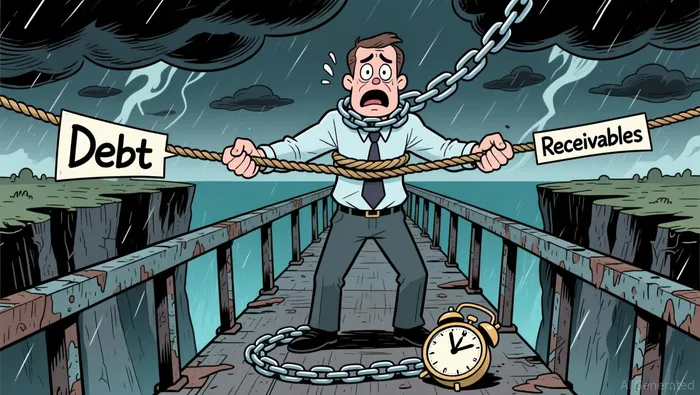
The second move, executed on March 9, was a receivables agreement. NextNRG received $2.1 million upfront (minus $105,035 in fees) in exchange for agreeing to hand over 6.87% of its future receipts until a total of $2.772 million is paid out. This deal also imposes a fixed biweekly payment of $231,000, adding immediate pressure to the company’s cash flow.
Both agreements are backed by a first-priority claim on NextNRG’s key assets, such as accounts, receivables, and inventory. Notably, the CEO has personally guaranteed the company’s obligations under the receivables arrangement, giving lenders both asset security and a personal guarantee from management.
These transactions provided NextNRG with over $3.8 million in liquidity, eliminating a fixed debt and injecting new funds. However, the company has now pledged a significant share of its future revenue and working capital as collateral. The fixed biweekly payments further strain short-term cash resources. In essence, NextNRG has exchanged future earnings and vital assets for immediate survival, heightening its exposure should operational cash flow fall short of these new commitments.
A History of Bold Financial Restructuring
These March deals are part of a broader pattern of aggressive financial engineering at NextNRG. The company has repeatedly turned to its balance sheet to buy time. For example, in July 2025, NextNRG converted debt into equity by issuing over one million shares to a lender, again diluting shareholders to retire a fixed obligation. This marks the second time in less than a year that the company has used this approach.
Recently, NextNRG has moved away from raising funds through open-market equity sales. In January, it ended its At-the-Market (ATM) stock offering program, which had previously allowed flexible capital raises. The discontinuation suggests the company lost access to this funding channel, likely due to weak investor interest. As a result, NextNRG has been forced into more costly, one-off financing arrangements, signaling a decline in financial flexibility.
Internal management challenges have also come to the fore. The company has notified the SEC that it will not file its 2025 annual report on time, pushing the deadline to April 15. This delay raises concerns about the company’s accounting and governance, highlighting ongoing struggles to meet basic financial reporting requirements. The balance sheet remains fragile, with short-term liabilities far outstripping liquid assets, forcing the company to seek cash wherever possible.
Altogether, these developments reveal a company in ongoing financial distress. Whenever cash flow falters, NextNRG turns to debt-for-equity swaps and the sale of future revenues. The March transactions are simply the latest—and most expensive—examples of this survival strategy.
Assessing Value and Risk
These recent financings have dramatically shifted the risk profile for NextNRG. While they provide a temporary lifeline, they come at the expense of significant shareholder dilution and increased financial risk. The debt-for-equity swap valued shares at just $0.55 each—about half the typical market price—resulting in a major hit to equity value without any operational improvement to offset it.
The company’s balance sheet is now highly vulnerable. Short-term obligations exceed cash and liquid assets by over four times, leaving little margin for error. Any operational hiccup—such as delayed payments or project setbacks—could quickly lead to a liquidity crisis. With much of its future revenue and working capital pledged as collateral, NextNRG has little room to maneuver.
A strategic investment made in January offers some support, but it is not a scalable solution. The investment comes from a single party, with no registration rights, meaning the funds are locked in and the investor cannot easily exit. While the CEO has indicated that further investments may be forthcoming over the next several months, this is merely a projection, not a guaranteed funding source. Meanwhile, the company must meet its new biweekly payment obligations from its own operations.
Ultimately, these actions are stopgap measures, not a foundation for long-term growth. They buy time but raise the cost of capital and the risk of further dilution if more funding is needed. The company’s valuation now hinges on its ability to generate enough cash to cover these new fixed outflows while it works to complete its overdue financial report. Any misstep could quickly render the recent financing inadequate.
Key Triggers and Areas to Monitor
The immediate challenge for NextNRG is whether this emergency funding will be enough to stabilize the business or merely delay further decline. The most pressing catalyst is the upcoming deadline for its overdue annual report, now expected by April 15. This filing will provide the first updated, audited financials in over a year, and investors will need to closely examine the balance sheet and cash flow to assess whether the company’s liquidity has improved or deteriorated further.
Another critical point is NextNRG’s ability to meet its new fixed payment obligations. Under the receivables agreement, the company must remit $231,000 every two weeks, regardless of project timing or collections. Missing this payment would trigger a default, giving the lender a direct claim on receivables and inventory, and activating the CEO’s personal guarantee. This biweekly payment schedule will put the company’s operational efficiency to the test in the near term.
Investors should also watch for new, substantial revenue-generating contracts that could help stabilize cash flow. The recent 28-year Power Purchase Agreement (PPA) with a nursing home is a positive development, offering an estimated $5 million in gross revenue over its term. However, this is just one project. A true turnaround will require NextNRG to consistently secure and execute similar deals, building a diversified and reliable revenue stream capable of supporting its new financial commitments and future growth. Until then, the company remains a speculative investment, with its fate tied to meeting its next payment and delivering its overdue financial report.
Disclaimer: The content of this article solely reflects the author's opinion and does not represent the platform in any capacity. This article is not intended to serve as a reference for making investment decisions.
You may also like
Check Point Tops April 10 Volume List at $210 Million as Revenue Miss Drives Stock to New 52-Week Low
Is There Still an Opportunity to Benefit from Amazon's Stock Recovery?
SMPL’s Shattered Trendline and $249 Million Write-Down Indicate Intensifying Structural Breakdown

Nordea's Outstanding Shares Decline Rapidly: Strong Buy Opportunity as Strategic Repurchase Plan Unfolds

Trending news
MoreCrypto prices
More





