
SharkNinja’s 6-Year Filter Air Purifier: Expanding TAM or Creating a Recurring Revenue Dilemma?

SharkNinja’s Strategic Bet: Disrupting the Air Purifier Market
SharkNinja is taking a bold approach in the air purifier industry by addressing the recurring expense of filter replacements—a pain point for many consumers. Their NeverChange™ technology promises up to six years without needing a new filter, potentially saving users as much as $350 over the product’s lifespan. This move is particularly striking for a company that could otherwise profit from regular filter sales.
The financial logic is compelling. With an $449 initial price tag, the BreatheClear Max is positioned as a high-end smart device rather than a typical household appliance. The savings from not having to buy replacement filters effectively lower the long-term cost, making the upfront investment more attractive. SharkNinja is signaling that a one-time purchase can be more valuable than ongoing subscription costs.
The real opportunity, however, lies in expanding the market. SharkNinja’s research shows that 86% of people associate air quality with health, but only a third actively track it. The main obstacle isn’t lack of concern, but the hassle of regular filter changes and ongoing expenses. By removing these barriers, SharkNinja is not just offering a superior product—they’re encouraging the majority who believe opening a window is enough to become proactive about indoor air quality.
Smart Home Innovation: More Than Just an Appliance
SharkNinja is intentionally marketing the BreatheClear Max as a smart home system, not just a passive device. Features like 3,600 air quality scans per hour and automatic adjustments triggered by movement set it apart from standard purifiers, justifying its premium status and redefining the category. This approach shifts the narrative from selling a simple appliance to offering an intelligent, always-on solution.
Market Dynamics: Growth Versus Recurring Revenue
The central question for investors is whether SharkNinja’s strategy of forgoing recurring filter sales will pay off through greater market share. The answer depends on whether the air purifier sector, valued at $14.7 billion, grows faster with a one-time purchase model or through ongoing subscriptions. SharkNinja is betting that consumers who might balk at a $449 price tag will be persuaded by the promise of six years of hassle-free filtration.
Financial Performance and Growth Signals
SharkNinja’s results for Q4 2025 demonstrate their ability to execute on this vision. The company reported earnings of $1.93 per share, surpassing analyst expectations, with $2.1 billion in revenue for the quarter. This performance, along with recognition from the FT Americas, highlights consistent growth across multiple product lines and markets. For investors focused on expansion, this track record is more significant than the revenue model of any single product.
Backtesting Investment Strategies
- Strategy: Go long on SN when the 252-day Rate of Change is positive and the closing price exceeds the 200-day Simple Moving Average. Exit if the price falls below the 200-day SMA, after 20 days, or if gains/losses reach +8%/-4%.
- Backtest Period: April 11, 2024, to April 11, 2026.
- Risk Controls: Take profit at 8%, stop loss at 4%, maximum holding period of 20 days.
Stock Snapshot

- Ticker: SN
- Company: SharkNinja
- Price: 115.070 (NYSE, closed)
- Change: +0.110 (+0.10%)
Valuation and Shareholder Activity
SharkNinja is currently valued at 21.15 times earnings with $6.4 billion in trailing twelve-month revenue, reflecting investor confidence in continued growth and innovation. The company’s $14.74 billion market cap suggests expectations for brand expansion and new product categories, not just profits from filter replacements.
However, insider activity adds complexity. In August, major shareholders linked to Chairperson CJ Xuning Wang sold shares at $116 per share, about 7% above the then-current price. The increased offering size indicates strong institutional interest, but also signals that insiders see current valuations as favorable for selling.
Revenue Model Considerations
For investors, the key issue is whether the six-year filter approach can drive enough revenue growth to offset the loss of recurring filter sales. Recent earnings and industry recognition suggest that SharkNinja is outpacing competitors, and the NeverChange™ feature is helping to expand the total addressable market. The company’s valuation is supported by rapid top-line growth rather than margin improvements.
Still, there are risks. Recurring filter sales provide steady, predictable income, while a one-time purchase model relies on high volume and brand expansion to maintain cash flow. SharkNinja’s strategy is a bet on scaling up quickly, not necessarily on long-term revenue stability.
Competitive Landscape: Maintaining an Edge
SharkNinja’s competitive advantage is built on its Nanoseal HEPA filter, which captures 99.98% of particles as small as 0.1-0.2 microns, surpassing the U.S. HEPA H13 standard. This technical edge is significant for investors, as it creates a clear performance gap that rivals must bridge through research and development. The ability to filter ultrafine particles—such as microplastics, smoke, and airborne viruses—gives SharkNinja a defensible position in the market and supports its premium pricing.
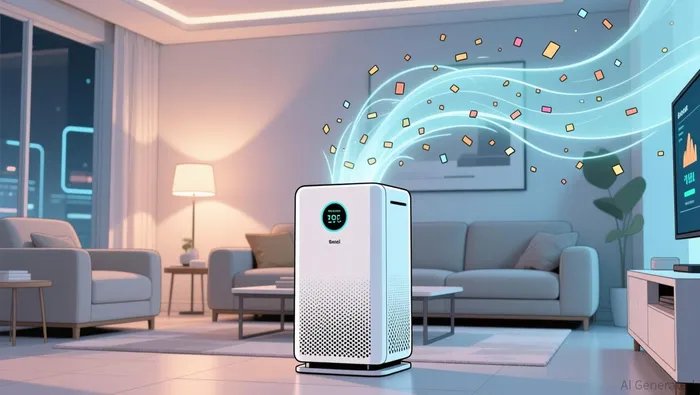
Features like real-time air quality monitoring and thousands of scans per hour provide continuous data, a rarity among competitors. Motion sensors enable proactive cleaning, positioning the BreatheClear Max as part of a broader smart home ecosystem. This data-driven approach could create long-term customer loyalty if SharkNinja continues to invest in innovation. However, the technology landscape is always evolving, and competitors are watching closely.
There is a risk that other brands—such as Dyson, Coway, and Levoit—could replicate these features. While the six-year filter is a strong marketing point, it may not be a lasting technical advantage without ongoing innovation. For example, Levoit’s Core 300S already offers competitive performance at a lower price. SharkNinja must maintain a rapid pace of development to stay ahead, as the current technical lead may be temporary.
Investors should consider whether SharkNinja can sustain a lead of at least two years over competitors. While recent results suggest strong execution, the air purifier market is crowded and rivals can move quickly once a successful formula is identified. Continued innovation or strong brand positioning will be essential for maintaining market share.
Key Catalysts and What to Monitor
SharkNinja’s future success depends on flawless execution. The company aims to turn passive consumers into active participants in air quality management, but this vision must translate into sales. Several upcoming events will be critical in determining whether the strategy succeeds.
- Q1 2026 BreatheClear Max Sales: The product launches on April 8, 2026, via SharkNinja.com, Amazon, and Costco at $449. Early sales figures will reveal whether the six-year filter promise drives demand or causes confusion. Key indicators include sell-through rates at major retailers and customer feedback on the NeverChange™ technology.
- Margin Trends: Sustained investment in R&D is necessary for the smart home vision. If gross margins shrink in the next two quarters, it may indicate heavy spending on innovation. This is acceptable if it preserves pricing power, but problematic if competitors catch up on features.
- Product Line Expansion and Smart Home Integration: New sizes are expected in spring 2026, catering to various room sizes. More importantly, watch for announcements about integration with Alexa, Google Home, or other smart home platforms. Becoming part of a connected ecosystem would create customer stickiness and a competitive moat.
- Stock Performance: The stock recently closed at $108.45 (March 24, 2026), down from a 52-week high of $133.99. If the price falls below $100, it could signal market doubts about SharkNinja’s execution or competitive position. The average price over the past year is $103.76, so current levels offer a potential entry point if upcoming sales and integrations meet expectations.
It’s important to note that these factors are interconnected. Strong initial sales support premium pricing and fund further R&D. Continued innovation enables smart home integrations, which in turn expand the addressable market. Any weakness in this chain could undermine the entire investment thesis. Monitoring each step will be crucial for investors.
Disclaimer: The content of this article solely reflects the author's opinion and does not represent the platform in any capacity. This article is not intended to serve as a reference for making investment decisions.
You may also like
Morgan Stanley's Crypto Push: Flow Analysis of a Latecomer's Strategy

TAG (Tagger) fluctuates 40.6% in 24 hours: driven by surging trading volume and net capital inflows
Wendy's Pretzel Burger Craze Conceals Organizational Departures and Turmoil Among Executives

New Tools Aim to Make AI 'Vibe Coding' Safer for Crypto
Trending news
MoreCrypto prices
More





