
Ondo Finance Broadens Availability and Liquidity of Tokenized Equities as It Strengthens Market Leadership

Ondo Finance Strengthens Its Position in Tokenized Real-World Assets
Ondo Finance has solidified its dominance in the tokenized real-world asset industry by broadening its equity portfolio and enhancing liquidity mechanisms. The platform now represents about 61% of the tokenized stock market, which recently exceeded $1 billion in on-chain value for the first time. Notable recent actions include the addition of 16 new tokenized equity pairs on MEXC and the transfer of 116 million ONDO tokens to Coinbase to support institutional collaborations.
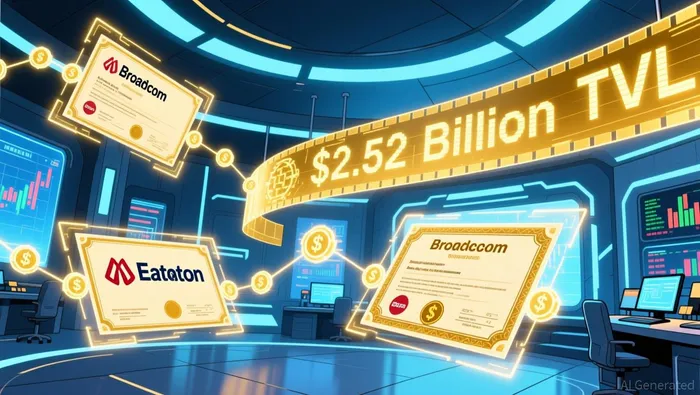
These advancements come as the tokenized asset market consolidates around early innovators capable of handling regulatory and liquidity complexities. Ondo Finance’s Total Value Locked (TVL) reached a peak of $2.52 billion in February 2026, propelled by strategic partnerships with companies such as Franklin Templeton. Ondo continues to connect traditional finance with blockchain technology, enabling round-the-clock trading and settlement for assets previously limited by market hours and geographic constraints.
The platform’s expansion features tokenized shares of major firms like Eaton Corporation and several iShares ETFs, alongside established offerings such as SanDisk and Broadcom. Investors can access these assets without the need for conventional brokerage accounts, although U.S. residents remain excluded due to securities regulations. This approach enables fractional ownership and immediate settlement while adhering to international compliance standards.
Liquidity Management and Institutional Access at Ondo Finance
Managing liquidity is a cornerstone of Ondo Finance’s strategy, ensuring efficient trading of tokenized securities. On-chain records show a planned treasury operation, with 116 million ONDO tokens transferred to Coinbase over 45 days. This transfer, valued at roughly $30.21 million, aims to strengthen liquidity for institutional partners rather than respond to short-term market shifts.
Experts view this move as preparation for wider adoption of tokenized real-world assets, which are forecasted to reach between $13 trillion and $30 trillion by 2030. The transfer reinforces Ondo’s role as a vital link between traditional finance and blockchain, providing global investors with access to assets like Broadcom or UnitedHealth Group without direct ownership.
Integration with major exchanges such as Binance, which has relaunched tokenized U.S. stocks in partnership with Ondo, further expands accessibility. This marks Binance’s first tokenized asset offering since 2021, providing a regulated avenue for trading assets that were previously unavailable on centralized platforms.

Main Factors Fueling the Growth of Tokenized Equities
The surge in tokenized equities is attributed to regulatory advancements, improved infrastructure, and investor demand for flexible trading hours. Research from Foresight Ventures highlights that the sector is consolidating around leaders like Ondo Finance and xStocks, who excel at managing legal rights across jurisdictions and integrating with DeFi protocols.
Market concentration is clear, with Ondo controlling about 58% and xStocks 24% of the tokenized stock market. This dominance stems from early investments in liquidity and compliance infrastructure. The tokenized U.S. Treasury segment alone has topped $11.13 billion, contributing to a broader tokenized asset market valued at around $26 billion.
New asset launches, such as the tokenization of Enlivex ordinary shares, demonstrate the expanding variety of instruments. These tokens allow non-U.S. investors to access clinical and prediction market treasury strategies digitally, bypassing the need for traditional brokerage accounts. The model supports fractional investments with low minimums and near-instant settlement, appealing to tech-savvy investors.
Risks and Challenges Facing Tokenized Asset Investors
Although the market is expanding, investors must contend with risks such as regulatory shifts, oracle failures, and limited access for U.S. users. Ondo Global Markets restricts tokenized stock offerings for U.S. residents due to securities laws, narrowing the potential user base. This limitation remains a significant hurdle for global scaling.
Operational risks include possible oracle malfunctions that could disrupt real-time pricing and smart contract reliability. Dependence on oracles for price feeds and custody solutions for underlying assets introduces vulnerabilities that may impact token values. The sector is also under regulatory scrutiny, with ongoing investigations such as the DOJ antitrust probe into UnitedHealth Group potentially affecting underlying assets.
The concentration of market share among a few platforms could pose systemic risks if any major player encounters operational or regulatory difficulties. Investors must balance the prospects for improved margins and efficiency against persistent regulatory and operational risks. While the industry anticipates substantial growth, achieving full integration will depend on successfully navigating complex legal and technical challenges.
The tokenization of equities marks a transformative change in how traditional assets are accessed and traded, with Ondo Finance at the forefront through strategic expansion and robust liquidity management. As the sector evolves, the ability to adapt to regulatory requirements and maintain strong infrastructure will be essential for continued progress.
Disclaimer: The content of this article solely reflects the author's opinion and does not represent the platform in any capacity. This article is not intended to serve as a reference for making investment decisions.
You may also like
Morgan Stanley's Crypto Push: Flow Analysis of a Latecomer's Strategy
TAG (Tagger) fluctuates 40.6% in 24 hours: driven by surging trading volume and net capital inflows
Wendy's Pretzel Burger Craze Conceals Organizational Departures and Turmoil Among Executives

New Tools Aim to Make AI 'Vibe Coding' Safer for Crypto
Trending news
MoreCrypto prices
More





