
Farmer Boys Franchisee Files Chapter 11 Amid Debt Crisis

- Farmer Boys franchisee Geddo Corp. filed for Chapter 11 bankruptcy protection in late March 2026, citing $5.2 million in merchant cash advance debt as the primary cause of insolvency.
- The filing highlights systemic risks for multi-unit franchisees relying on high-interest short-term financing to fund expansion during economic headwinds.
- Major creditors, including the franchisor Farmer Boys Franchising Co., face significant exposure as the company seeks to restructure its obligations.
- The situation mirrors broader industry trends where competitors like Wendy's are also closing underperforming locations to focus on profitability.
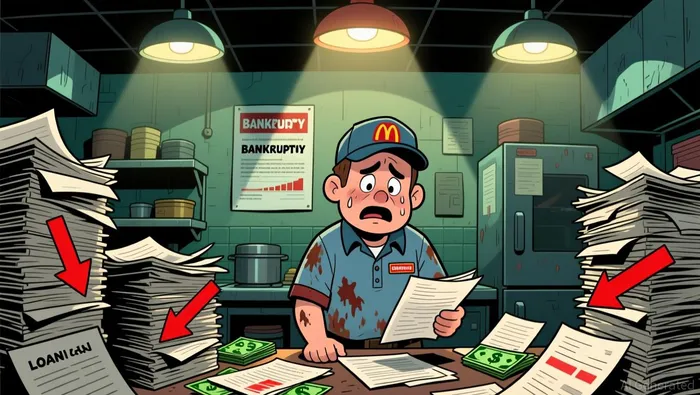
The fast-casual dining landscape is facing renewed scrutiny as franchisee financial distress becomes a focal point for industry analysts. Geddo Corp., the operator of 12 Farmer Boys locations across California and Arizona, sought bankruptcy protection on March 31, 2026, in the U.S. Bankruptcy Court for the Central District of California. The filing lists assets and liabilities between $1 million and $10 million, signaling a moderate-sized but significant disruption within the regional franchise network. The core issue driving the collapse was not a lack of sales volume, but a liquidity crunch caused by a portfolio of 40 merchant cash advance loans totaling $5.2 million. These high-interest, short-term instruments, often used to fund rapid expansion into markets like Goodyear and Phoenix, Arizona, created a cash flow trap that the company could not escape.
Why Did Farmer Boys Franchisee Geddo Corp. File For Chapter 11 Bankruptcy?
The primary catalyst for Geddo Corp.'s financial collapse was the aggressive collection mechanism employed by lenders of merchant cash advances. Unlike traditional bank loans that have fixed monthly payments, merchant cash advances often require daily or weekly withdrawals directly from the business's operating bank account. For Geddo, this structure proved fatal when economic pressures mounted. The lenders' automatic withdrawals drained the company's operating capital faster than revenue could replenish it, leaving insufficient funds to pay vendors, staff, or the franchisor.
According to court documents, Geddo attempted to negotiate more manageable repayment terms with these lenders, but most refused to adjust the collection schedules. The company had utilized these loans to fund the development of new locations, a common strategy for franchisees looking to scale operations. However, when the debt service requirements became unsustainable, the company defaulted on its obligations. The filing lists Farmer Boys Franchising Co. as a major unsecured creditor, owed approximately $1.05 million in notes, back rent, and royalties. Other significant creditors include Marlin Leasing and Havadji Holdings, indicating a complex web of debt that the bankruptcy process aims to untangle.
How Do Merchant Cash Advance Loans Impact Franchisee Stability?
The Geddo Corp. case serves as a stark warning about the dangers of relying on expensive short-term financing for long-term growth. Merchant cash advances are notoriously costly, often carrying effective annual percentage rates that far exceed those of traditional credit facilities. For a franchisee operating on thin margins, these loans can quickly become an existential threat. The immediate cash flow relief they provide is often illusory, as the high cost of capital eats into operational profitability.
In the case of Geddo, the loans were taken on to fund expansion into Arizona. While the intent was to grow the brand's footprint, the execution relied on a financing structure that left the company vulnerable to any disruption in cash flow. When the lenders began aggressive collections, the company could not maintain its vendor payments or franchise fees. This highlights a critical vulnerability in the franchise model: when franchisees over-leverage themselves with high-cost debt, the entire ecosystem, including the franchisor, faces increased risk of default and reputational damage.
The broader implications extend beyond a single franchisee. The fast-casual burger industry is currently grappling with economic headwinds that are forcing companies to reevaluate their growth strategies. Competitor Wendy's has recently announced plans to close 5% to 6% of its U.S. locations, citing the need to focus on profitable growth rather than expansion at any cost. This move underscores the challenging environment in which franchisees operate, where the cost of capital and consumer spending patterns can make even well-managed businesses struggle.
What Are The Investor Implications Of The Geddo Corp. Filing?
For investors monitoring the fast-casual sector, the Geddo Corp. filing offers valuable insights into the health of the franchise model and the risks associated with debt-fueled expansion. The bankruptcy highlights the importance of analyzing a franchisee's capital structure, particularly their reliance on alternative financing sources. While Farmer Boys remains a regional player, the financial distress of one of its key franchisees could impact the brand's overall performance if not managed effectively.
The restructuring process will likely involve negotiations with creditors to determine the viability of the franchisee's remaining locations. If Geddo Corp. can successfully restructure its debt, it may emerge as a more sustainable operator. However, if the process leads to a liquidation of assets, it could result in the closure of several locations, impacting the brand's market share in California and Arizona. Investors should also watch for any ripple effects on the franchisor, as the loss of a significant franchisee could affect royalty payments and brand consistency.
Ultimately, the Geddo Corp. case serves as a cautionary tale for the industry. It underscores the need for franchisees to maintain prudent financial management and avoid over-reliance on high-cost debt. As the economic landscape continues to evolve, the ability to navigate liquidity challenges will be a key differentiator for success in the competitive fast-casual market.
First Bancshares Inc. Trend Chart

Disclaimer: The content of this article solely reflects the author's opinion and does not represent the platform in any capacity. This article is not intended to serve as a reference for making investment decisions.
You may also like
Sen. Tillis aims to release draft resolving Clarity Act's stablecoin yield dispute this week: report
Wegovy-maker Novo Nordisk partners with OpenAI to speed drug development
German wholesale prices in March 2026: an increase of 4.1% compared to March 2025
Factbox-Impact of Gulf crisis: Australian and New Zealand companies from airlines to banks experience pressure
Trending news
MoreCrypto prices
More





