
Burry's JD.com and Alibaba Longs Protected by Puts as He Bets on Policy-Driven Stabilization

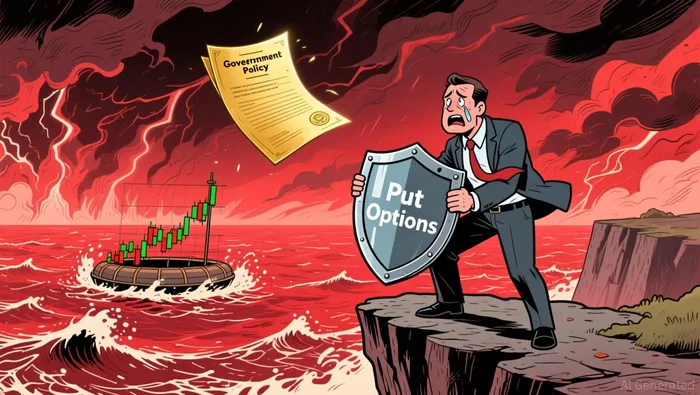
Michael Burry's move into Chinese tech is a classic hedge, not a pure bullish call. The investor doubled down on three giants last quarter, boosting his stake in Alibaba by 29% and his JDJD+2.08%.com position to 500,000 shares. Yet for each long position, he bought bearish put options on a nearly identical number of shares. This creates a dual bet: he profits if the stocks rally, but he's protected if they fall further.
Why use puts instead of outright shorting? Burry himself explained the rationale: to limit maximum loss and time decay. Shorting a stock carries theoretically unlimited downside if the price spikes. A put option caps that risk at the premium paid. It's a smarter way to express bearishness when you're already long, giving you skin in the game on the upside while capping the downside on the downside.
This setup frames his bet as a bet on government-led stabilization, not a conviction that these stocks are cheap. The timing is telling. He added these positions as Chinese stocks slumped after a government stimulus pledge that lacked concrete details. His strategy suggests he sees a potential floor being set by policy but remains wary of the path to get there. The puts are his insurance policy against the government failing to deliver or the market sentiment turning sour again.
In short, Burry is a smart money investor hedging his longs. He's not making a pure call on AlibabaBABA-0.27% or JD.com's intrinsic value. He's betting that the government's intervention will eventually work, but he's not willing to risk everything on it. The put options are his way of saying, "I believe in the policy, but I'm not betting my entire portfolio on it."
The Catalyst: Government Crackdown on Price Wars
The catalyst for Burry's bet is clear: a decisive shift in the regulatory landscape. Last week, China's market regulator held a seminar aimed at reining in unfair competition in the food-delivery sector. This wasn't just talk. The state-backed Economic Daily newspaper followed up with a column labeling the industry's pricing battles a "vicious cycle" that actively weighs on the broader economy's consumption recovery. That's the signal Burry is betting on.
For years, the sector's growth has been built on a foundation of heavy subsidies. When JD.com entered the market last year, it triggered a new round of discount campaigns, forcing Meituan and Alibaba to match them. The result was a race to the bottom, with Meituan reporting its largest annual loss since at least 2021 from the pressure. This wasn't just a corporate problem; it was a macroeconomic one, as the Economic Daily pointed out, because unsustainable price wars undermine consumer spending.
The regulator's move changes the competitive calculus. It signals that the government is stepping in to end the destructive cycle, protecting not just profits but the health of the consumption recovery. This is the stabilization Burry's put options are hedging against. He's not buying a stock because he thinks its earnings will magically rebound tomorrow. He's buying because he sees a credible state-backed intervention that could finally end the bleeding and set a floor for valuations.
The market's immediate reaction confirms the power of this catalyst. Shares of the major players jumped sharply on the news, with Meituan up 14% and Alibaba and JD.com also seeing strong gains. Burry's timing is impeccable. He added his long positions as the sector was slumping after a vague stimulus pledge. Now, with concrete regulatory action announced, the setup for a potential rally is in place. His dual bet-long the stocks, short the risk via puts-positions him to profit from this stabilization, whatever the path.
The Financial Reality: JD's Eroding Profitability
The smart money is betting on a policy floor, but the fundamental health of JD.com tells a different story. The company's latest results show a clear erosion of its core profitability, driven by the very price competition Burry is betting will soon end.
JD's adjusted operating margin turned negative at -0.9% last quarter, a sharp drop from 3.0% a year earlier. That's a material deterioration, and the cause is straightforward: aggressive price competition with Alibaba and Meituan has pressured its bottom line. The company's own "low-price" strategy, while aimed at regaining market share, is clearly taking a toll on its premium brand equity. As one analysis notes, JD is at a critical crossroads, where its multi-year effort to reclaim customers from leaner rivals risks becoming a costly erosion of its high-margin model.
This isn't just a temporary blip. The financials show a company under strategic pressure. Revenue grew a meager 1.5% year-over-year, and the company reported a net loss of RMB 2.7 billion for the quarter. Marketing expenses, the fuel for the price war, jumped 50.6% to $3.6 billion. This aggressive spending is the direct cost of the subsidies Burry's regulatory catalyst aims to end. In other words, the put options he bought are insurance against the very scenario his long position is exposed to: a prolonged, profit-sucking battle for customers.
Yet, there is a crucial buffer. JD maintains a robust balance sheet with over RMB 180 billion in cash and cash equivalents. This war chest provides a significant financial cushion, allowing the company to fund its price war and strategic bets without immediate liquidity stress. It's a classic defensive position, giving JD the runway to outlast competitors in the short term.
The bottom line is a tension between a strong balance sheet and weak profitability. Burry's bet hinges on the government ending the price war, which would immediately improve JD's margins. But the company's current financial reality shows those margins are already under severe pressure. The smart money is hedging a turnaround that hasn't yet arrived.
The Contrarian Signal: Burry's Nvidia Puts vs. Wall Street
While Burry is hedging his longs in China, he's taking a direct bearish stance on Nvidia. In a recent Substack post, he revealed he bought January 2027 put options at a strike price of $115. This is a clear, high-stakes bet against the stock's trajectory. He even noted the high implied volatility on these puts, which he sees as an opportunity to profit from the market's own uncertainty.


The divergence with Wall Street is stark. For all the bullishness on the chip giant, the analyst consensus is overwhelmingly positive. According to data from Koyfin, 57 out of 60 analysts covering Nvidia have a rating of 'Buy' or higher. This creates a classic contrarian setup: the smart money is betting against the herd.
What does this high implied volatility signal? It shows the market is pricing in significant uncertainty about Nvidia's future. The stock has gained more than 75% in the past year, and while it has a strong projected revenue forecast, concerns about sustainability and growth cycles are palpable. Burry is betting that this uncertainty will crystallize into a meaningful price decline. His use of put options, not outright shorts, is a calculated move to limit his maximum loss-a tactic he's used elsewhere to hedge his long positions. It's a way to express bearish conviction while capping the downside risk of the bet itself.
The bottom line is a battle between two signals. Wall Street is looking at Nvidia's dominance and growth projections and seeing a winner. Burry is looking at the same stock and seeing the same risks that once plagued Cisco: dependence on a few hyperscaler clients, inventory buildups, and a valuation that may have priced in perfection. In a market where sentiment is so one-sided, his contrarian put bet is the kind of move that often gets noticed when the tide turns.
What to Watch: The Alignment of Interest
The smart money has placed its bet. Now the real test begins: watching for signals that confirm or contradict the thesis. Burry's dual strategy hinges on a government-led stabilization of a brutal price war. Three key watchpoints will show whether his insurance policy is needed or if the floor is holding.
First, monitor the sustainability of the recent rally. The stocks popped on the regulatory news, with Meituan shares closing 14% higher and JD.com and Alibaba also seeing strong gains. That's the initial relief rally. The critical test is whether these gains hold or fade. If the price wars resume or the government's resolve wavers, the stocks will likely retreat, validating the need for Burry's put options. A sustained climb, however, would signal the intervention is working.
Second, watch for a reversal in JD's operating margin trend. The company's latest results show the war is still costing it dearly, with its adjusted operating margin turning negative at -0.9%. This is the financial reality Burry is hedging against. The watchpoint is clear: when price competition eases, JD's margins should begin to improve. A reversal in that trend-starting with a stabilization or slight improvement in the next few quarters-would be the fundamental proof that the government's intervention is having its intended effect.
Third, track insider trading at JD and Alibaba for signs of skin in the game. This is the ultimate alignment-of-interest signal. Are the people running the companies betting their own money on the turnaround, or are they quietly cashing out? While specific insider sale data isn't in the provided evidence, the pattern is what matters. Any significant selling by executives or directors would be a red flag, suggesting they see risks Burry is hedging against. Conversely, meaningful buying would signal confidence in the new policy direction. For now, the lack of visible insider accumulation is a neutral point, but it's a watchpoint that will gain importance as the stock moves.
The bottom line is that Burry's bet is a hedge on a policy outcome. The market's immediate reaction shows the policy is being taken seriously. But the true test will be in the financials and the actions of those closest to the business. Watch those three signals, and you'll see whether the smart money's insurance policy is about to pay off.
Disclaimer: The content of this article solely reflects the author's opinion and does not represent the platform in any capacity. This article is not intended to serve as a reference for making investment decisions.
You may also like


Oscar Health's Surge on Speculation: Will May 6 Earnings Validate the Positive Outlook?


Trending news
MoreCrypto prices
More





