
Sable Offshore Resumes Santa Ynez Production Exceeding 50,000 bpd—A Closer Look at the Real Supply Effects

Sable Offshore Restarts Oil Flow at Santa Ynez Pipeline
Sable Offshore has recommenced oil shipments via the Santa Ynez Pipeline System, now delivering more than 50,000 barrels per day. This marks the first significant movement of oil from this offshore complex in several months. The current output is distributed among three platforms: Platform Harmony is producing around 22,000 barrels daily, Platform Heritage is resuming operations today with expectations of surpassing 30,000 barrels per day, and Platform Hondo is scheduled to start up by the end of Q2 2026, aiming for over 10,000 barrels per day.
Oil from these platforms is being sold to Chevron, utilizing the existing pipeline network to supply refineries along the West Coast. This sales arrangement was established prior to the shutdown, which has facilitated a swift return to operations.
News of the restart prompted a 3% pre-market increase in Sable’s stock price, indicating investor optimism about the company’s short-term revenue prospects. The anticipated restoration of output is substantial—approximately 52,000 barrels per day once Heritage is fully operational, with an additional 10,000+ barrels per day expected from Hondo in the near future.
While the Santa Ynez Unit is modest in size compared to other offshore fields, the resumption of production eliminates a known supply gap and reactivates a pipeline system that had been dormant. The main uncertainty now is whether these production levels can be maintained or if further setbacks will occur. Platform Heritage is restarting today, but Sable has acknowledged the usual operational and regulatory risks that could impact ongoing output.
Production Outlook: Heritage and Hondo’s Role
The immediate production plan is clear: Platform Heritage is now online, targeting over 30,000 barrels per day, while Platform Hondo is expected to begin operations by the end of Q2 2026 at more than 10,000 barrels per day. Combined with Harmony’s current production, total output from the Santa Ynez Unit could exceed 62,000 barrels per day once all platforms are fully ramped up.
However, Sable has highlighted the ongoing risks associated with offshore production, including operational challenges, regulatory hurdles, and environmental considerations. Heritage’s restart follows a final regulatory review, and Hondo’s timeline depends on successful pre-production work. The difference between planned and actual sustained output remains a key risk, as offshore projects in this region have previously faced delays due to weather, equipment issues, and regulatory scrutiny.
From a supply standpoint, Sable is moving from a period of disruption toward a restored baseline of roughly 62,000 barrels per day. Whether the company can surpass this level will depend on flawless execution and the absence of new obstacles. For now, the market is factoring in the return of these volumes, assuming stable operations continue.
Regulatory and Political Landscape: Implications of the DOJ Order
The regulatory environment for the Santa Ynez restart is shaped by a recent shift in oversight. A 2015 federal court decision placed responsibility with the Office of State Fire Marshal, but a new Department of Justice (DOJ) order issued earlier this month allows the President to override this process under national security provisions. This provides immediate legal clearance for operations, but leaves the long-term regulatory framework unresolved.
The pipeline rupture in 2015 led to a consent decree requiring strict safety oversight by the State Fire Marshal. That process remained in effect until the DOJ’s recent opinion, which argued that the President could direct Sable Offshore to resume production immediately, bypassing federal, state, and local regulations for national security reasons.
The Trump Administration’s order, issued on March 13, 2026 under the Defense Production Act, gave Sable the legal authority to restart. The Department of Energy justified this move by citing California’s reliance on imported oil despite its many military bases, framing state policies as a national security risk. This rationale allowed the federal government to sidestep the State Fire Marshal’s oversight.
However, the DOJ order introduces new uncertainties. It does not require the oil to be used exclusively for military purposes or sent to the strategic petroleum reserve, nor does it address the safety and environmental concerns that led to the original court order. The State Fire Marshal’s authority now conflicts with federal directives, and the order itself is subject to public records requests, indicating that its legal standing could be challenged.

For Sable, this regulatory shift is crucial. The immediate threat of a regulatory blockade has been lifted, but the company must still navigate ongoing scrutiny from state and local agencies while relying on federal protection. The $622 million loan from ExxonMobil that enabled Sable’s acquisition of the Santa Ynez Unit includes a clause requiring market entry for the oil, aligning financial incentives with federal directives. Still, the gap between legal authority and operational certainty remains a significant risk—Sable can produce now, but long-term consistency is not guaranteed if regulatory or legal challenges re-emerge.
Key Factors to Monitor: Supply Stability and Market Impact
The next two to three months will be critical in determining whether this restart delivers sustainable results or becomes another example of unfulfilled production promises. Three main factors will shape the outcome: actual versus projected output, regulatory clarity, and economic feasibility.
- Production Performance: The main test is whether Sable can achieve and maintain its targets. Heritage is now producing at over 30,000 barrels per day, and Hondo must come online by the end of Q2 at more than 10,000 barrels per day. These are management’s best estimates, dependent on equipment reliability, weather, and regulatory stability. Sustained output over several weeks will be the true indicator of success. If either platform falls short, the economic case weakens quickly, especially given the capital invested and financing from ExxonMobil.
- Regulatory Stability: The DOJ order provides temporary legal cover, but it does not resolve the underlying conflict with the 2015 consent decree. The order is open to legal challenge and public scrutiny. Any court decision that limits or overturns DOJ authority could immediately halt operations. Watch for state-level actions or new lawsuits that could impact the restart.
- Economic Viability: The project’s profitability depends on crude prices and local market conditions. Oil from Santa Ynez flows to Pentland Station in Kern County, and margins are influenced by the spread between West Coast crude benchmarks and transportation costs. If oil prices drop or local differentials widen, profitability could be squeezed. Maintaining throughput above 50,000 barrels per day is essential—any decline in volume makes it harder to cover fixed costs and pipeline fees.
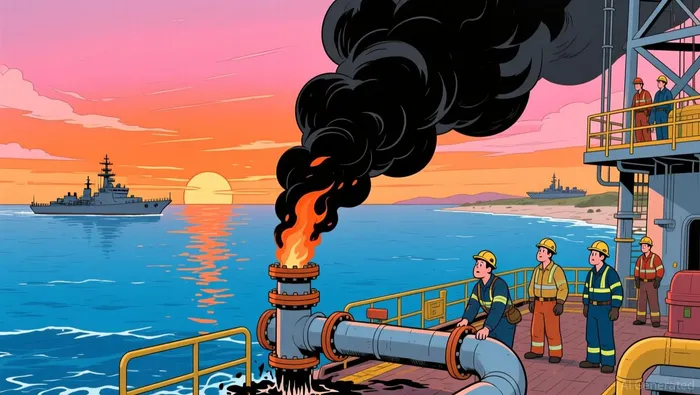
Sable continues to highlight the usual operational, regulatory, and environmental risks that could affect ongoing production. The real challenge lies in bridging the gap between target output and what is actually sustained. While Sable is producing today, the company’s ability to maintain consistent operations without renewed regulatory or legal obstacles remains to be seen.
Disclaimer: The content of this article solely reflects the author's opinion and does not represent the platform in any capacity. This article is not intended to serve as a reference for making investment decisions.
You may also like
Concentrix Shares Drop Despite Analyst Upgrades — Savvy Investors Step In

UFC and Crypto.com Launch $1 Million CRO Bonus Pool for White House Event

Trending news
MoreCrypto prices
More





