
EU Gas Market Linked to Hormuz Reopening—Price Surge Depends on Strait’s Condition

Energy Markets Rattled by Geopolitical Tensions
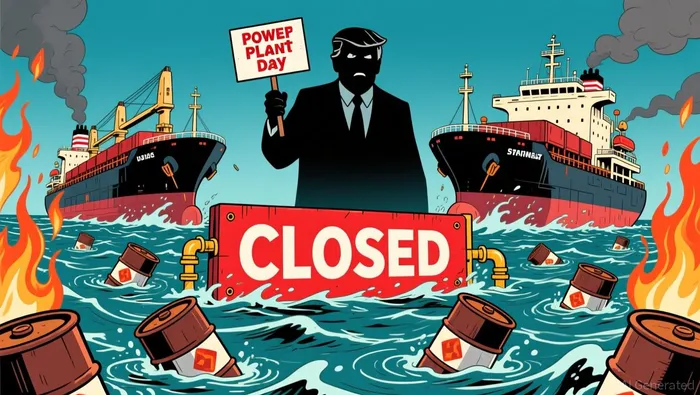
Energy markets experienced intense volatility following a decisive warning from U.S. President Donald Trump. On Sunday, he threatened military action against Iranian energy infrastructure if the Strait of Hormuz was not reopened by Tuesday night. This ultimatum, dubbed "Power Plant Day" and "Bridge Day," triggered widespread concern among traders, who began questioning whether the price surge was a fleeting reaction or the start of a fundamental shift in supply dynamics.
Market reactions were swift and unpredictable. European natural gas futures jumped 3% higher on Tuesday, with the Dutch TTF benchmark exceeding $58 (50 euros) per megawatt-hour—a 55% increase compared to pre-conflict prices. Oil markets saw even greater swings: Brent crude briefly climbed to $110 before retreating to $108 as the situation evolved. On Monday, oil prices dropped about 2% as traders responded to shifting rhetoric.
Despite the turmoil, European officials maintain that supply remains stable. The EU's Gas Coordination Group recently affirmed there are currently no risks to supply security. Gas storage levels are steady, and oil reserves are robust, offering a reassuring counterbalance to the anxiety reflected in futures prices.
The TTF benchmark's recent price fluctuations highlight the market's heightened sensitivity to geopolitical developments. After reaching a low of €43.64 on April 10, prices rebounded to €46.50 by Thursday. Currently, TTF trades between 56.683 and 61.500 EUR/MWh, well above recent lows but still within its 52-week range of 26.550 to 69.350. The market is poised for rapid responses to geopolitical shocks, though the underlying supply chain and storage capacity appear sufficient to absorb immediate pressures.
Macro Forces: Inflation, Monetary Policy, and Economic Growth
While geopolitical events drive short-term volatility, broader macroeconomic trends ultimately shape energy prices. The surge in gas prices is expected to fuel inflation, with economists forecasting a 3.4% year-over-year increase in consumer prices for March—a sharp rise largely attributed to a 20% jump in gas costs. This inflationary spike may prompt the Federal Reserve to reconsider its policy stance.
The Fed's reaction will be crucial. If inflation exceeds expectations, planned interest rate cuts could be postponed or even reversed, tightening financial conditions. This would bolster the U.S. dollar, which typically exerts downward pressure on dollar-priced commodities like oil and gas. The current market volatility reflects this dynamic: geopolitical fears push prices up, but the prospect of a hawkish Fed and a strong dollar limits sustained gains.
Global growth trends also play a significant role in absorbing displaced Middle Eastern oil and LNG. Recent data shows sluggish economic expansion—just 0.5% in the fourth quarter—with weak employment and subdued consumer spending. This contrasts with the robust demand seen during the pandemic stimulus years. According to economists, the current environment resembles the 1990-91 recession, where oil shocks slowed growth without causing persistent inflation. The implication is clear: the economy's capacity to handle higher energy costs is limited, which could restrain industrial demand and prevent prolonged price rallies.
In summary, energy prices are caught between supply-driven spikes and macroeconomic constraints. Fears over supply disruptions are real, but factors like a hawkish Fed, a resilient dollar, and tepid economic growth collectively act as barriers to a lasting price surge. The EU's official position that no supply risks are currently observed supports this perspective, indicating that the physical market can manage the disruption for now. While elevated prices may persist in the short term, broader economic forces suggest a ceiling rather than a new baseline.
Storage and Supply Chain: Testing Market Resilience
The market's ability to withstand shocks depends on physical realities that are currently under strain. Europe's gas storage has been depleted to levels not seen in years following a severe winter, creating a structural deficit that magnifies the impact of supply interruptions. With the refill season approaching, the recent price surge threatens to disrupt the replenishment process. Although Europe's reliance on Middle Eastern LNG is less than Asia's, benchmark prices are now about 55% higher than before the conflict, and the market anticipates significant shortages.
Logistical challenges persist, as no LNG shipments have passed through the Strait of Hormuz for over a month, despite ongoing ceasefire negotiations. Two vessels were forced to abandon attempts to exit, highlighting the continued blockage. This disruption keeps European prices elevated, even as the EU maintains that supply security is not currently at risk. However, this assessment does not eliminate concerns about the upcoming refill cycle.
On the oil front, strategic reserves provide a temporary cushion. The International Energy Agency's release of 400 million barrels offers short-term relief, but EU officials are evaluating its medium-term effectiveness. While this move helps manage immediate volatility, it is not a long-term solution if the strait remains closed. The market is closely monitoring whether strategic reserves can offset a prolonged disruption, but blocked shipping lanes continue to pose a significant risk.
Europe's depleted storage amplifies price shocks, and the ongoing blockage of the strait prevents replacement LNG from reaching the market. The IEA's intervention offers some relief, but its ability to sustain supply security over an extended period remains uncertain. For now, the market is coping with immediate pressures, but any escalation or prolonged closure could quickly exhaust available buffers.
Key Drivers and Future Scenarios
The direction of energy prices will be shaped by several pivotal factors. The first is the outcome of U.S. inflation data and the Federal Reserve's response. The March report, expected to show a 3.4% annual increase, will be a critical test. If the Fed views this inflation as persistent, it may delay rate cuts or even consider raising rates, strengthening the dollar and capping energy prices.
Diplomatic efforts are the second major catalyst. High-level negotiations between the U.S. and Iran are underway, with the outcome expected soon. The ceasefire agreement requires Iran to reopen the Strait of Hormuz, but reports indicate it remains closed. The White House has demanded immediate action. Reopening the strait would directly ease supply disruptions, allowing LNG and oil shipments to resume and likely triggering a sharp price correction. Until this happens, the market remains on edge.
The third factor is the EU's ongoing assessment of supply security. The Gas Coordination Group has confirmed stable supply for now, but this is subject to change. The next meeting, scheduled for late March, will provide a fresh evaluation. If storage levels deteriorate or the impact of the IEA release becomes clearer, the group may revise its stance, signaling a shift in the supply outlook.
Ultimately, the interplay between policy decisions, diplomatic developments, and physical supply will determine how the current tension is resolved. A hawkish Fed and a strong dollar impose structural limits, while successful diplomacy could quickly deflate the price spike. However, depleted storage and blocked shipping lanes continue to expose the market to risk. The situation remains highly sensitive—any positive breakthrough could ease prices, but further disruptions would strain buffers and push prices toward their upper limits. For now, the market is waiting for one of these catalysts to break the deadlock.
Disclaimer: The content of this article solely reflects the author's opinion and does not represent the platform in any capacity. This article is not intended to serve as a reference for making investment decisions.
You may also like

Healthequity's Earnings Surge Can't Outrun Bearish Signals

Japanese Yen falls as US Dollar rises after US–Iran talks collapse
Trending news
MoreCrypto prices
More





