
FTC Investigation Could Compel Major Advertisers to Drop Profitable Brand Safety Guidance

FTC Investigation: Market Expectations and Reality
Investors have long anticipated the FTC's investigation, viewing it as a foreseeable and manageable regulatory challenge. Since its public launch in June 2025, the probe has centered on allegations that media credibility organizations and advertising agencies colluded to exclude conservative websites from ad placements. This development was widely expected, and the consensus has been that the FTC would address these concerns about political speech. As a result, the market has largely factored in an outcome similar to the resolution already reached in a related case.
Earlier this year, a final order resolved charges related to Omnicom Group’s acquisition of IPG. This order specifically prohibits Omnicom from withholding advertising funds from publishers based on political or ideological grounds. This sets a clear standard: coordinated ad placement decisions rooted in ideology are not permitted. Ongoing settlement negotiations with firms such as Publicis, WPP, and Dentsu follow this precedent, indicating that similar restrictions are likely, with agencies agreeing not to direct client budgets based on political content.
From a market perspective, the scenario appears straightforward. Investors expect only minor reputational damage and limited compliance costs for the agencies involved, viewing the situation as a regulatory clean-up rather than a fundamental threat. However, the real risk lies in the possibility that the market is underestimating the potential for a broader, lasting transformation in how brand safety is managed.
Absolute Momentum Long-Only Strategy Overview
- Entry Criteria: Go long on SPY when the 252-day rate of change is positive and the closing price is above the 200-day simple moving average (SMA).
- Exit Criteria: Sell when the price drops below the 200-day SMA, after 20 trading days, upon reaching an 8% profit, or if a 4% loss occurs.
- Risk Controls: Take-profit set at 8%, stop-loss at 4%, and a maximum holding period of 20 days.
Backtest Results
- Total Return: 4.26%
- Annualized Return: 2.36%
- Maximum Drawdown: 9.38%
- Profit-Loss Ratio: 0.92
- Total Trades: 12
- Winning Trades: 7
- Losing Trades: 5
- Win Rate: 58.33%
- Average Hold Days: 16.92
- Max Consecutive Losses: 3
- Average Win Return: 2.59%
- Average Loss Return: 2.68%
- Largest Single Gain: 3.91%
- Largest Single Loss: 4.46%
Industry Implications: More Than Just Political Bias
This investigation extends beyond concerns about political favoritism; it challenges the collective influence of industry groups in directing advertising budgets. If a settlement dismantles these coordinated practices, it could fundamentally reshape the digital advertising landscape, potentially unlocking significant ad spend that was previously restricted. While the market currently views this as a limited issue, the actual outcome could be a major shift in competitive dynamics.
Financial Impact: Rethinking the Bottom Line
Market expectations have centered on the FTC probe resulting in only modest compliance expenses. In reality, the consequences could be far more significant, potentially altering a core revenue stream for agencies. The Omnicom/IPG settlement not only bans Omnicom from restricting ad dollars based on political or ideological views, but also sets a precedent that undermines a key component of brand safety advisory services across the sector. For agencies, the financial repercussions extend well beyond legal costs, threatening the foundation of their advisory business.
Brand safety consulting has been a lucrative area, with agencies guiding clients away from content considered risky or controversial. The new regulatory environment directly limits this practice. If agencies can no longer use political content as a criterion for ad placement, they stand to lose a substantial portion of their high-margin advisory revenue. This is the real expectation gap: while the market may anticipate only minor fines, it may not have accounted for the potential loss of a major profit center. Ongoing settlement discussions with Publicis, WPP, and Dentsu suggest similar constraints on coordinated, ideology-driven decisions.
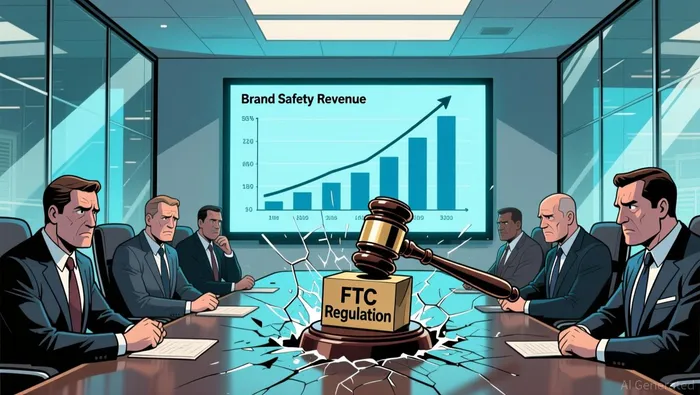
Compliance obligations add further complexity. In addition to lost advisory income, agencies face ongoing legal expenses and the possibility of fines from related FTC actions. The investigation continues into organizations like NewsGuard and the Global Disinformation Index, with the FTC requesting information from these groups. While these are not direct penalties for agencies, the increased legal and operational challenges raise costs. More importantly, the focus on coordinated industry practices may cause agencies to become more conservative in their brand safety protocols, potentially prompting clients to reconsider their partnerships if they perceive diminished protection for their brands.
Ultimately, the settlement order does more than prohibit a specific behavior—it removes a critical tool for agencies to add value. The financial consequences are twofold: a direct reduction in advisory revenue and indirect pressure on client relationships. While the market currently sees this as a limited regulatory matter, the reality may be a structural shift that compresses margins and forces agencies to innovate new ways to justify their fees.
Key Catalysts and What to Monitor
Current market pricing reflects the belief that the issue will be resolved without major disruption. The most immediate catalyst is the outcome of ongoing settlement negotiations. The FTC is in discussions with leading advertising firms including Publicis, WPP, and Dentsu. If a broad agreement is reached that mirrors the Omnicom/IPG settlement—where agencies agree not to steer client budgets based on political content—it will likely be seen as a clean resolution, with any remaining effects limited to compliance costs.
However, if negotiations collapse, it could signal more severe penalties. This would contradict expectations of a minor fine and could lead to harsher enforcement, such as substantial monetary penalties or broader restrictions that challenge the current brand safety model. Such an outcome would force the market to reassess, likely resulting in a significant repricing of agency stocks.

Additional Developments to Watch
- Monitor for new FTC rulemaking or enforcement actions related to brand safety. The ongoing probe into groups like NewsGuard and the Global Disinformation Index, with the FTC seeking information from these organizations, could signal a broader regulatory shift if formal sanctions or new rules are introduced.
- Pay attention to statements from advertisers or changes in ad spending patterns following any settlements. The prevailing market view is that the impact will be minimal because advertisers retain control over their placements. However, if major brands publicly announce changes to their ad strategies or redirect spending to platforms previously restricted by brand safety groups, it would indicate that the loss of coordinated advisory tools is having a real effect—confirming the structural risks that may have been underestimated.
Disclaimer: The content of this article solely reflects the author's opinion and does not represent the platform in any capacity. This article is not intended to serve as a reference for making investment decisions.
You may also like

Healthequity's Earnings Surge Can't Outrun Bearish Signals

Japanese Yen falls as US Dollar rises after US–Iran talks collapse
Trending news
MoreCrypto prices
More





