
Oil Surpasses $100 After U.S. Navy Closes Strait of Hormuz - How Serious Is the Threat to Supply?

Brent Crude Oil Surges Amid Middle East Tensions
On Monday, Brent crude oil prices soared past $100 per barrel for the first time in nearly four years, briefly reaching $119.50 before closing just under the symbolic $100 threshold. This marks an approximate 37% increase since the onset of U.S. and Israeli military actions against Iran on February 28.
The dramatic price movement was sparked by a single message from President Trump on Truth Social late Sunday, following the breakdown of over 21 hours of ceasefire negotiations in Islamabad. In his post, Trump accused Iran of engaging in "global extortion" and mining the Strait of Hormuz, subsequently directing the U.S. Navy to block all maritime traffic attempting to enter or exit the strategic waterway.
Financial markets responded swiftly and sharply. Asian equities plummeted, with South Korea’s Kospi dropping nearly 6% and Japan’s Nikkei falling 5.2%, as investors braced for a sudden and severe disruption in oil supply. The Strait of Hormuz, a critical passage for about one-fifth of the world’s oil, has been effectively closed for over a week, halting fuel exports from the Persian Gulf.
This event represents the most significant disruption of a maritime chokepoint since the 1980s, when Iran mined the strait during the Iran-Iraq War, prompting U.S. intervention to secure shipping routes. Unlike previous incidents, this blockade was announced without warning, transforming a regional conflict into a global supply crisis within hours.
President Trump described the price jump as "temporary" and "a small price to pay for the safety and peace of the U.S. and the world." However, market participants are anticipating a more challenging scenario.
Assessing the Oil Supply Threat
Even before the U.S. blockade, the Strait of Hormuz was largely impassable. Since Iran began retaliatory actions on February 28 following the death of Supreme Leader Ali Khamenei, shipping activity dropped by about 70% within days and then nearly ceased. At the height of the crisis, only about ten vessels managed to transit the strait in a 24-hour period.
The U.S. blockade essentially formalizes the existing situation.
This distinction is important for oil pricing. Brent crude had already climbed to $118 per barrel by the end of the first quarter of 2026, marking the largest inflation-adjusted quarterly increase since 1988. The market had already factored in a prolonged closure. The April 6 blockade announcement did not introduce new supply risks but rather solidified the ongoing disruption with a clear U.S. military commitment.
According to OPIS chief oil analyst Denton Cinquegrana, prices in the $120 to $130 range are plausible if the crisis endures. The key issue is how long the disruption lasts, not whether it will continue.
There are factors that could limit further price increases: spare production capacity and strategic reserves. Gulf producers like Saudi Arabia and the UAE have withheld output during the crisis, and these reserves could be utilized. Additionally, the International Energy Agency’s member nations collectively hold about 1.5 billion barrels in strategic petroleum reserves, enough to compensate for several weeks of lost supply from Hormuz if released aggressively.
The main concern is not a permanent closure, but a prolonged standoff that keeps the strait blocked for weeks or months. This would force shipping routes around Africa, adding 7–10 days to delivery times and significantly increasing transport costs. Such a scenario could push Brent crude prices toward or above $130 per barrel.
Currently, the market is anticipating a high-probability, short-term shock. Whether prices remain above $100 will depend on whether Iran and the U.S. shift from confrontation to negotiation, or if the conflict escalates further.
Market Dynamics: Temporary Spike or Lasting Change?
Oil prices have retreated below $100 per barrel—down about 10% from $108.90 a month ago and well below the $119.50 intraday peak seen after the blockade announcement. This indicates a pullback from recent highs rather than a sustained breakout.
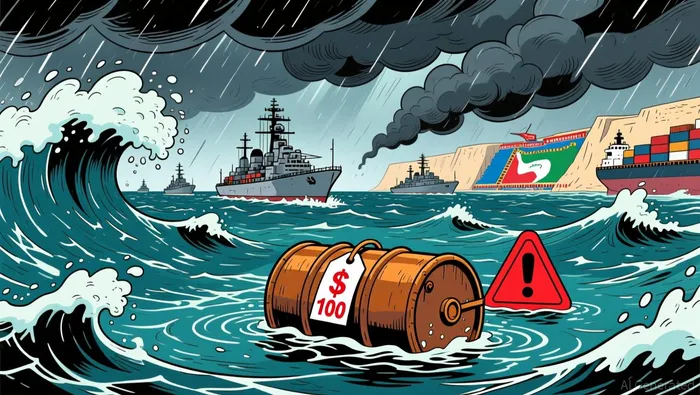
While the market is pricing in significant supply risk, the actual physical disruption has not worsened since late February. The Strait of Hormuz was already nearly closed before the U.S. blockade order, with Iran restricting passage and shipping traffic dropping to almost zero. The U.S. Navy’s involvement marks a political and military escalation, not a new supply shock.
Asian markets reacted strongly—South Korea’s Kospi fell nearly 6% and Japan’s Nikkei lost 5.2%—reflecting real concerns about supply chain risks. These economies rely heavily on Persian Gulf oil, and the disruption is significant. However, there is debate over whether the market has overreacted.
The blockade could create a temporary price premium that may not last. If the U.S. Navy enforces the blockade without further escalation and diplomatic channels reopen, the additional risk premium could dissipate quickly. The actual flow of oil has not deteriorated since late February; what has changed is the perceived political risk.
Oil was priced at $108.90 a month ago, peaked at $119.50, and is now below $100. The market’s volatility reflects uncertainty—where risk and opportunity coexist.
Key Factors and Potential Outcomes
The $100 price point has become a critical battleground. Whether oil remains at these levels or falls back toward $90 will depend on developments in the next two to four weeks. Several factors could influence the direction:
- Iranian Escalation: The main risk to higher prices is further action from Iran. The IRGC has already shown its willingness to use force, sinking a tugboat and damaging at least 16 merchant vessels, resulting in 12 casualties. Any attack on major oil infrastructure or non-Iranian tankers could escalate the situation into a broader regional conflict, pushing Brent crude above $120. The question is whether Iran seeks escalation or is signaling openness to negotiation.
- U.S. Navy Actions: The credibility of the blockade will be tested by U.S. Navy interdictions. Trump has ordered the Navy to block all ships entering or leaving the Strait of Hormuz. The first major interdiction, especially if it involves boarding or disabling a vessel, could trigger a crisis. Markets will watch closely to see if Iran responds militarily or if the blockade can be enforced without direct confrontation. The former would drive prices higher; the latter could cause a rapid price reversal as risk premiums fade.
- Diplomatic Developments: The collapse of Islamabad talks after over 21 hours of negotiations has not closed all channels. If either side signals willingness to compromise—such as Iran reopening the strait in exchange for sanctions relief or the U.S. easing its demands—prices could fall 15–20% within days. The market is currently pricing in a prolonged standoff, but the conflict has lasted just over five weeks.
- OPEC+ Response: The actions of Saudi Arabia and the UAE will be crucial. If they view the disruption as long-term, they may increase output to stabilize prices, or they could coordinate production cuts to maintain prices above $100. Their next meeting will be pivotal.
- Strategic Petroleum Reserve Releases: The IEA holds about 1.5 billion barrels in member reserves. A coordinated release, led by the U.S. and allies, could offset several weeks of lost supply from Hormuz and put downward pressure on prices. The political question remains: will Trump choose to signal abundance or use scarcity as leverage?
President Trump has described the price surge as "short term" and "a very small price to pay for U.S.A., and World, Safety and Peace". However, if the 37% increase in oil prices leads to gasoline exceeding $4.50 per gallon in the U.S., the political narrative could shift, especially if consumers feel the impact directly.
The situation is clear: $100 per barrel is the current dividing line. A move above $110 would likely require further escalation, while a drop below $90 would suggest de-escalation. The coming month will reveal which direction the political and military dynamics will take.
Disclaimer: The content of this article solely reflects the author's opinion and does not represent the platform in any capacity. This article is not intended to serve as a reference for making investment decisions.
You may also like
Institutional Money Buys SMCI as Analysts Disagree

Dimon's 2026 Risk Forecast: Institutional Implications of the "Skunk at the Party" Scenario

Sovereign Cloud Hype vs. Weak SPIR.N Chart: What’s the Play?

IOVA Rises on Strong Buy — But Charts Signal Trouble

Trending news
MoreCrypto prices
More





