
Iran Blockade Hints at Renewed Supply Disruptions, Impacting Energy and Shipping Shares

Strategic Missteps and Escalation Risks of the Blockade
The recent announcement of a blockade represents a bold yet questionable strategic maneuver, one that is unlikely to fulfill its intended objectives and instead heightens the chances of a broader conflict. The primary issue lies in its lack of strategic clarity. This move comes on the heels of unsuccessful negotiations between the United States and Iran in Pakistan, where Iran declined to renounce its nuclear ambitions, casting doubt on the fragile ceasefire. No agreement was reached, and the blockade directly undermines the recently established two-week truce, immediately raising the risk of renewed hostilities and jeopardizing a potential de-escalation path.
Defense analysts have expressed skepticism about the feasibility of the blockade. President Trump's proposal to deploy the Navy to seal off the strait is seen as impractical by security experts, who point out the absence of an effective military mechanism to compel Iranian compliance. The U.S. lacks the resources to maintain a blockade that Iran could swiftly circumvent, diminishing the credibility of the action as a means of coercion and making it appear more symbolic than actionable.
Ultimately, this blockade injects ongoing risk into energy and shipping markets. It signals a renewed willingness to escalate tensions, directly threatening the vital Strait of Hormuz. Although the ceasefire briefly buoyed markets, the economic fallout from the conflict is expected to linger.
Rather than preventing supply disruptions, the blockade has reintroduced volatility and uncertainty. For large investors, this means a higher risk premium is now required for energy and shipping assets, as political brinkmanship continues to block the path to stable maritime trade.
Economic Impact: Trade Routes and Market Volatility
The blockade's effects are already being felt in global shipping and energy markets, with immediate consequences for liquidity and credit stability. The Strait of Hormuz, which handled 21 million barrels of oil daily in 2022, is now largely inaccessible to major shipping lines. This has forced global trade to reroute, driving up costs and increasing price swings.
Major shipping companies, including Maersk and Hapag-Lloyd, have redirected their vessels around the Cape of Good Hope, a detour that adds approximately ten days to transit times and reduces available shipping capacity. This has led to a surge in freight rates. While this situation benefits shipping companies in the short term, as reduced supply boosts their revenues, it also imposes significant new costs on global trade, raising expenses for manufacturers and retailers worldwide.
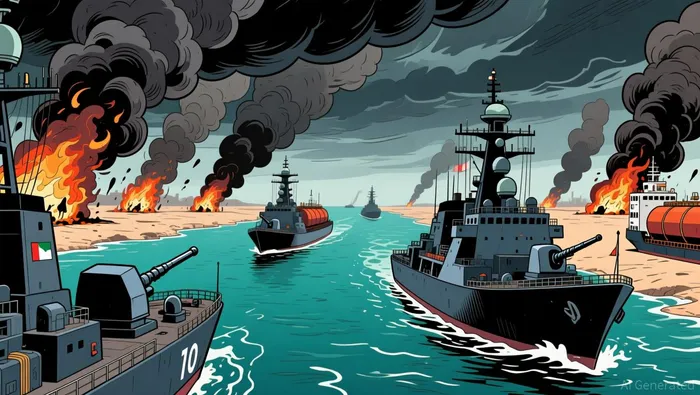
The disruption is not limited to oil. CMA CGM has implemented a $600 surcharge on shipments from China to West Africa, directly attributing the increase to Middle East instability. This demonstrates how a single chokepoint disruption can trigger widespread cost increases across various trade routes and sectors.
For institutional investors, two main challenges emerge: slowing trade flows put pressure on global liquidity, and increased costs from rerouting and surcharges threaten credit quality. Companies heavily reliant on these affected routes may see their profit margins and cash flow stability erode, making them more vulnerable amid rising costs and economic uncertainty. The blockade thus acts as a direct catalyst for a global trade cost shock, testing the resilience of corporate finances.
Investment Shifts: Navigating Energy and Shipping Sectors
The blockade has prompted investors to reassess their sector allocations, favoring defensive assets and reducing exposure to the operational risks inherent in energy and shipping. The initial market reaction to the ceasefire—a rally in U.S. futures and a drop in oil prices—was a temporary relief. However, the underlying situation remains fragile. The ceasefire is merely a temporary pause, not a lasting solution, and the blockade itself has fueled further escalation, creating a highly volatile environment where sector rotation is driven by the risk of renewed conflict.
Energy stocks face a particularly uncertain outlook. While reopening the Strait of Hormuz would be positive, the broader economic consequences of the conflict are likely to persist. Damage to infrastructure, higher shipping and insurance costs, and lasting changes in pricing will continue to impact inflation and growth projections. These factors put pressure on the profit margins of both major and independent energy companies, suggesting a cautious or even reduced allocation to pure energy plays. The sector is challenged by both the threat of renewed supply disruptions and the ongoing burden of elevated operational costs.
Shipping stocks are in a similar, if not more precarious, position. The blockade and subsequent rerouting have temporarily boosted freight rates, as shipping companies benefit from constrained capacity. However, this is a short-lived and costly gain, not reflective of sustainable demand. The sector faces significant operational risks, with vessels exposed to conflict zones and reroutes adding time and expense. Additionally, the increased surcharges and rerouting costs may strain the finances of customers, raising the risk of defaults and making shipping stocks a higher-risk investment during this period of geopolitical uncertainty.
The next major shift in capital allocation will depend on Iran's response to the blockade. Should Iran refuse to comply, the risk of direct military confrontation or further escalation rises, likely prompting investors to move decisively into safe-haven assets such as U.S. Treasuries and gold. For now, a defensive investment approach is warranted: reduce exposure to energy and shipping equities and remain alert to geopolitical developments that could necessitate further sector rotation.
Key Triggers, Scenarios, and Portfolio Strategy
The most immediate factor influencing portfolio adjustments is how Iran reacts to the blockade. The U.S. imposed the blockade after extended negotiations failed to produce a breakthrough. If Iran resists, it would confirm doubts about the blockade's effectiveness and likely provoke a stronger U.S. response, reigniting supply disruptions and market volatility. This would drive a shift toward safe-haven assets. Conversely, if Iran complies, it would highlight the blockade's lack of coercive power, but the economic damage would remain.
Another scenario is the operational failure of the blockade itself. As experts have noted, the plan to use naval forces to enforce the blockade is not realistic and lacks a credible military mechanism. If the blockade collapses, it could embolden Iran and increase the likelihood of direct confrontation, further destabilizing the fragile ceasefire, which is seen as a temporary pause, not a resolution.
From a portfolio management perspective, the recommendation is clear: scale back positions in high-volatility energy and shipping stocks, while maintaining a core allocation to defensive assets. The blockade has reintroduced persistent risk, and the economic aftershocks of the conflict are expected to endure. Energy equities face ongoing threats from potential supply shocks and higher operational costs, while shipping stocks, despite short-term gains, are exposed to elevated risks from rerouting and surcharges. These sectors remain high-risk holdings amid ongoing instability.
In summary, a prudent, risk-aware approach is essential. Closely monitor Iran's actions as the primary trigger for further adjustments. For now, portfolios should emphasize caution: underweight direct energy and shipping exposures, and prioritize defensive assets and quality investments that can weather ongoing volatility and uncertainty. In this environment, liquidity and stability take precedence over speculative growth.
Disclaimer: The content of this article solely reflects the author's opinion and does not represent the platform in any capacity. This article is not intended to serve as a reference for making investment decisions.
You may also like
PLUMETRY's Double-Top Forms as Momentum Diverges

Audinate’s Financial Challenge: Will Rising Gross Profits Surpass Soaring Costs in the Second Quarter?
Ether Machine SPAC Breakdown: A Flow-Oriented Examination of the $1.6 Billion Outflow
Trending news
MoreCrypto prices
More





