
IDFC First Bank’s chief executive offloads shares to cover taxes and exercise options—Here’s why this move suggests a buying opportunity rather than a wave of selling

Insider Transactions at IDFC First Bank: Strategic Moves, Not Sentiment Shifts
Recent developments at IDFC FIRST Bank highlight a series of calculated insider actions rather than a change in outlook. The bank recently completed a standard employee incentive process, granting 490,588 equity shares to its staff through the Employee Stock Option Scheme on March 23. Simultaneously, CEO V. Vaidyanathan executed a major block sale, transferring 5.07 crore shares to GQG Partners for ₹478.7 crore. While these actions may appear as a simple sale and grant, they actually reflect a coordinated financial strategy.
The CEO’s share sale was specifically intended to cover tax obligations and social contributions related to options awarded during the Capital First period. The bank clarified that the funds raised would be used solely to subscribe to new shares by exercising options, pay the associated income tax, and support pre-committed social initiatives. This is a textbook example of insiders leveraging share sales to finance option exercises, which ultimately increases their ownership. As a result, Vaidyanathan’s stake is set to grow from 0.58% as of June 30, 2023, to 1.04% of the paid-up capital after this transaction. Despite selling shares, his investment in the bank is actually rising.
This approach is consistent with previous insider activity. For instance, the Rukmani Social Welfare Trust sold 625,000 shares at ₹80.4 in November 2025. Although this was a separate entity, it demonstrates a steady flow of shares from major stakeholders. The CEO’s recent transaction, however, is larger and directly linked to option exercises and tax requirements. Rather than signaling a lack of confidence, these moves allow insiders to realize long-term compensation without using personal funds, while also settling tax liabilities from years of share appreciation.
In summary, these actions reflect alignment of interests rather than a withdrawal of support. The CEO’s share sale was a necessary step to unlock value from legacy grants, with proceeds earmarked for taxes and social causes, not personal gain. This is a financial adjustment, not a negative signal. For investors, the key takeaway is that the CEO’s net ownership is increasing, and the sale was essential to achieve this.
Market Response and the End of the Structural Discount
The market’s reaction to the recent corporate restructuring is more telling than the CEO’s share sale. The reverse merger between IDFC Ltd and IDFC First Bank was a strategic move to simplify the company’s structure, removing the typical “structural discount” associated with layered ownership in Indian markets. By eliminating the holding company, the merger allowed the bank’s true value to surface.
Sample Trading Strategy: Long-Only Bollinger Bands
- Enter a long position when IDFCFIRSTB’s closing price rises above the upper Bollinger Band (20-day SMA, 2 standard deviations).
- Exit the position if the closing price drops below the 20-day SMA, after 10 trading days, or if a take-profit (+8%) or stop-loss (−4%) is triggered.
- Backtest period: Last 2 years.
| Metric | Result |
|---|---|
| Total Trades | 0 |
| Winning Trades | 0 |
| Losing Trades | 0 |
| Win Rate | 0% |
| Average Hold Days | 0 |
| Max Consecutive Losses | 0 |
| Profit Loss Ratio | 0 |
| Avg Win Return | 0% |
| Avg Loss Return | 0% |
| Max Single Return | 0% |
| Max Single Loss Return | 0% |
Institutional Interest and Market Valuation
Institutional investors are beginning to recognize the benefits of this simplified structure. In September, GQG Partners, a US-based fund, acquired a 2.58% stake for approximately ₹1,527 crore, signaling confidence in the bank’s new direction. However, despite this significant investment, the stock continues to trade at a discount, suggesting the market has yet to fully price in the value unlocked by the restructuring.
This disconnect between institutional buying and the current stock price presents an opportunity. The reverse merger was aimed at streamlining operations and making the bank’s value more transparent. Now that the holding company layer is gone, the bank’s valuation should gradually align with its intrinsic worth. GQG’s investment is a bet that this adjustment is overdue.
Ultimately, simplifying the corporate structure can create significant value, even without immediate earnings growth. While institutional investors are moving in, the broader market has been slower to react. If the discount persists, it could represent a temporary mispricing, rewarding those who recognize the improved financial clarity beneath the surface.
Key Catalysts and Risks to Monitor
The stage is set: the structural discount is narrowing, and major investors are positioning themselves. The main catalyst now is for the stock price to reflect the bank’s intrinsic value. With the reverse merger finalized, the market should begin valuing the bank on its own merits, rather than as part of a complex holding structure. The current price near ₹64.60 serves as a benchmark for assessing the remaining discount and potential upside. Sustained trading above this level would indicate the market is starting to recognize the bank’s true value.
The primary risk is dilution. The recent issuance of 490,588 equity shares under the ESOS is modest, but it signals a flow of new shares entering the market. Future option exercises, like the one that funded the CEO’s sale, will further increase supply. If earnings growth does not keep pace, this could put pressure on per-share metrics such as book value and earnings. This dilution is not a flaw of the restructuring, but a cost of the compensation model that aligns employees’ interests with shareholders. The market will need to see accelerating growth to justify the larger share base.
It’s also important to track insider activity for any changes in alignment. The current pattern shows insiders selling shares to fund option exercises and tax payments, ultimately boosting their net holdings. A period of consistent insider buying would be a strong positive signal, while large, untied sales by the CEO or other key insiders could indicate a breakdown in alignment.
In conclusion, patience is essential. The corporate simplification has created a hidden value opportunity, but realizing it will take time and depends on the market’s ability to absorb the changes. The catalyst is the convergence of price and value; the risk is dilution without corresponding growth. Watch the price relative to ₹64.60 and monitor insider transactions for the next important signal.
Disclaimer: The content of this article solely reflects the author's opinion and does not represent the platform in any capacity. This article is not intended to serve as a reference for making investment decisions.
You may also like
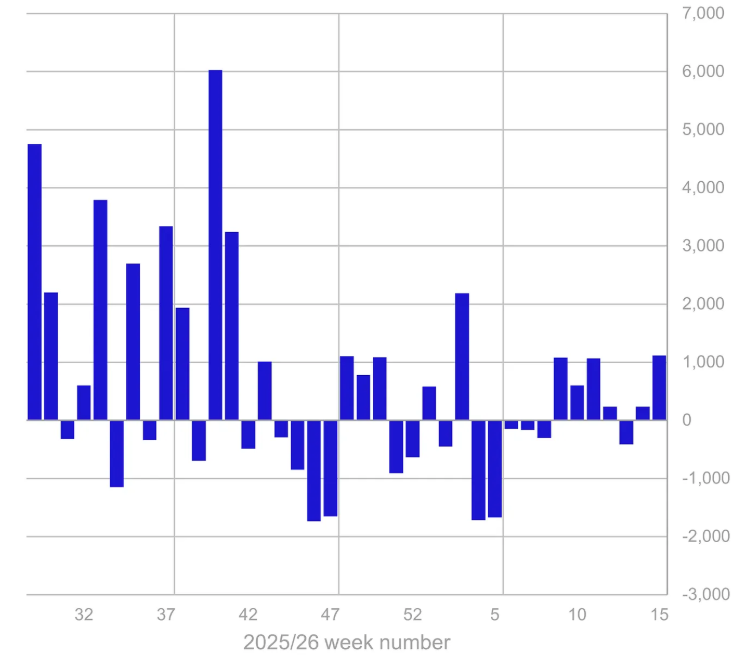
Crypto ETPs see $1.1B inflows, strongest gains since January
Morgan Stanley States S&P 500 Profits Protect Against Iran Conflict
Intel’s $100 Billion Surge in April Turns It Into the Market’s Top Performer
Trending news
MoreCrypto prices
More





