function ft_articletoptg_scrollto(){ let ft_tg_el = document.getElementById('app-qihuo-kaihu-qr'); if(ft_tg_el){ let ft_tg_el_offtop = ft_tg_el.offsetTop - 100; window.scrollTo({ top: ft_tg_el_offtop, behavior: 'smooth' }); } }
Source: China Business Journal
Report by: He Shasha, Beijing correspondent
In the past year, the gold market has undoubtedly been the focus of the global financial world.
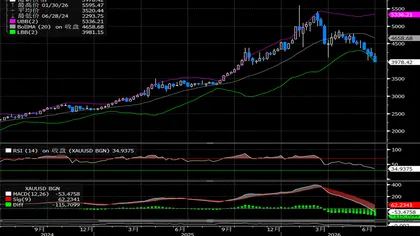
The price of gold has surged to historical highs, plummeted sharply at the beginning of this year, and is now experiencing intense fluctuations at high levels. The volatile movement of gold has left many investors puzzled. What structural changes have occurred behind this volatility? How has the popular "TACO trading" (Trump Always Chickens Out, a market arbitrage strategy based on Trump's policy behavior patterns) on Wall Street disrupted the market?
Lu Liping, professor at the School of Finance, Renmin University of China, and PhD advisor, provided an in-depth analysis of the financial logic behind the gold market on the recent "Zero View Finance" program by China Business Journal.
TACO Trading: The Illusion of a "Monkey Market" Under Policy Disturbances
China Business Journal: The recent sharp volatility in the gold market has been jokingly referred to as a "monkey market," and the term TACO trading is frequently mentioned among financial professionals. What exactly does TACO trading mean? What are the characteristics of the gold "monkey market"?
Lu Liping:
TACO trading is a term coined on Wall Street, short for "Trump Always Chickens Out." The logic is that policy makers often launch strong policies to exert pressure, causing the market to fall, but eventually abandon or moderate these policies, leading the market to rebound. Investors take advantage of this repetitive "hard then soft" pattern for short-term arbitrage, and over the past year, this trading logic has repeatedly succeeded—this is TACO trading.
The gold "monkey market" refers to the extreme volatility in the gold market. Especially since March this year, there has not been a clear upward or downward trend in gold; instead, it has remained in a state of high volatility.
China Business Journal: What is the logical connection between TACO trading and the gold "monkey market"? What kind of sentiment does this reflect in the market?
Lu Liping:
Essentially, TACO trading creates "disturbances" and uncertainty. The fact that this arbitrage logic based on policy reversals repeatedly works shows a lack of confidence in long-term expectations—the market is no longer treating gold as a traditional safe-haven asset, but rather as one with strong volatility and speculative nature. Investors engaging in such trades no longer focus on fundamentals like CPI, non-farm payrolls, and other classic economic indicators, but are driven by short-term news for arbitrage.
China Business Journal: Does this new form of trading create asset bubbles?
Lu Liping:
It doesn’t create bubbles; rather, it creates "volatility" that deviates from true value. This form of trading exploits market psychology and policy reversals. But there is a potential risk: when people get used to this "crying wolf" story, they may become desensitized to real risks from economic fundamentals, like a financial crisis. If the next market downturn is due to a collapse in fundamentals rather than policy games, investors continuing to use the TACO trading logic may face significant losses. Overall, TACO trading can mislead investors’ trading strategies.
China Business Journal: For investors, how should they invest rationally?
Lu Liping:
Investments should focus more on long-term fundamentals. At a company level, pay attention to profitability and growth; at a macro level, consider inflation, employment, and economic growth data. In addition, technological innovation, as often discussed now, is also part of the fundamentals. Institutional investors tend to place more importance on long-term effects, while some individual investors are more affected by short-term factors due to more straightforward access to and processing of information.
Long-term Allocation: Safe-haven Logic and Retail Survival Guide
China Business Journal: Currently, geopolitical conflicts are frequent, but why does gold’s safe-haven function seem to have "failed," resulting instead in sharp rises and falls?
Lu Liping:
The safe-haven function of gold has not disappeared—it's just been offset by other mechanisms in the short term. For example, geopolitical conflict pushes up oil prices, which raises inflation expectations, causing the Federal Reserve to maintain high interest rates or not cut rates, thus increasing the holding cost of gold. In addition, when the stock market plunges due to crisis, some institutions sell their most liquid asset—gold—to make up margins. These short-term factors obscure the long-term safe-haven nature of gold.
China Business Journal: In the long run, does gold still have investment value? Can it return to its highs?
Lu Liping:
Over the long term, as a precious metal, gold’s price remains strongly supported. First, the "de-dollarization" trend sees major central banks continuously increasing gold reserves; second, global inflation may structurally rise, making gold an excellent hedge against inflation; furthermore, demand for gold in industry (such as electronic devices) is growing robustly. Currently, many institutions' forecasts for gold are even more optimistic than previous highs—the long-term investment logic remains solid.
China Business Journal: In the current "monkey market," how should ordinary investors set strategies?
Lu Liping:
The core advice is "respect risk, focus on the long term, abandon the short term." First, do not fantasize about making quick money, and do not add leverage in such a volatile market. Next, it’s advisable to adopt a "core + satellite" strategy: allocate most funds to stabilizing assets like treasury bonds and index funds, and use gold as a safe-haven asset, with a small, long-term position.
China Business Journal: How do you view the competition between individual and institutional investors in the gold market?
Lu Liping:
Investing is an extremely professional endeavor. Institutions are equipped with AI, big data, and stronger information processing capabilities. Individual investors’ advantage lies in "resilience"—as long as you do not use leverage and do not need to urgently use your funds, you can ignore short-term volatility and share in long-term gains. Do not try to directly compete with institutions in areas beyond your knowledge (such as short-term arbitrage); preserving principal and maintaining patience is the wise choice.
(Editor: Li Hui; Review: He Shasha; Proofreading: Zhai Jun)
Responsible editor: Zhu Henan