
SaaS Doomsday Arrives? After Meeting with 40 Companies, Goldman Sachs Declares: This Could Be an Even Bigger Growth Narrative

Amid the AI disruption wave, the "SaaS Doomsday Theory" is being met with the most powerful systemic rebuttal from Wall Street.
After leading a series of visits to around 40 software companies, Goldman Sachs analyst Gabriela Borges released an in-depth report, clearly stating: AI is not a zero-sum game for the SaaS industry. Instead, it is poised to significantly expand its addressable market, and the "death narrative" around software companies is severely overestimated.
The report points out, software companies are transitioning their business models from selling features and seats to selling "units of labor or productivity." This move allows them to tap into the labor budget market, which far exceeds the traditional software budget in scale, thereby significantly increasing the Total Addressable Market (TAM). At the same time, value is shifting from cutting-edge model labs to the software application and runtime layers. This structural change provides positive support for the long-term valuation logic of SaaS stocks.
However, current market sentiment hasn't completely reversed. JPMorgan trader Brian Heavy has recently noted that the latest 8 consecutive rallies of software stocks are "largely tactical," mainly driven by short covering rather than fundamental change. ServiceNow’s subsequently weak earnings guidance further hit the stock and dragged down the entire sector, quickly dampening early signs of recovery. The debate around SaaS’s survival is reaching a critical point, tested by both earnings season and AI benchmarks.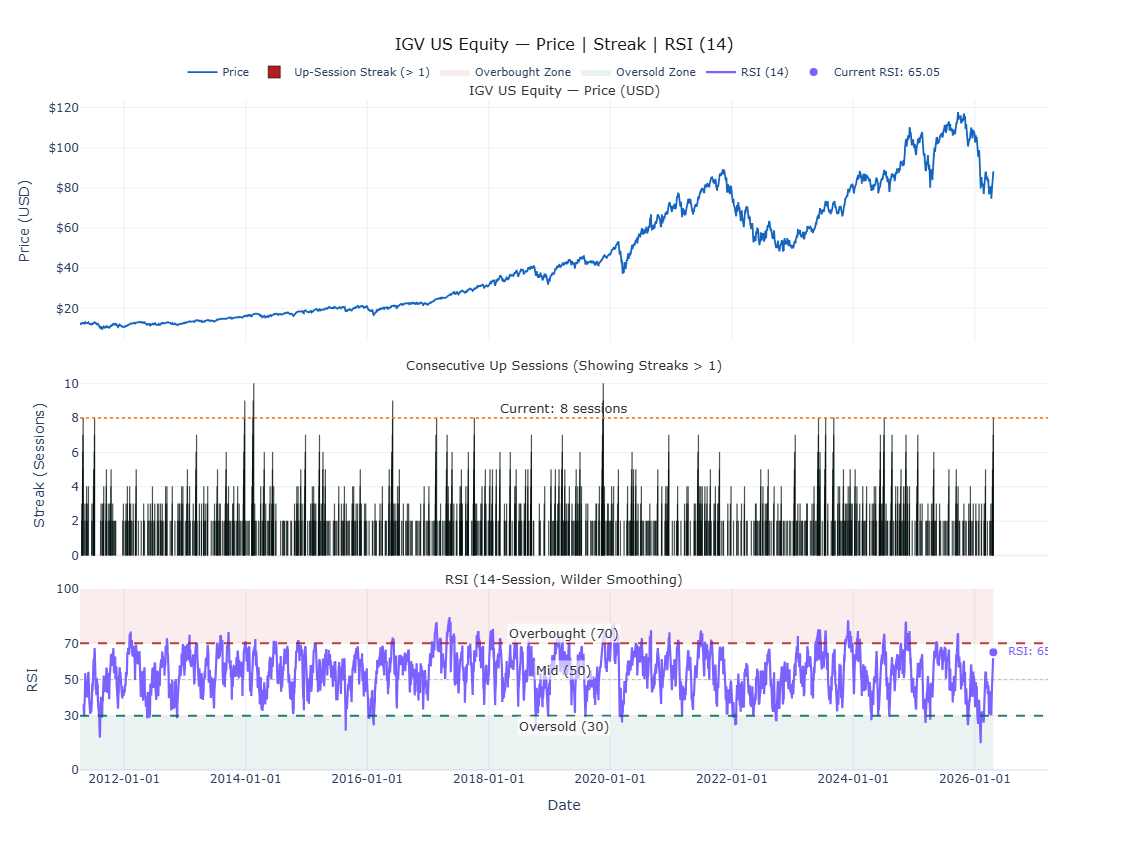
AI is a TAM Expander, Not a Value Destroyer
The core logic of the Goldman Sachs report is that AI and SaaS are not locked in a zero-sum game.
Traditional SaaS charges by "seat," while AI is enabling software companies to reprice based on "units of labor" or "productivity processes." This lets them penetrate the much larger labor cost pool, which dwarfs the IT budget for software—implying a quantum leap in market size.
Meanwhile, the focus of the value chain is shifting.
As frontier AI model benchmarks continue to refresh and inference costs fall rapidly, value is shifting from cutting-edge labs to the software/application/runtime layers.
Borges points out that enterprises are actively building independent software ecosystems that are "model vendor-agnostic," preferring to use open-source distilled models or their own small language models (SLMs) to avoid overreliance on a single model vendor. The benefits: more efficient request routing, lower inference costs, and immunity from sudden price shocks should a model vendor stop subsidizing Tokens.
The report also highlights that compute scarcity is becoming the new key constraint, shifting the power balance toward those with inference-time capabilities—in other words, those controlling agent orchestration, routing, and cost management at the software layer.
AI Native Companies Forge New Paths, Filling SaaS Gaps
In terms of competition, Goldman Sachs highlights that AI-native startups are not taking on SaaS giants like Salesforce and Workday head-on but are instead targeting the "blank spaces" between traditional SaaS products.
These blank spaces refer to business processes and workflow scenarios in various SaaS verticals that have not been effectively covered by traditional players. Leveraging more flexible architectures and process-centered product designs, AI-native companies are establishing their beachheads in these areas instead of competing directly with established players.
This pattern means that AI Natives, traditional SaaS vendors, and frontier model providers—all three types of players—each have their strengths and weaknesses at the software application layer, resulting in an "additive effect" rather than a cannibalistic dynamic overall.
Divergence Remains: The Bearish Narrative Is Not Dead
Among the surveyed public companies, Goldman Sachs highlighted five with structural advantages:
CRM (Salesforce): Seen as having a clearer agent strategy; the upcoming developer tools are worth watching;
CRWD (CrowdStrike): Noticeable improvement in multi-module demand;
GWRE (Guidewire): AI is accelerating its cloud transformation, embodying a pure incremental market expansion logic;
IOT (Samsara): Demand is ROI-driven; their data and AI capabilities are differentiated;
RBRK (Rubrik): Agent Cloud and identity security business broaden the growth narrative; enterprise resilience demand continues to expand.
Divergence Remains: The Bearish Narrative Is Not Dead
Although Goldman Sachs has a clear stance, internal market divergence remains. The software application layer currently faces competitive assaults from two camps—AI-native companies and frontier AI model providers—even Goldman admits that the core question is which group can best overcome its own shortfalls.
The report’s answer is that it’s an "additive game" rather than zero-sum: all sides continue to create customer value in their respective areas of strength, benefitting the overall software market rather than shrinking it. Whether this is confirmed by forthcoming earnings reports remains to be seen.
At present, the negative impact from ServiceNow’s weaker guidance reminds investors that the uncertainty in this AI transition period remains real. Brian Heavy’s assessment warns that long-term capital has only modestly repositioned in software; if this rebound isn’t confirmed by continued fundamental improvement, its sustainability will remain in question.
Disclaimer: The content of this article solely reflects the author's opinion and does not represent the platform in any capacity. This article is not intended to serve as a reference for making investment decisions.
You may also like
The Fed Just Exposed Major XRP Secrets
ECB: Inflation signals allow patience – BNY
TAC (TAC) sees 40.2% volatility in 24 hours: surge in trading volume and breakout market movement
Crypto prices
More





