
Southeast Asian Currency Series: Small Currencies Are Not Small Issues

Morning FX
In recent years, more and more companies are “going global”, leading to an increasingly diverse mix of currencies on corporate accounts—in addition to traditional US dollar and euro, there are Indonesian rupiah, Vietnamese dong, Malaysian ringgit, Brazilian real, and so on…
In the past, Southeast Asian currencies were often referred to as “small currencies.” However, times have changed and small currencies are no longer a “small problem.” Research, hedging, and management of small currencies are increasingly becoming important topics in the new era.
A set of data illustrates the point:
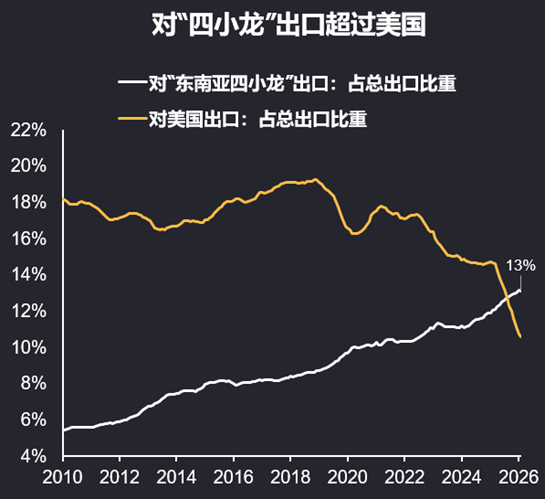
From the perspective of exports, China’s export proportion to the “Four Asian Tigers” of Southeast Asia (Malaysia, Indonesia, Thailand, Vietnam) has reached 13%, surpassing the 10.6% exported to the US. It’s the typical “surrounding the city from the countryside” feeling.
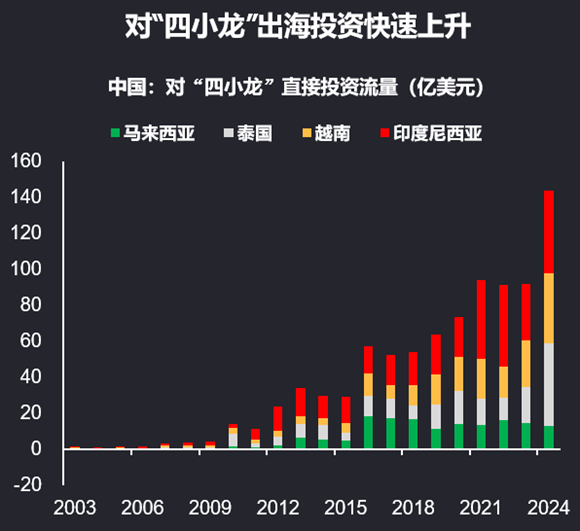
From the perspective of outbound investment, China’s FDI flows to the “Four Asian Tigers” have reached 15 billion USD per year, and outbound investment continues to accelerate annually. Leveraging their own unique resources, regional, and industrial advantages, the “Four Asian Tigers” have become key destinations for Chinese companies expanding overseas.
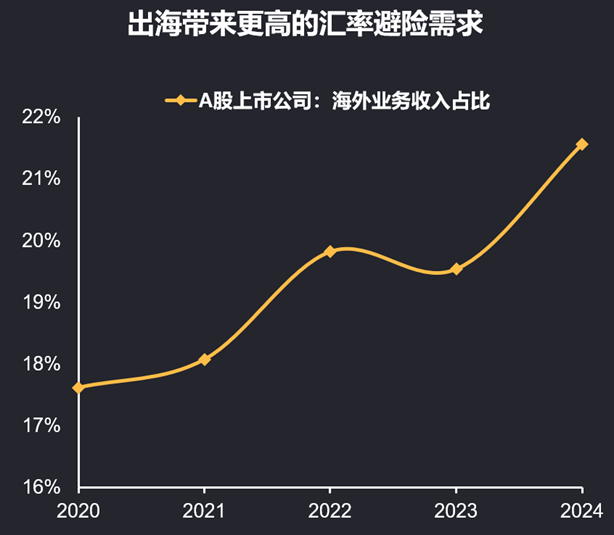
From the perspective of overseas revenue, the share of overseas business income of listed companies has surpassed 20%, and more and more enterprises are making a mark in the international market. Without a doubt, going global is an irrevocable trend. As more Chinese companies go abroad, the foreign currencies in their hands will become increasingly more and diverse. This is an important issue of exchange rate risk hedging for the future—“small currencies” are no longer a “small problem.”
Therefore, we are launching a new series to chat with everyone about Southeast Asian currencies. As the opening article, we will mainly discuss some structural questions:
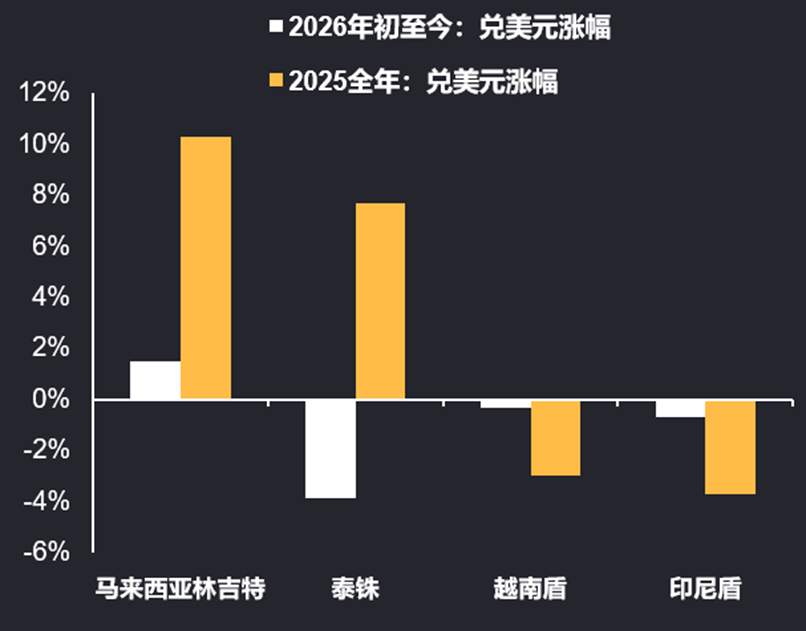
1. How have Southeast Asian currencies performed in the past two years? In fact, the internal divergence is particularly large. Taking the previously mentioned “Four Asian Tigers” as examples, Malaysian ringgit has performed the strongest, appreciating more than 10% since 2025. In subsequent articles, we’ll explore the exchange rate logic of ringgit (MYR), where you’ll discover that MYR is a template for Southeast Asian currencies in the “Belt and Road” era.
On the other hand, Vietnamese dong (VND) and Indonesian rupiah (IDR), both Southeast Asian currencies, have shown consistent weakness over time, each facing their own issues, which we’ll discuss in later articles as well. Thai baht (THB) is considered a “small safe haven currency” within Southeast Asia, and its performance is linked to gold...
2. How should we study Southeast Asian currencies? Is there a framework? The logical framework for FX rates can be simple or complex. For emerging market currencies (EM currencies), there is a relatively universal analytical framework—the balance of payments (current account + capital account).
On this basis, some EM currencies have a high degree of capital account openness (such as the Korean won), making capital flows very important; some, like the Vietnamese dong, have a relatively closed capital account, so trade surpluses and exchange rate policies are more critical…
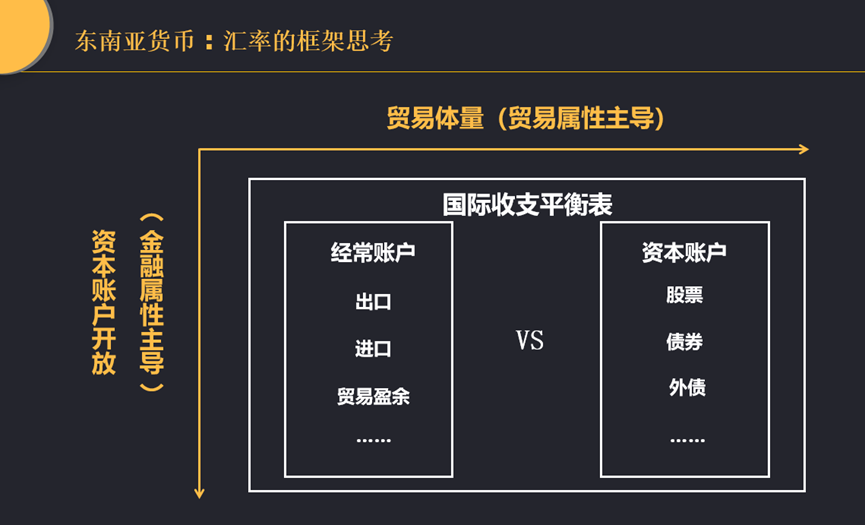
On top of this universal framework, Southeast Asian currencies have some unique characteristics that investors should pay attention to:
1. The direction of foreign capital flows is extremely important. Southeast Asian countries are generally small economies highly dependent on foreign investment, so the direction of foreign capital is key. Later, we’ll see why the ringgit (MYR) continues to strengthen and the rupiah (IDR) continues to weaken—foreign capital flows are an extremely important factor…
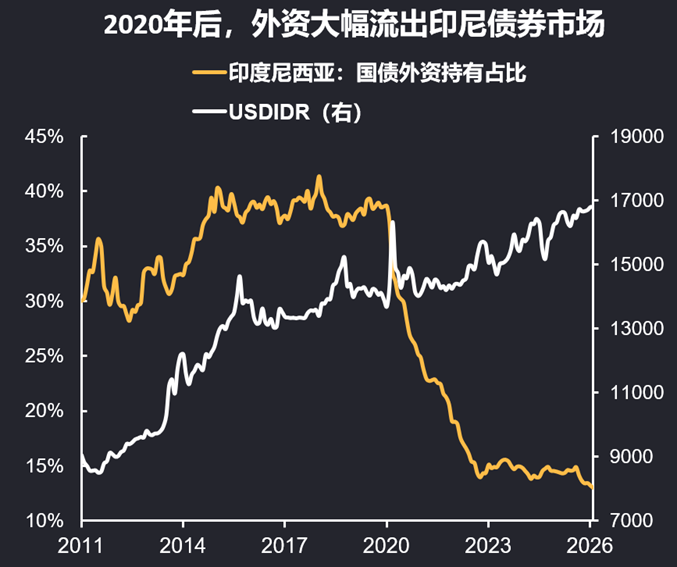
2. The robustness of the current account is very important. Southeast Asian countries benefit from the “Belt and Road” strategy and generally have very strong exports, but strong exports do not necessarily mean a robust current account. Some countries have small current account surpluses, or even long-term deficits. Thus, the shock resistance of these currencies is relatively weak, so when foreign capital exits, their currencies are vulnerable to depreciation…
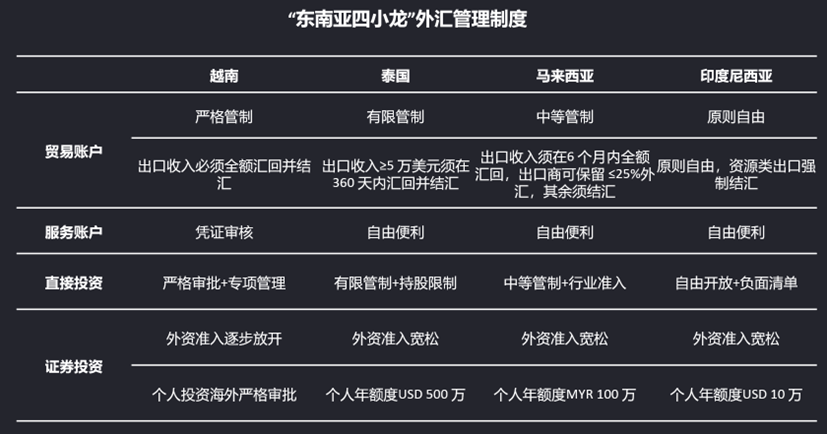
3. Each country’s FX management system is also very important. As EM economies, each Southeast Asian country has its own unique FX management system—some stricter, some looser. Central banks play varying roles in exchange rate pricing. Typical example is the Vietnamese dong (VND), where the central bank’s influence is highly significant…
Summary of today’s sharing:
1. Over the years, more and more companies are “going global,” and the mix of currencies on corporate accounts is getting more complex. Over time, small currencies have ceased to be a “small problem.” The study, hedging, and management of small currencies have become key topics in the new era;
2. How have Southeast Asian currencies performed in recent years? Actually, there is significant internal divergence. Research on Southeast Asian currencies can be based on a universal analytical framework—the balance of payments (current account + capital account). In addition, there are unique considerations for Southeast Asian currencies: foreign capital flows, robustness of the current account, FX management systems…
3. This article is the opening piece of the series. Next, we’ll discuss the ringgit (MYR), rupiah (IDR), baht (THB), dong (VND), as well as other Asian currencies. You are welcome to follow along.
Disclaimer: The content of this article solely reflects the author's opinion and does not represent the platform in any capacity. This article is not intended to serve as a reference for making investment decisions.
You may also like
XCX (XelebProtocol) fluctuates 60.2% in 24 hours: Low liquidity amplifies price volatility

Trending news
MoreCrypto prices
More





