
Not a Repeat of 1999! While Bearish Voices Rise, Contrarian Investors Sense a Different Atmosphere

As market pessimism rises, a seasoned fund manager sees a contrary logic: precisely because a large number of investors are skeptical about the stock market, there is room for the rally to continue.
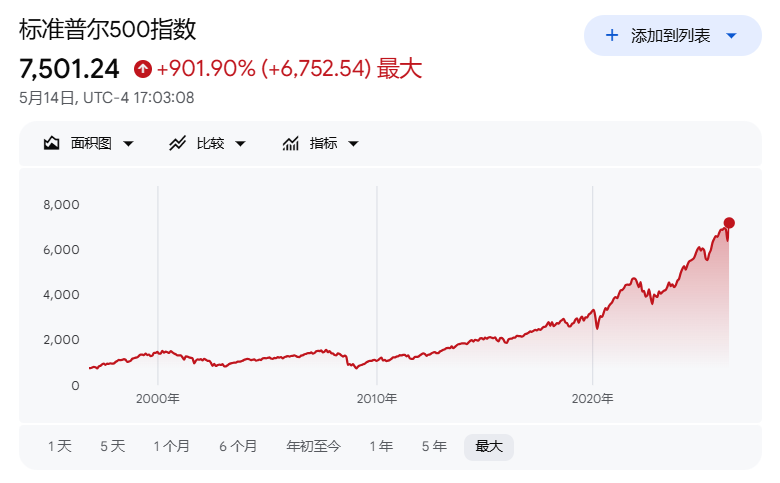
Global stock markets have recently continued to hit all-time highs, but bearish voices remain persistent. Well-known investor and The Big Short prototype Michael Burry compared the current market to the dot-com bubble, warning that the market is in "extremely thin air" and consequences are inevitable. According to Bank of America, global fund managers have cut their stock overweight positions by two-thirds since March. However, this widespread cautious sentiment, in the eyes of some market observers, actually constitutes potential momentum for a further market upswing.
Wall Street's year-end target for the S&P 500 Index is quickly approaching 8,000 points—about 8% higher than current levels. The core logic supporting this optimistic forecast is the stronger-than-expected earnings of U.S. companies and the potential boost to productivity and corporate profits from artificial intelligence.
The Very Existence of Bears Is "Ammunition" for Further Upside
Burry compares the current market to the dot-com bubble of the late 1990s, but this analogy has a key flaw: at that time, almost everyone was bullish until the bubble burst. The common saying back then was that bears "didn't understand the market."
Today, the situation is completely different. Despite record highs in stock markets from the U.S. to Zimbabwe, a significant number of investors remain skeptical. The presence of these doubters means the market still has room for "changing sides"—once they turn bullish, the buying could push prices even higher.
This logic helps to explain why, since late March, global stock markets have achieved significant gains despite an ever-growing list of risks. Many negative factors have already been priced in by more investors early, while positive factors—especially the outperformance of corporate earnings—continue to surprise, driving more people to join the bulls.
The AI Narrative Reshapes Earnings Expectations
The main argument supporting current stock valuations is the potential impact of artificial intelligence on corporate profits. Recently, U.S. corporate earnings have seen one of the largest upward revisions in decades (excluding the typical rebound after a recession), which has become a key driver drawing investors back into stocks.
A deeper question is: if AI truly achieves large gains in productivity, the stock valuations that appear too high now may not only be reasonable, but even underestimated. This "what-if scenario" is being factored in by an increasing number of investors.
Historically, when Internet technology emerged in the mid-1990s, it initially propelled only tech stocks, but later the margin-boosting effects spread to logistics, retail, and many other industries. The diffusion path of AI could be similar.
High Market Concentration Is Not Unprecedented
Another concern in the current market is the extreme concentration of gains—over the past month, fewer than twenty stocks in the S&P 500 outperformed the index. Right now, the 10 largest AI-related companies account for about 40% of the S&P 500's total market cap.
However, this concentration is not unprecedented. According to the book "Triumph of the Optimists," similarly high levels of concentration occurred in 1900, the 1930s, and the 1960s. Morgan Stanley data also shows that in the decade through 2024, as concentration rose, the 10 largest stocks contributed about one-fifth of the market's total capitalization but created nearly half of the economic profit, with fundamentals supporting a "winner-takes-all" landscape.
The flip side of high concentration is that more stocks have catch-up potential—and this process doesn’t have to involve tech stocks falling first. Whether the AI dividend can spread to more industries will be a key variable in determining if the market's breadth can improve.
Earnings Spillover Is the Core Bet
Overall, the key focus of the current market tug-of-war between bulls and bears ultimately comes down to one core question: Can AI-driven earnings growth spread from a handful of tech giants to a broader set of industries?
In the optimistic scenario, AI will expand the overall profits pie fast enough that even if it’s sliced among more players, each piece can continue to grow in absolute terms. If this logic holds, the issue of market concentration will naturally resolve over time, rather than turn into a systemic risk.
Of course, whether this outlook is realized remains quite uncertain. But for those investors worried about the market overheating, the sheer number of currently bearish players may ironically be the most notable contrarian signal.
Disclaimer: The content of this article solely reflects the author's opinion and does not represent the platform in any capacity. This article is not intended to serve as a reference for making investment decisions.
You may also like
Bitcoin Shrugs Off CLARITY Gains as Institutions Sell Amid Surging Treasury Yields
Trending news
MoreCrypto prices
More





