
Middle East War + Super El Niño! UBS warns: Food inflation in Asia may heat up across the board

Asian food prices are currently facing dual pressures. UBS analysts have issued a warning that the El Niño climate event and the fertilizer price shock triggered by Middle Eastern conflicts are fermenting simultaneously, which may significantly push up Asian inflation levels between later this year and 2027.
A report led by UBS analyst Leigha Miyata noted that the probability of El Niño occurring between May and July 2026 has risen to 82%, and the probability of it persisting from December 2026 to February 2027 is as high as 96%. This means that major Asian agricultural regions could face drought risk, impacting the yields of key crops such as rice.
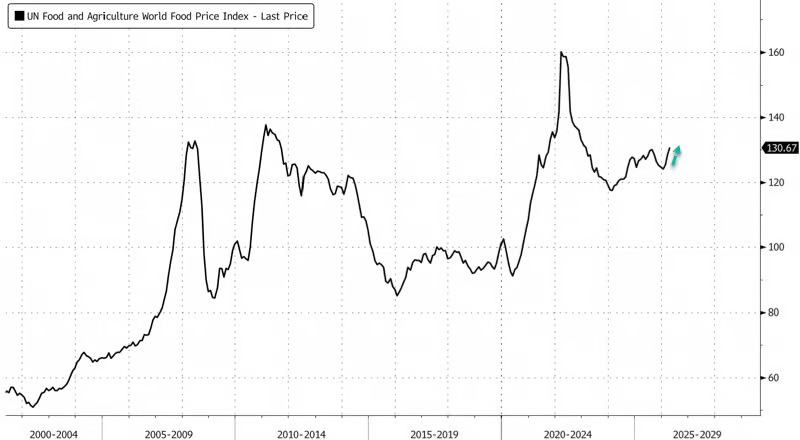
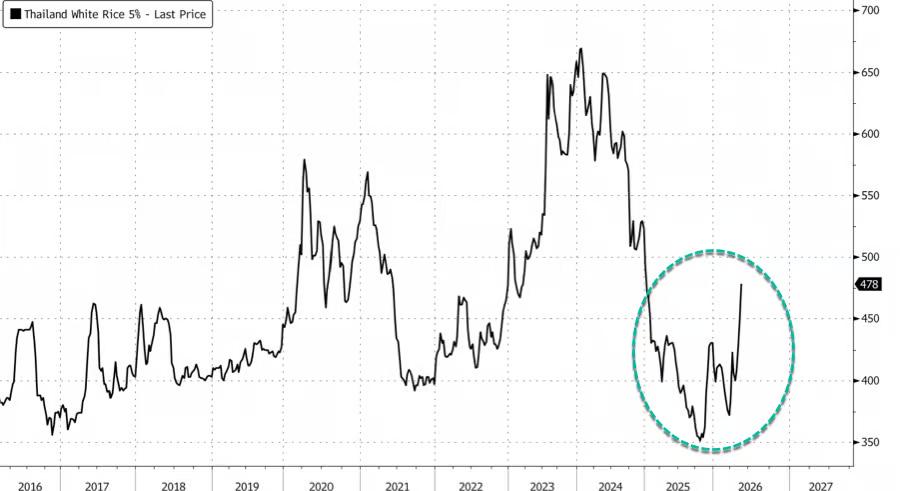
Meanwhile, the UN Food and Agriculture Organization Food Price Index recorded an average of 130.7 points in April, a month-on-month increase of 1.6%, marking the third consecutive monthly rise. In May, the price of Thai white rice surged by 20% in a single month, the largest one-month increase since 2008, and Chicago rice futures also rose 15% last month.
These signals indicate that food inflation pressure has already emerged in several Asian economies. The inflation rate in the Philippines jumped from 2.3% in February and 3.9% in March to 7.1% in April; Thailand shifted from deflation in February and March to 2.9% inflation in April. UBS economists expect Asian inflation to climb further due to base effects.
Rising Probability of El Niño Threatens South and Southeast Asian Harvests
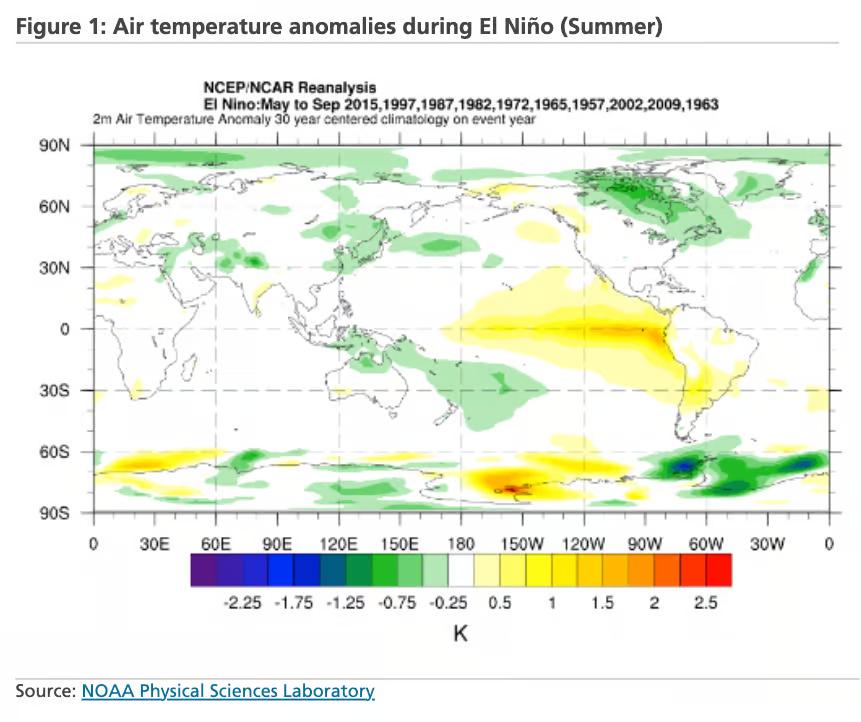
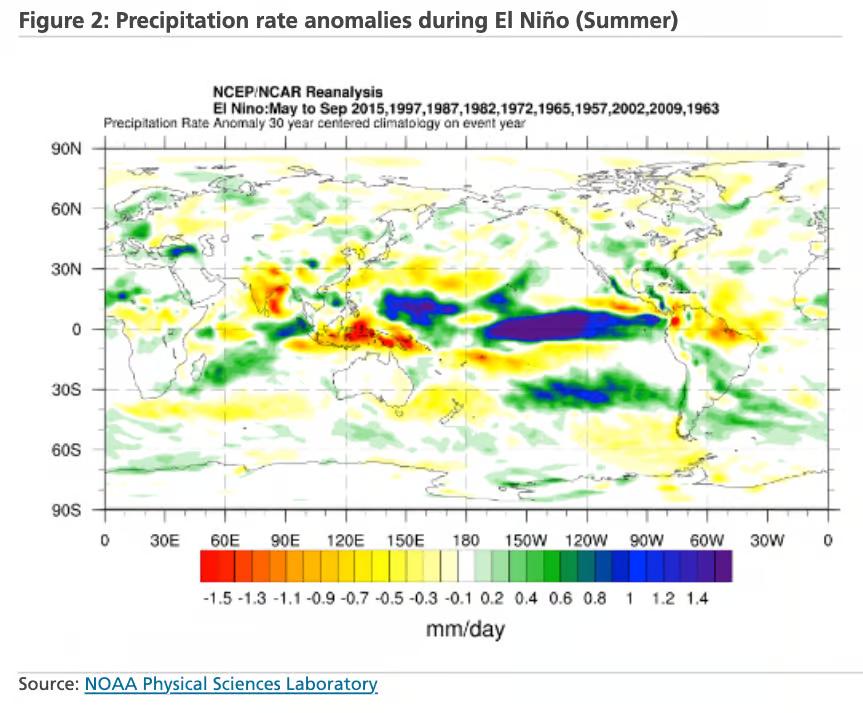
According to data from the U.S. National Oceanic and Atmospheric Administration (NOAA), the likelihood of El Niño persisting from the end of 2026 to early 2027 is now close to certainty. Miyata points out in the report that historical patterns show that during El Niño, temperatures in Indonesia and northern Australia are notably higher, while precipitation drops in South and Southeast Asia, directly threatening agricultural yields.
If El Niño unfolds as expected, UBS forecasts that droughts will impact the harvest season in South and Southeast Asia from September 2026 to April 2027. The report specifically highlights that Thailand and India will be most negatively affected in the Asia-Pacific region, and food-importing countries—including Japan—will also face greater import price pressure.
In addition, if a "super El Niño" event occurs, countries like South Korea and Japan, which usually have lower temperatures, may experience a reversal, resulting in extreme heat and heavy rainfall, further disrupting agricultural production in the region.
Fertilizer Price Shock Is Spreading Along the Supply Chain
Since the outbreak of the Middle East conflict, fertilizer prices have remained under pressure. UBS data shows that while urea prices have fallen about $190/ton (down 23%) from their April peak, they are still up 23% since tensions with Iran escalated. Ammonia prices remain firm, and ammonium nitrate solution (UAN) prices are also stable.
The UBS chemical team points out that the market has passed the seasonally tightest supply period, and the second quarter may be the price peak for the year. However, due to restricted trade flows and limited production capacity, structurally tight supply is expected to persist, supporting fertilizer prices above cost curves from the second half of 2026 into 2027. The report also notes that the real impact of rising fertilizer costs on crop yields is expected to gradually emerge from April 2027 onwards.
In addition, the price of plastic packaging in Japan has reportedly risen by 20% to 30%, and transportation costs are also increasing. These factors are expected to further push up retail food prices, though they are not yet fully reflected in Japan's inflation figures.
The Asset Ripple Effect of El Niño: From Sugar to Thermal Coal
The UBS report outlined the potential impacts of El Niño on multiple asset classes. In agriculture, the global sugar supply-demand balance is tightening and paired with massive speculative short positions, should El Niño disrupt India's monsoon, sugar production could fall by 3 to 8 million tons year-on-year, triggering a price surge.
In the energy sector, extreme heat will boost Asian electricity demand, especially for cooling, thereby increasing demand and imports for thermal coal, squeezing the shipping market supply. Meanwhile, hydroelectric output in Latin America and Africa may decline due to reduced precipitation, further supporting coal demand.
Policy Responses Have Shown Results, but Upward Inflation Trend Remains Hard to Reverse
UBS economists note that, following the outbreak of the Iran conflict, many Asian economies quickly enacted policy measures, which lowered initial inflation readings to some extent. However, the report clearly forecasts that inflation will continue to rise in the future.
According to current data, inflation is rising in all major Asian economies except Indonesia and Japan. Since the outbreak of the Iran conflict, corn futures prices for 2026 and 2027 have risen about 4% and 5% respectively. In Japan, while the year-on-year growth rate of food inflation slipped slightly from 4.6% in April to 4.1% in May, month-on-month it still rose by 0.3%. UBS expects Japan's nationwide CPI to increase from 1.4% in April to 1.5% in May, suggesting that April may have been a cyclical low for this round of inflation.
In summary, the combined impact of energy and fertilizer price shocks, El Niño climate risk, and base effects will cause Asian food inflation to face sustained upward pressure from the second half of 2026 through 2027, posing significant risks for consumers, central bank policy paths, and regional asset prices.
Disclaimer: The content of this article solely reflects the author's opinion and does not represent the platform in any capacity. This article is not intended to serve as a reference for making investment decisions.
You may also like
Hyperliquid price pulls back from ATH as Arthur Hayes exits HYPE, can bulls hold above $60?
Solana Price Prediction: $58 Buy Zone Eyed Before $175 Run
LayerZero price prediction: Why bears are watching ZRO’s $1.30 supply zone

Inside the Monetary Twist: Why Japan’s Policy May Not Be the XRP Catalyst Bulls Expect

Trending news
MoreCrypto prices
More





