
Hedge fund manager Gavin Baker: A textbook IPO execution, SpaceX aims to become the "East India Company of the Solar System" and achieve "the greatest in history"

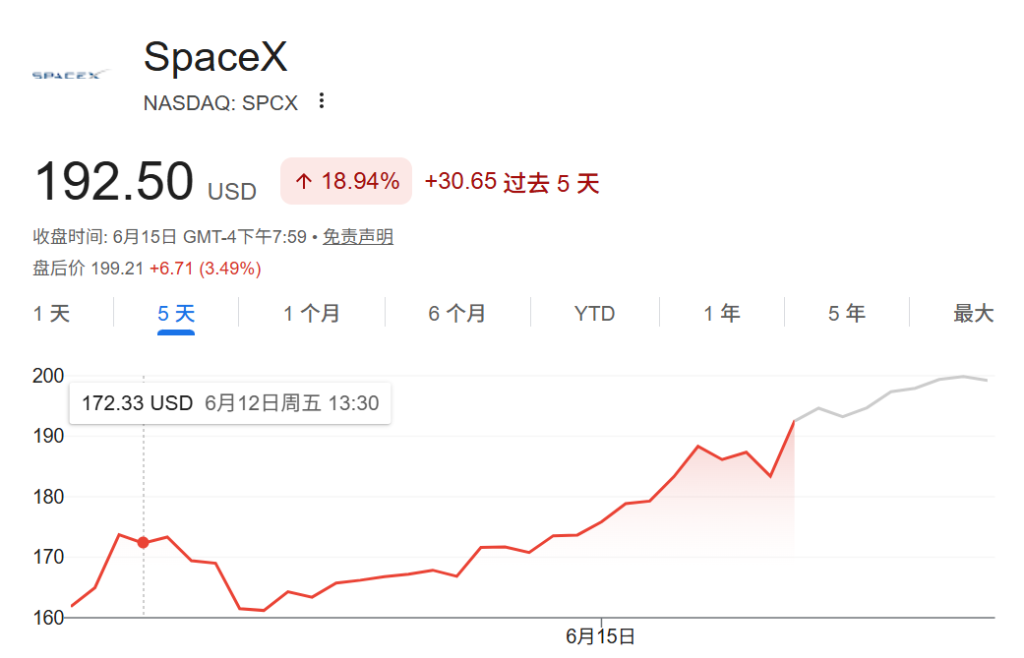
SpaceX made its debut on the public market with an almost flawless IPO, posting a two-day gain of over 30% without any significant volatility throughout the process.
Renowned hedge fund manager Gavin Baker believes this company not only has immediate commercial drivers within reach but is also poised to become "the most important enterprise in human history"—he compares its ultimate form to the "British East India Company" of the Solar System era.
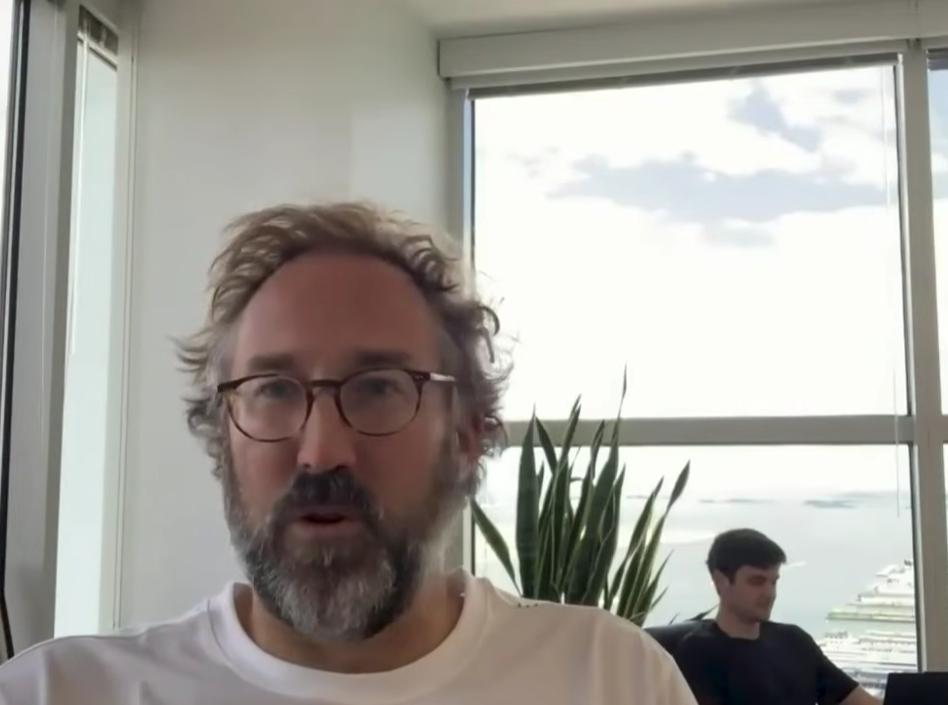
The underwriting team from Goldman Sachs and Morgan Stanley received high praise from Baker, describing the execution as "textbook perfection"—the pricing was precise, leaving no excess value on the table, nor did it witness the dramatic whipsawing of a surge followed by a collapse. He also pointed out that more than 10,000 SpaceX employees subscribed to their own company's shares during the IPO. Underlying market data also shows that the major buying force post-IPO came from institutional investors, contrary to certain media portrayals of retail investors taking the exit liquidity. Overall, the supply-demand structure is far more robust than external expectations.
On the recent commercial front, Baker focused on two key variables: First, the high-velocity monetization of data center computing power. According to disclosures from Altimeter, SpaceX generates about $50 billion in revenue per gigawatt (GW) of compute capacity in its partnership with Google, with a monetization efficiency approximately two to three times that of typical new cloud providers. Second, the AI code editor Cursor has already penetrated over half of Fortune 500 companies, demonstrating significant commercial traction. Baker stated bluntly, "The commercial story of SpaceX is not as distant as many imagine."
From a longer-term perspective, Baker believes that once Starship achieves full reusability, the total deployment cost of orbital compute will drop to only half that of terrestrial data centers, fundamentally rewriting the economic logic of compute infrastructure. Coupled with the vision of building lunar and Martian cities as part of a multi-planetary civilization, he admitted that SpaceX stands out as "the most unique experience" of his career, asserting that it is "very likely to become the most important company in human history."
Textbook Underwriting: Precise Pricing with Nearly 20% First-Day Gain
Baker described the execution of this SpaceX IPO as exemplary. With a first-day gain of nearly 20% and no significant volatility throughout, the pricing was neither too conservative (leaving excessive upside on the table) nor did it experience a sharp rally followed by a steep decline due to imbalances in supply and demand. Baker noted that the underwriting work by Goldman Sachs and Morgan Stanley was of exceptionally high quality, and that this stable price discovery process itself is the highest affirmation of professional execution capability.
Regarding how the public market will assess SpaceX's future, Baker acknowledged that quarterly results are inevitable, but emphasized that public markets often display a higher tolerance for heavy-asset investment cycles than outsiders might expect.
He cited the experiences of Tesla and Amazon during the construction of AWS: Both companies, during periods of massive infrastructure investment, saw public markets display considerable patience, with a time horizon far exceeding that of many in the venture capital ecosystem. In his view, this historical pattern also applies to SpaceX.
Recent Catalysts: Gigawatt-Scale Compute Monetization & Cursor's Enterprise Penetration
Baker concentrates on two primary commercial drivers to watch in the next 12 months.
The first driver is the rapid deployment and monetization of data center compute power.
According to Nvidia CEO Jensen Huang, SpaceX is building data centers faster than any other player in the industry.
Altimeter disclosed that SpaceX has reserved about 20% of Nvidia’s next-generation Rubin architecture chips, which, with more plug-and-play functionality compared to the prior Blackwell generation, will notably compress data center build-out timelines. Baker also expects that Groq’s LPU (Language Processing Unit) will be integrated into some compute deployments within the next six to nine months, further optimizing inference latency. He noted that if 2 to 4 GW of compute could be brought online quickly in the next year, it would directly deliver a step-change in revenue scale.
The second driver is Cursor’s enterprise-scale penetration.
This AI-native code editor has already made its way into more than half the Fortune 500 companies. Baker pointed out that Composer 2.5, trained on the Colossus 2 cluster, has, after reinforcement learning (RL) and supervised fine-tuning (SFT), demonstrated Pareto-dominant comprehensive performance across multiple evaluation metrics. He believes that migrating it to even more powerful foundational models will unlock further commercial value.
Regarding the tension between internal vs. external allocation of compute, Baker is optimistic. He believes SpaceX’s ability to supply compute to external clients like Anthropic and Google is fundamentally based on its confidence in rapidly bringing new compute online. He also noted that some external contracts have exit clauses, giving SpaceX the flexibility to reclaim compute capacity for its own model training in the future.
Orbital Compute: Disrupting the Cost Paradigm of Ground Data Centers
Baker provided a clear mathematical framework for the economics of orbital compute, which is among his most convincing arguments for SpaceX's long-term value.
He noted that the total cost to deploy 1 GW of compute on the ground is about $60 billion, with $25 billion for power and cooling infrastructure and $35 billion for IT core equipment such as GPUs, CPUs, switches, and high-bandwidth memory.
In orbit, there’s no need to bear the high costs of power access and cooling as on Earth—only IT equipment costs and launch costs are required. Baker estimates that once Starship is fully reusable, the launch cost for sending an equivalent scale of compute into orbit will be about $5 billion, bringing the total deployment cost down to around $30 billion—just half of the terrestrial cost.
He further pointed out that the cost of power and cooling for data centers on Earth will continue to climb with inflation, whereas orbital deployments are not bound by this constraint, and the cost gap between the two will continue to widen over time. Baker believes ordinary land is not on the critical path for compute value chains; only property directly connected to core nuclear power stations is an exception, and such assets are extremely scarce.
Solid Supply-Demand Structure: Over Ten Thousand Employees Hold Shares, Institutions Lead Positioning
Baker believes that concerns about selling pressure after the SpaceX listing are overstated; in reality, the supply-demand structure is much more solid than it appears.
He noted that more than 10,000 SpaceX employees subscribed to their own company’s stock in this IPO, with strong holding intentions. More importantly, SpaceX has historically offered employees and early investors official buyback opportunities for liquidity every six months in the primary market. Those wishing to exit could have done so in several previous employee tender offers. The remaining shareholder base is largely composed of long-term holders, rather than short-term traders waiting for the lock-up expiration to arbitrage.
Baker also stated that his underlying data shows institutional investors are the main buying force post-IPO, which does not match rumors of pure retail investors taking the other side of the trade. Overall, he views retail investors favorably, noting that over the past three and a half years, retail as a group has outperformed most professional fund managers. The term ‘retail investor’ should not carry a pejorative connotation.
The Ultimate Wager: "The East India Company of the Solar System Era"
Baker is unabashedly vocal about his deep position and extreme conviction in SpaceX, rating it as the most significant investment experience in his career trajectory.
He once held 15% of Nvidia’s shares when its market cap was below $2 billion on behalf of his fund and 10% of Tesla when its market cap was under $2 billion. However, he says that SpaceX is "the most unique experience" for him—"I think it could become the most important and iconic company in human history, bar none—maybe even drop the 'bar none'.
His ultimate thesis is based on several milestones yet to be achieved but with paths increasingly clear: Starlink is connecting schools and hospitals in low-income countries to the Internet at extremely low cost; once Starship achieves full reusability, the unit economics of orbital computing will far outstrip those of ground-based deployments; and if SpaceX ultimately builds human cities on the Moon and Mars, achieving multi-planetary habitation, it will evolve into the ‘East India Company' for the Solar System.
Baker admits that there are still "massive engineering and physics hurdles" ahead, but he believes the odds of seeing a substantial portion of this vision realized in his lifetime are quite high. He especially encourages investors to take their children to Boca Chica, Texas, or Vandenberg, California, to watch heavy rocket launches on site—"That sound and the roaring heatwave are far more visceral than anything you can see on a screen, and make you truly feel humanity’s capacity for miracles as a species."
Disclaimer: The content of this article solely reflects the author's opinion and does not represent the platform in any capacity. This article is not intended to serve as a reference for making investment decisions.
You may also like
Aave Proposes Cross-Chain sGHO Stablecoin Expansion
BlackBerry stock surges 23% as QNX software powers AI and robotics
Ethereum Outlook Weakens as Key Support Faces Pressure
Analyst Diana said $XRP’s path to $50 depends on demand consistently outpacing supply
Trending news
MoreCrypto prices
More


